

US data centre divestments top priority for Mapletree Industrial Trust as Q2 income slips
It eyes advanced manufacturing, high-tech industries, digital infrastructure sectors in Singapore, US and Japan

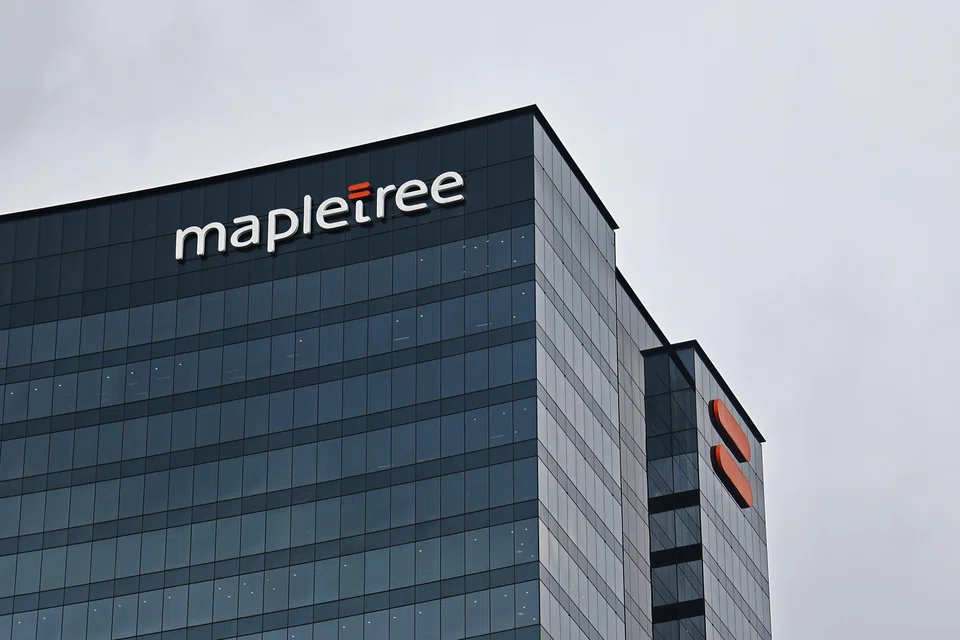
[SINGAPORE] Mapletree Industrial Trust (MIT) is looking beyond data centres for growth as it continues to divest older North American assets, pivot from a legacy-heavy portfolio and manage rising financing costs.
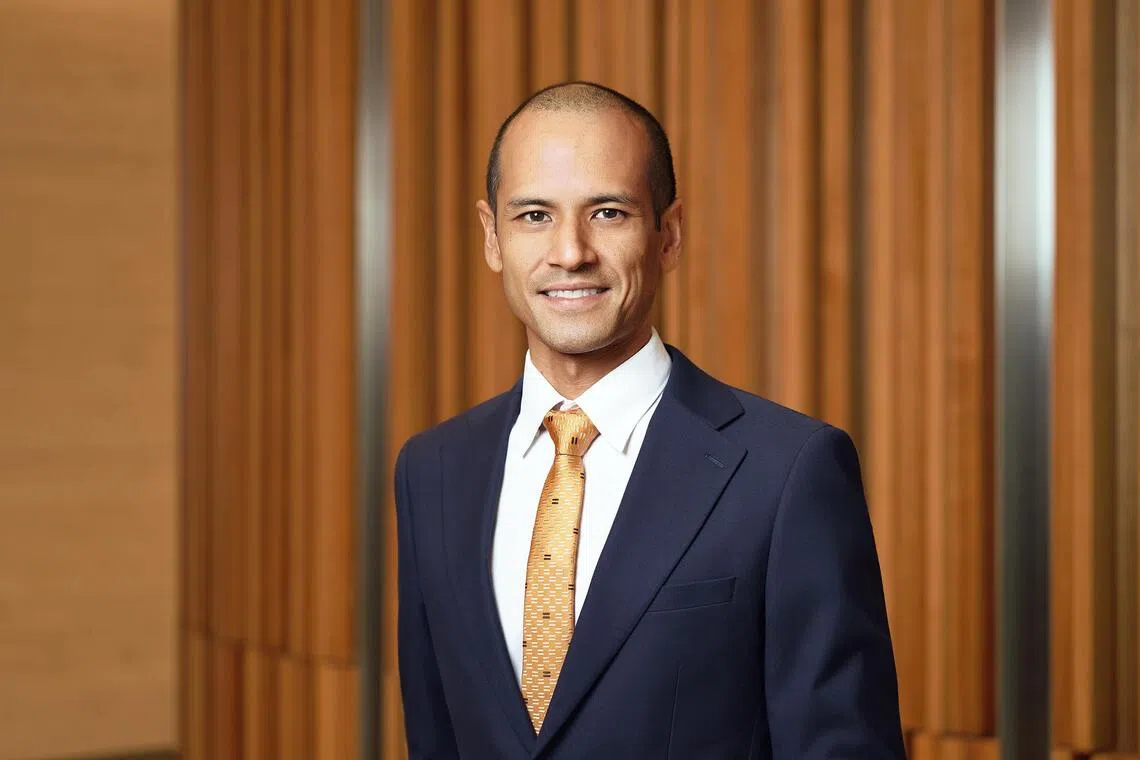
The CEO of the manager, Anand Tze Ming Chandran, who took on the role on Oct 1, said that the execution of North American divestments was the trust’s top business priority.
“I want the business to increase the diversification out of the data centre industrial vertical. That’s not to say we diminish it,” said Chandran, who was speaking at MIT’s second-quarter results briefing on Wednesday (Oct 28).
Previously the head of Mapletree Investments’ data centre division for the Asia-Pacific, he was tapped for the CEO position after Lily Ler left it to become Mapletree Investments’ chief financial officer.
In April, MIT announced plans that it would take one to two years to divest US$500 million to US$600 million in North American assets.
In August, it put a portfolio of 22 older US data centres up for sale, valued in aggregate at about US$1.24 billion, with US$1.07 billion attributable to the trust.
It is targeting to complete “a good amount” of the divestments by the end of its financial year on Mar 31, 2027, and is in talks with “a handful of parties” involving various parts of its portfolio, Chandran noted.
“If we have to take clear-eyed decisions about executing to get certainty, we will do it because a lot of portfolio pivot performance depends on the execution of the divestment.
“It will speak to everything to do, not just with income replacement and acquisitions, it will speak to our ability to manage shelter from (the) high-interest rate environment.

“It will speak to our ability to manage the hedge profile in a more optimal way. So that remains the top business priority, certainly between now and the end of the FY,” he said.
MIT will continue exploring opportunities in Singapore, the US and Japan, in sectors supported by advanced manufacturing, high-tech industries and digital infrastructure.
Asked how investors should view data centres’ contributions to MIT’s assets under management, relative to that by the general industrial sector, Chandran replied: “We will remain a general industrial Reit (real estate investment trust) with the ability to go down deep into specific verticals where we have strong conviction, as we have evidenced over the last five or so years in the data centre space.”
Data centres now account for 57.1 per cent or S$4.7 billion of MIT’s S$8.3 billion portfolio of assets under management.
Chandran said that the trust would seek to build relationships with a broader range of industrial tenants, adding that “any business needs to have strategic diversification”, whether across geographies or sectors.
He acknowledged that MIT’s footprint across primary and secondary North American data centre markets had “presented a challenge in recent years”.
“While we entered the market through acquisition as opposed to development, we have had to deal with the natural issues that come with the fast-changing market cycle in the US,” explained Chandran, adding: “I do not think it’s the right decision, strategically, to give up”.
He said that the trust would “work through the difficulties”.
For the quarter ended Sep 30, distribution per unit fell 6.6 per cent year on year to S$0.0297.
Q2 net property income declined 3.5 per cent to S$119.8 million, largely from lower contributions from North America, the absence of income from three Singapore industrial properties sold in August 2025, and depreciation of the Japanese yen against the Singapore dollar.
Portfolio occupancy slipped to 89.7 per cent from 90.7 per cent in the preceding quarter.
Data centre occupancy fell to 82.1 per cent from 85 per cent, while North American occupancy declined to 79.1 per cent from 82.5 per cent, when a lease on a San Diego property was not renewed in May.
When the news broke that MIT had put US$1 billion worth of its US assets up for sale in August, DBS analysts described the move as “surgical and decisive”, suggestive of a broader strategic review underway.
The bank’s Derek Tan wrote in an Aug 31 note: “In our view, this demonstrates greater urgency and decisiveness in addressing portfolio quality while sharpening MIT’s exposure to modern facilities, positioned to benefit from cloud and AI demand.”
The bank estimated that divesting 30 to 100 per cent of the marketed portfolio and applying all proceeds towards debt repayment could lower aggregate leverage to between 23.6 and 33.9 per cent, from 37.5 per cent.
“This would provide MIT with substantial capacity to pursue modern data-centre acquisitions and other high-specification facilities without requiring near-term equity fundraising,” the DBS report said.
In Singapore, MIT achieved a positive weighted average rental reversion rate of 6.9 per cent, up from 5.3 per cent in the preceding quarter, after 184 lease renewals covering about 640,000 square feet.
The management expects rental reversions to remain in the mid-single digits in the second half of the financial year.
Committed occupancy at Mapletree Hi-Tech Park @ Kallang Way, stands at 72.4 per cent. The property, completed in March 2023 in the trust’s largest redevelopment project, is expected to top 75 per cent occupancy by the financial year-end.
Decoding Asia newsletter: your guide to navigating Asia in a new global order. Sign up here to get Decoding Asia newsletter. Delivered to your inbox. Free.
Copyright SPH Media. All rights reserved.
TRENDING NOW

If Europe goes to war, the fallout will be felt in East Asia

Shanmugam says firms linked to haze probe pledge cooperation; government to table changes to haze law

Indonesia stocks suffer worst plunge in nearly 30 years as MSCI proposes standalone status

Keppel seeks US$1 billion for Vietnam investments as it joins country’s international financial centre

