

DBS, OCBC, UOB rout lops billions from STI as inflation, rate concerns spook investors
Regional bourses also retreat, tracking moves on Wall Street

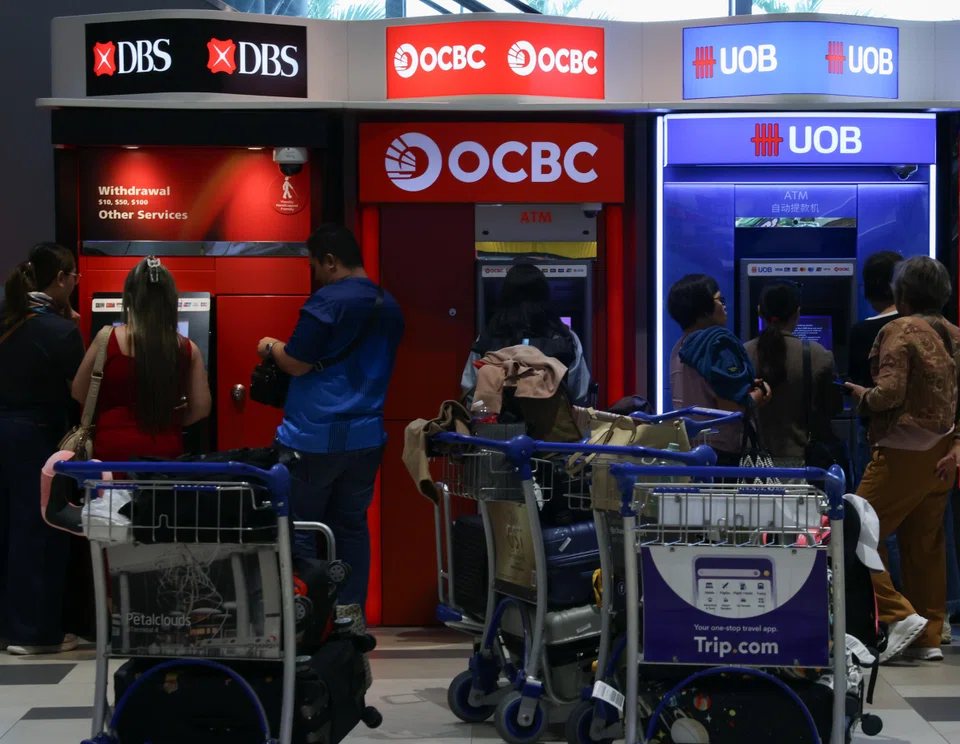
[SINGAPORE] Asia markets dipped on Thursday (Oct 8), tracking Wall Street’s overnight tumble amid the rising interest-rate environment and continued pressure on the oil market.
The Straits Times Index (STI) dropped almost 2.2 per cent as at 9.54 am, losing 120.79 points to 5,487.65. By 10.45 am, the STI was down 2.7 per cent or 150.16 points at 5,458.28.
Banking stocks were all lower, leading the STI’s decline. As at 10.45 am, DBS lost 3.4 per cent or S$2.62 to S$74.87, UOB was down 4.7 per cent or S$1.98 at S$40.46, and OCBC dropped 4.4 per cent or S$1.32 to S$28.98.
Regional indices were down. At around the same time, the KLCI was down 0.6 per cent and Hong Kong’s Hang Seng Index retreated 0.2 per cent. Japan’s Nikkei 225 was 1 per cent lower, while the broader Topix lost 1.5 per cent. South Korea’s Kospi was also 0.8 per cent weaker.
At Wednesday’s close, the US’ S&P 500 and Nasdaq each fell 0.22 per cent, and the Dow declined 0.66 per cent.
“Pressure from oil and the bond market continued to weigh on sentiment,” said Tiger Brokers market strategist James Ooi of the US market on Thursday.
“Treasury yields moved higher earlier in the session as elevated oil prices kept inflation concerns in focus, while investors remained sensitive to heavy long-end supply and broader weakness across global bond markets.”
As for the dip in local bank shares, he noted that after a recent strong rally, investors may have become more sensitive to earnings risks and negative catalysts.
“When expectations are already elevated, it can take slightly negative news to trigger some profit-taking,” he said. “That said, the upcoming earnings season in about a month should provide a clearer picture of whether current concerns are showing up in the banks’ financials.”


He added: “The market may also be reassessing the assumption that higher Singapore dollar interest rates are necessarily positive for banks. Higher rates can lift yields on loans and newly deployed assets, but they also push up what banks pay for deposits and other funding.
“For banks, what matters is not just where rates are going, but whether asset yields can keep pace with rising funding costs to defend net interest margins.”
Oil-fuelled inflation continues to complicate the outlook for investors spooked by further rate hikes by the US Federal Reserve, which in September increased interest rates for the first time since 2023.
Latest Brent prices rose 1 per cent to around US$101.20 a barrel, after a report that the White House asked the Pentagon to draw up strike options against Iran, which could be executed before the midterm elections.
In a Thursday note, DBS senior FX strategist Philip Wee said: “Although West Texas Intermediate’s crude oil prices have not revisited April’s peak, (petrol) has returned towards its 2026 high, while diesel has surged to new highs amid exceptionally tight distillate supplies.”
Decoding Asia newsletter: your guide to navigating Asia in a new global order. Sign up here to get Decoding Asia newsletter. Delivered to your inbox. Free.
Copyright SPH Media. All rights reserved.
TRENDING NOW

IOI Properties and CapitaLand Investment closer to acquiring One Raffles Place in joint bid

OCBC sheds S$8 billion in value as shares close nearly 6% down; analysts cautious on banks

Grab CEO’s wife Chloe Tong on life with Anthony Tan and finding her purpose

Crystal Jade closes four more outlets, cuts 120 jobs ahead of proposed sale

