

Singapore faces energy risks with ‘resource nationalism’ that undermines contracts: Tan See Leng
The Republic plans to store Saudi crude on Jurong Island, and keep ‘multiple lines of defence’ for energy security

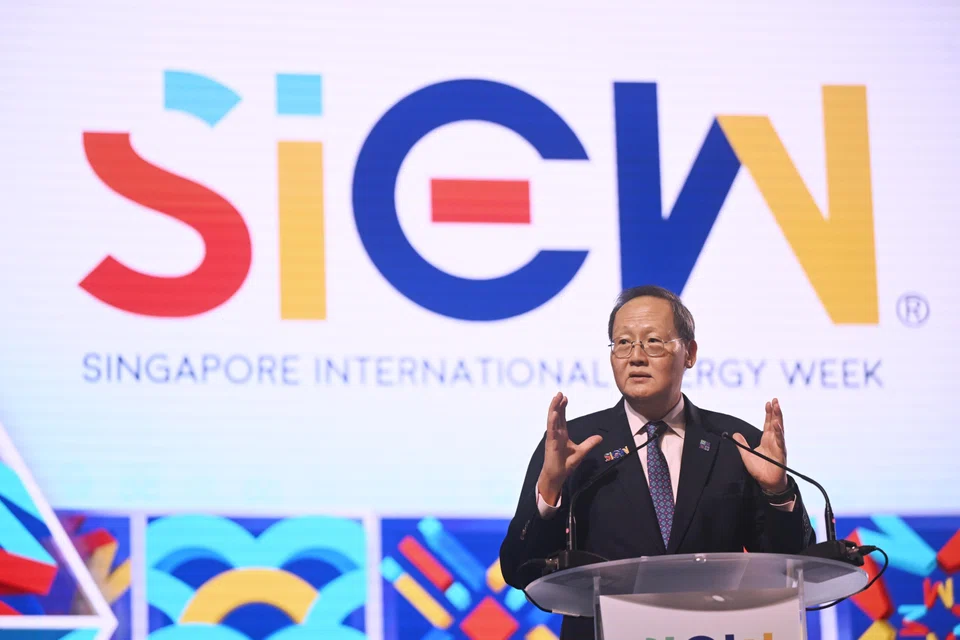
[SINGAPORE] Singapore will have to brace itself for greater risk of energy supply disruptions amid “resource nationalism” that undermines contracts, said Minister for Energy, Trade and Industry (Energy and Industry) Tan See Leng on Monday (Oct 26).
Countries may prioritise their domestic needs during energy crunches, and “this trend of resource nationalism is particularly concerning, especially if it undermines established contractual agreements”, he said in his keynote address at the annual Singapore International Energy Week.
“Such moves will increase business risks and deter investments in the energy sector, with negative long-term implications,” he told conference participants at the Sands Expo and Convention Centre.
His comments come as Indonesia began cutting natural gas exports to Singapore on Saturday, prompting gas importer Gas Supply to look into a possible case of breach of contract.
Acknowledging the Indonesian curbs, Dr Tan noted that the reduction amounts to under 2 per cent of Singapore’s total daily gas demand.
He noted that the Republic has dealt with similar past disruptions “without incident, because of all the measures we have invested in and built up over many years”.

“So, for Singapore... we can keep calm and carry on... We will continue to maintain (and) expand our options, strengthen our partnerships around the world, and build even greater resilience,” he said.
One key effort is central gas buyer Singapore GasCo launching an inaugural request for proposals to procure gas beyond 2028; it is on track to award its first contracts by next year.
“We have made it very clear to GasCo that the reliability of supply must be a key criterion in its assessment of suppliers,” Dr Tan said, noting that the company is also exploring collaboration with Thai energy company PTT to optimise liquefied natural gas supply.
SEE ALSO
Storing Saudi crude
On the partnerships front, Singapore and Saudi Arabia intend to set up an arrangement for Saudi crude oil to be stored underground in Jurong Island, in the Jurong Rock Caverns, from the second half of 2027.
No other countries store crude oil in Jurong Rock Caverns, which was developed for the commercial storage of liquid oil products.
Oil giant Saudi Aramco was due to ink a memorandum of understanding with the Energy Market Authority and industrial landlord JTC later on Monday. The aim is for the negotiations to be concluded in a few months, Dr Tan said.
“This arrangement enhances the resilience of the Saudi crude oil supply chain in South-east Asia, and contributes to Singapore’s energy security and resilience in the event of supply disruptions,” he said.
The move comes amid the recent attacks on Saudi Arabia’s energy infrastructure and airport by Houthi rebels.
The crude storage effort “marks a new milestone in energy cooperation” between both countries, the Ministry of Energy, Trade and Industry said on Monday.
“It also reflects the two countries’ shared commitment to strengthening regional energy security and recognises Singapore’s role as a key regional energy hub,” it added.
‘Multiple lines of defence’
Dr Tan also highlighted Singapore’s “multiple lines of defence” against supply disruptions that are already in place.
First, Singapore imports about half its gas as LNG from countries including the US and Australia, and will expand its LNG throughput capacity by 50 per cent once its second LNG terminal comes online by 2030.
In addition, Singapore last week renewed a cooperation agreement with QatarEnergy on LNG and low-carbon technology, while signing another agreement on a Joint Energy Taskforce with the Abu Dhabi National Oil Company.
Singapore is “continually on the lookout for collaborations to strengthen supply chain resilience”, Dr Tan said.
Citing a Chinese proverb, he added that “by preparing well ahead of time, we can face any circumstances with calm, with confidence”.
Long-term risks
Analysts are sanguine about the short-term impact of the gas curbs on Singapore, but flagged the uncertainties that lie ahead.
Standard Chartered chief economist Edward Lee and senior economist Jonathan Koh on Monday called the near-term policy implications of Indonesia’s gas curbs for Singapore limited.
“Unless the shortfall requires sustained replacement with more expensive (liquefied natural gas), the initial effect on electricity prices and inflation should be modest,” they said in a research note.
But a “more relevant” risk lies in how the gas cuts may run counter to the Monetary Authority of Singapore’s inflation outlook, which projected that core inflation would ease from mid-2027 on gradual easing of disruptions to global energy and food supplies.
“That moderation is now somewhat less assured. If prolonged Middle East tensions keep global fuel prices elevated while regional producers increasingly prioritise domestic demand, Singapore could face both higher replacement costs and less reliable pipeline supply,” Lee and Koh wrote.
Separately, Morgan Stanley analysts said in a report that the shortfall could be addressed by higher Malaysian piped gas imports or more LNG on a spot basis.
However, they added that the curtailment “does raise the trajectory of the cost of gas until 2027, before US exports rise and make LNG markets move into a glut”.
Decoding Asia newsletter: your guide to navigating Asia in a new global order. Sign up here to get Decoding Asia newsletter. Delivered to your inbox. Free.
Copyright SPH Media. All rights reserved.
TRENDING NOW

Government to bring forward raising of retirement age, give employers more financial support to create flexi-load jobs

If Europe goes to war, the fallout will be felt in East Asia
Former minister Maliki Osman, Revolut chairman join Asia Gulf Holdings advisory board

Small nuclear reactors could boost the Asean Power Grid: GE Vernova executive

