Singapore Medical Group has its heart set on regional growth
The group aims to strengthen its foothold abroad, albeit with cautious optimism, especially in Australia, Vietnam and Indonesia.

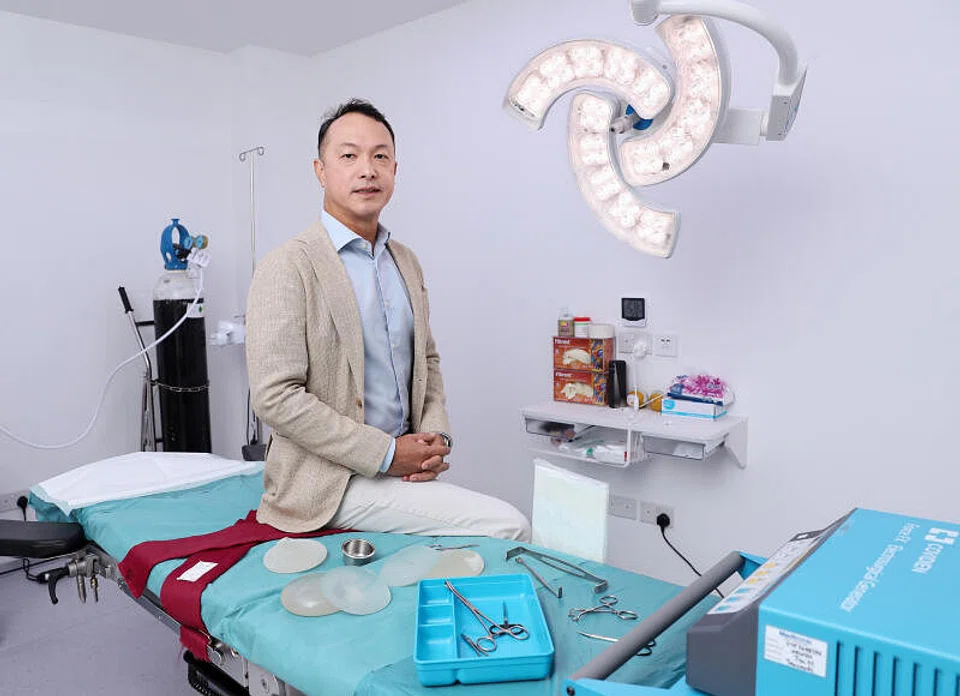
OPPORTUNITIES abound beyond Singapore's shores, and specialist healthcare provider Singapore Medical Group (SMG) is raring to go.
Even as it continues to grow its domestic business across the Republic's heartlands, the Catalist-listed company is hungry for further expansion and new ventures in the Asia-Pacific.
"We're one of the few Singapore healthcare companies that have been actively investing and growing our overseas footprint. From that standpoint, we're extremely unique," says Beng Teck Liang, SMG's chief executive officer and executive director.
In Singapore, it has over 30 clinics specialising in diverse disciplines such as cardiology, aesthetics, diagnostic imaging, obstetrics and gynaecology, paediatrics, and oncology.
Its three-year roadmap to further expand its organic footprint in the city-state entails setting up new clinics in suburban locations, hiring more specialists and boosting capacity. In the near term, the group will open at least two more clinics in the women's and children's health space, Dr Beng says. It will also expand its aesthetics business with a new site before the end of Q1 2022.
New verticals in Singapore could potentially be in the pipeline, either via acquisitions or a combination of both inorganic and organic growth.
Abroad, SMG is likewise aiming to strengthen its foothold, albeit with cautious optimism.
Net profit for the first half of this year more than doubled year on year to a record S$7.2 million, and was up 5.1 per cent from the pre-Covid net profit of S$6.8 million in H1 2019, driven by its diagnostic and aesthetics unit and the health segment.
SMG's share of results of joint ventures was in the black at about S$229,000 for the six months ended June, a turnaround from the loss of S$20,000 in the year-ago period and the S$92,000 loss in H1 2019. This was largely achieved on the back of higher profits earned by its Australian associate and Indonesian joint venture, offset by losses in Vietnam.
Vietnam's Covid-19 surge
CityClinic Asia Investments (CCAI), whose unit CityClinic Vietnam runs the CarePlus brand of medical centres in Ho Chi Minh City, was hit by Vietnam's surge in Covid-19 cases and resultant curbs. The three clinics' services include health screening, paediatrics and diagnostic imaging.
For the six months to June, SMG International (Vietnam) (SIV), which owns 32 per cent of CCAI, posted a net loss of S$472,000, weighed down by the clinics' two-month closure.
Despite this, the group is keeping its long-term view intact. Most recently, SMG completed a S$3 million acquisition of the remaining half stake in SIV this month, upping the group's effective shareholding in CCAI to 42 per cent, from 26 per cent previously.
Coincidentally, the share purchase came after the CarePlus clinics were licensed to perform Covid-19 antigen rapid testing in Ho Chi Minh City, which supported a recovery in financial performance since July. "When Vietnam gets more supplies, we hope CarePlus may also serve as vaccination centres," Dr Beng says. He notes that the group is changing tack only temporarily, to adapt to the pandemic.
"Going into the next year, we are cautiously optimistic. Things are starting to get better, and in the coming months they will be gradually lifting the lockdowns," Dr Beng says.
Ultimately, the goal remains to raise the quality of care in Vietnam.
"We want to establish centres of excellence, where our specialists in Singapore work closely with their Vietnamese counterparts to manage and develop protocols for a never-before-seen quality of care," Dr Beng says.
In turn, a small percentage of patients in Vietnam may decide to travel to Singapore for major medical intervention or surgeries.
Vietnam had accounted for the lion's share of the group's medical tourism volumes, at nearly 80 per cent, before the pandemic. That was unlike most other healthcare players in Singapore, for which the overwhelming bulk of such patients tended to come from Indonesia.
In that vein, the latest SIV stake purchase was also meant to create a patient referral system for cross-selling in oncology, cardiology and other specialist segments, once travel corridors are established between Vietnam and Singapore.
Dr Beng describes the group's initial investment in CCAI in 2017, via joint-venture firm SIV, as a coincidental opportunity that "fell into our laps", and involving an entity that was structured "cleanly". CityClinic Vietnam holds a 100 per cent foreign investor licence for Vietnamese healthcare operations; such entities are few and far between. "So we've got a very clean entity in Vietnam with many paths for us to grow, foremost of which will be organic growth," he says.
Still, SMG is not discounting the possibility of inorganic growth via targets in other cities. "We have a choice now, having established CarePlus as a major ambulatory care player in Ho Chi Minh City. So why not bring CarePlus to Hanoi or Da Nang? That's always an option," he adds.
Elsewhere in the region, SMG sees plenty of opportunities, too.
Eye clinics in Indonesia
The group has two eye clinics in Jakarta and Surabaya via Ciputra SMG, its 40:60 joint venture with developer Ciputra Group. SMG is hoping to set up eye clinics in more Indonesian cities and possibly also expand to other verticals such as aesthetics, women's health or paediatrics.
In Oceania, where the group focuses on fertility services like in-vitro fertilisation (IVF), there is the prospect of entering the obstetrics, gynaecology and aesthetics segments.
SMG is actively growing the City Fertility Centre (CFC) network of IVF clinics across Australia, under its joint venture with South Korea's CHA Healthcare. SMG effectively owns 13 per cent of CFC. Already, CFC is in the final stages of closing an earnings-accretive acquisition that will mark its foray into Western Australia.
"We are looking to significantly increase our market share in Australia, leapfrogging from our current fourth position in the market to third or even second place," Dr Beng tells BT.
Moreover, the group wants to expand its IVF footprint - not just in Oceania, but also South-east Asia and North Asia, he adds.
But SMG has had to hit pause on some regional ambitions, as travel constraints slow due diligence for potential deals. "There are so many opportunities waiting. . . When you're buying multi-million-dollar businesses, you need to be there to meet people and feel the pulse of what's happening on the ground."
Dr Beng expresses his frustration in wanting to get on a plane and move things along, but notes that the silver lining is "no one else can come and go, so I don't think the opportunities are going anywhere in a hurry".
In the interim, SMG may consider possibilities such as creating joint ventures with some of these firms, "at least to get to know each other better", he adds. That way, "we can start thinking about strategic initiatives".
Strategy
Thanks to its strong operating cash flows, SMG has strengthened its net cash position in the past few years, to a healthy S$18.1 million as at June 30 this year. That's up 14 per cent from the end of last year, and is nearly nine times the S$2.1 million in December 2018.
When it comes to deploying capital, strategy is key. "Where can we find good, solid people we can invest in? After all, we're very much a people business," Dr Beng says, adding that finding the best value for the company is an inherent part of his guiding principles.
As for dividends, SMG has admittedly been "ultra conservative" to date, which means there is likely "a little bit of room to see how we can do more", Dr Beng notes.
No dividend was paid for H1 2021 amid the economic uncertainty. The final dividend per share for 2020 was S$0.004, unchanged from 2019. While he "would love to pay out more" to shareholders, Dr Beng stresses that it is vital for SMG to balance payouts against retaining some earnings for investing in growth. "There are many options ahead, and we've been busy. The future is very bright."
READ MORE: