Singapore shares close lower on Wednesday; STI down 1.1%
Jardine Matheson leads the gainers on blue-chip index, rising 2.4% to US$60.59
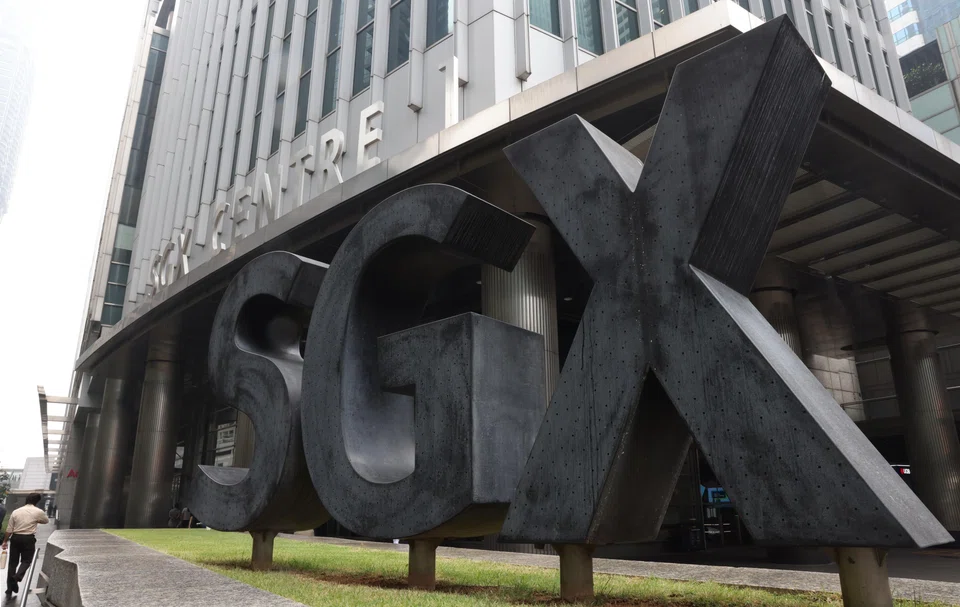
[SINGAPORE] Singapore stocks ended lower on Wednesday (Nov 18).
The benchmark Straits Times Index (STI) lost 1.1 per cent or 54.24 points to finish at 5,054.89.
Jardine Matheson led the gainers on Singapore’s blue-chip index, rising 2.4 per cent or US$1.44 to US$60.59.
The worst performer among STI constituents was Frasers Logistics & Commercial Trust , which fell 5.1 per cent or S$0.045 to S$0.845.
The local banks all ended lower. DBS lost 1.1 per cent or S$0.76 to S$66.94, OCBC fell 1 per cent or S$0.28 to S$27.40, and UOB was down 1.6 per cent or S$0.57 at S$36.13.
Within the iEdge Singapore Next 50 Index, AEM was the top gainer, rising 3.5 per cent or S$0.22 to S$6.55, while NTT DC Real Estate Investment Trust was the biggest decliner, falling 5.9 per cent or US$0.055 to US$0.88, as it traded ex-dividend.

Across the broader market, losers beat gainers 355 to 229, after 1.1 billion securities worth S$2.3 billion changed hands.
Thai Beverage was the most actively traded stock with 51.1 million shares changing hands.
DBS was the most actively traded stock in terms of value, with 9.6 million shares worth S$640.8 million traded.
Key regional indices were mixed.
Hong Kong’s Hang Seng Index lost 0.9 per cent and the FTSE Bursa Malaysia KLCI declined 0.5 per cent. Meanwhile, Japan’s Nikkei 225 rose 0.3 per cent and South Korea’s Kospi was up 2 per cent.
Jose Torres, senior economist at Interactive Brokers, said that the US government’s efforts to tighten its grip on semiconductor export to China has stoked fears that revenue momentum among chip players may decrease.
“The economic calendar hasn’t provided any relief for equities either, as lacklustre retail sales coincided with misses in industrial production and a 14-year low in home builder sentiment,” he added.
This article was written with the assistance of AI and reviewed by a reporter
Decoding Asia newsletter: your guide to navigating Asia in a new global order. Sign up here to get Decoding Asia newsletter. Delivered to your inbox. Free.
Share with us your feedback on BT's products and services