

Investors look beyond TSMC as AI boom spreads to new winners
The company now accounts for more than 40% of Taiwan’s Taiex
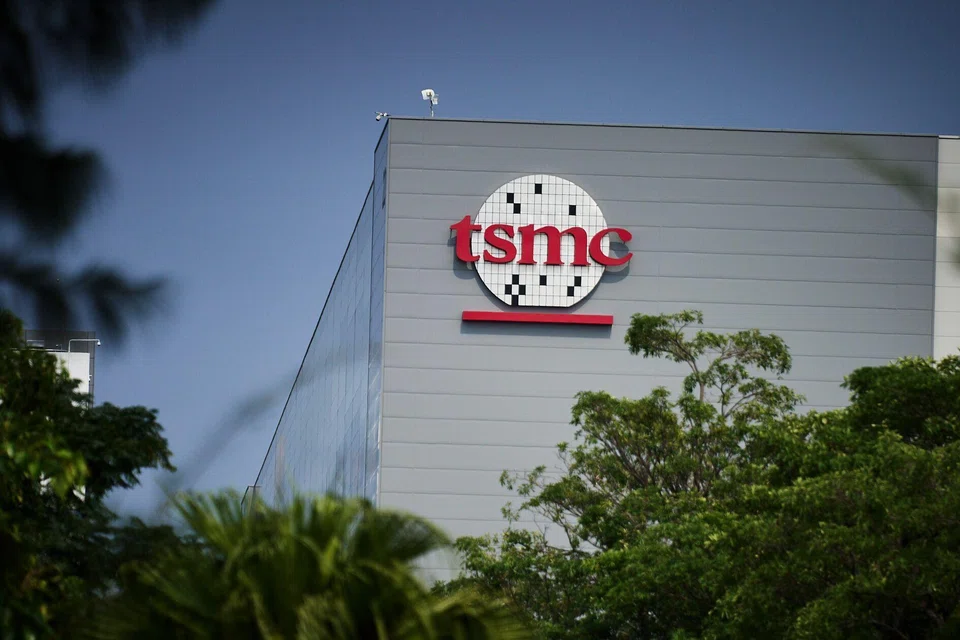
[HONG KONG/TOKYO] After several years flying high as Asia’s best Nvidia proxy, Taiwan Semiconductor Manufacturing Company (TSMC) is increasingly vying with other artificial intelligence stocks for investor attention.
Stock traders are chasing a wider array of beneficiaries as mainstream usage of AI creates demand for hardware beyond the most advanced chips TSMC makes for Nvidia. Subthemes from the deepening memory crunch to advances in robotics are also luring bids.
At the same time, investment caps on single stocks are pushing funds to diversify, while retail investors long familiar with TSMC through its American depositary receipts (ADRs) are being offered a broader set of Asian tech alternatives.
As a result, TSMC shares are underperforming those of local chip designer MediaTek by the most since 2009. Meanwhile, Samsung Electronics, the world’s largest memory maker, has narrowed its market valuation gap with TSMC to join it in the elite US$1 trillion club.
There’s a “structural diversification away from TSMC”, said Jason Hsu, Boston-based chief investment officer at Rayliant Global Advisors. New capital being raised in funds is “disproportionately going to other tech companies which also benefit from the record AI capex”.
TSMC’s shares are up 44 per cent this year on bumper sales and earnings, but that pales in comparison with gains of nearly 150 per cent each in MediaTek and Samsung. This mirrors underperformance in shares of Nvidia even as it’s still seeing strong growth.
There’s little doubt TSMC will continue to benefit from AI demand for some time, as the manufacturer of virtually all of Nvidia’s leading-edge graphics processing units. Still, other players are emerging as winners as AI moves deeper into the inferencing phase that focuses on targeted tasks.
Hot trades have popped up among chip designers like MediaTek, which is helping Alphabet create application-specific integrated circuits. Need is also growing for less-sophisticated central processing units, which can be made at foundries run by Samsung and Intel as well as TSMC.
“Agentic AI is driving a broadening of the AI trade because agents will require more CPUs,” said Brian Ooi, a portfolio manager at Swiss-Asia Financial Services. “As we see AI spending shift from training to inference, I expect this broadening trend to continue and would be the next leg of the AI trade.”


TSMC also lacks direct exposure to the memory and storage boom, given its focus on logic chips. That has it missing out on the massive gains in shares of Samsung and its peers.
Global investors are poised to get better access to such memory plays, with both South Korea’s SK Hynix and Japan’s Kioxia Holdings planning to launch ADRs this year. Asian firms also feature heavily in the popular new Roundhill Memory ETF, and US retail traders can even now trade South Korean stocks directly online.
Still another part of the reason for TSMC’s underperformance is the 10 per cent weighting for single stocks placed on many active funds. With TSMC now accounting for more than 40 per cent of Taiwan’s Taiex, these vehicles need to buy other stocks that can help them keep up with the index.
“I have almost 10 per cent in TSMC and I have added more Taiwan tech names driven by AI demand in the past few months,” said Jian Shi Cortesi, a fund manager at Gam Investment Management in Zurich. These include companies involved in chip packaging, power management, cooling and printed circuit boards, she added.
Taiwan is moving to lift its limit to 25 per cent in extreme cases like TSMC, but this is still far below the real level.
Kevin Net, head of Asian equities at Financiere de l’Echiquier, said that his fund is “structurally underweight” TSMC given the 10 per cent cap, but has raised its non-TSMC AI exposure by 5 per cent compared with earlier this year. He said that he has invested in MediaTek and Samsung, as well as Taiwan’s ASE Technology Holding and Chroma ATE as proxies since they benefit from TSMC capex. BLOOMBERG
Decoding Asia newsletter: your guide to navigating Asia in a new global order. Sign up here to get Decoding Asia newsletter. Delivered to your inbox. Free.
Share with us your feedback on BT's products and services
TRENDING NOW

DBS, OCBC, UOB rout lops billions off STI as inflation, rate concerns spook investors

Grab CEO’s wife Chloe Tong on life with Anthony Tan and finding her purpose

OCBC sheds S$8 billion in value as shares close nearly 6% down; analysts cautious on banks

Deal between tycoon friends sparks scrutiny of Philippine power sector

