

Singapore public sector commands highest AI salary premium as job postings surge: PwC study
The share of artificial intelligence-related listings is up at 5.3% in 2025, from 3.3% the previous year

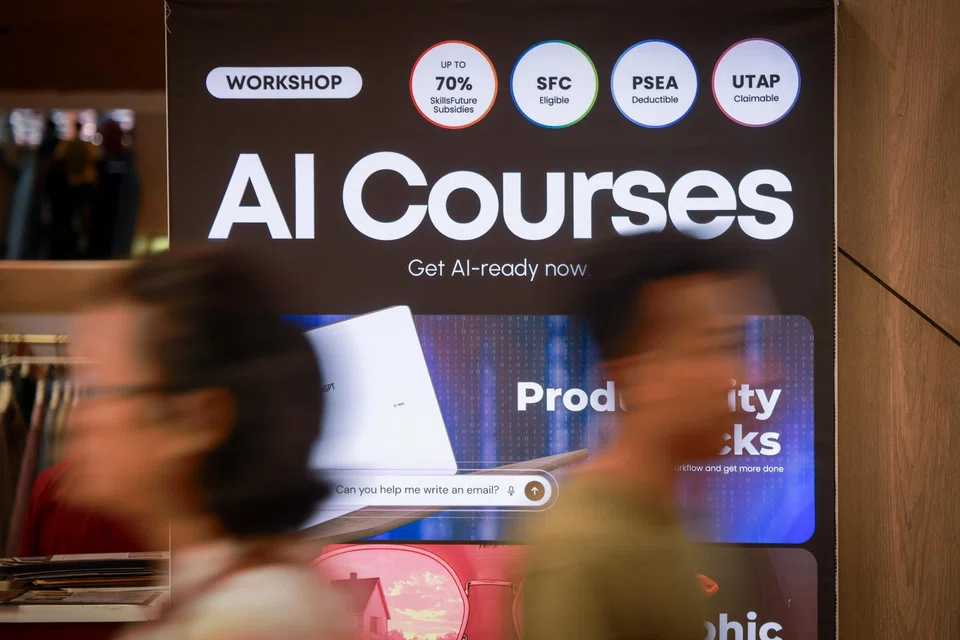
[SINGAPORE] The public sector and consumer markets offer the largest salary premiums for artificial intelligence expertise in Singapore, a new study by PwC has found.
The data comes amid an economy-wide surge in AI adoption, the professional services firm said in a report released on Monday (Jun 15). The high wage premiums reflect a highly targeted demand for specialised roles, it added.
In 2025, advertised roles requiring AI skills in the government and public sector commanded a 107 per cent wage premium compared to non-AI roles within the same sector, the Singapore edition of PwC’s 2026 Global AI Jobs Barometer report showed.
Consumer markets followed closely with a 96 per cent premium.
PwC said that the data highlighted a “targeted demand” for specialised talent in select areas, contrasting with sectors where AI is more broad-based and pay differentials are more contained.
AI job postings grow
The substantial pay premiums came as AI-related job openings last year captured a larger slice of Singapore’s total labour market. The share of AI-related job postings jumped to 5.3 per cent in 2025, up from 3.3 per cent the previous year.
This represented an influx of roughly 30,000 additional AI-related listings, bringing total demand to 84,000 roles.
While financial services and the tech, media and telecom (TMT) sectors yielded the largest overall volume of job advertisements, the uptick in AI-specific vacancies was visible in all surveyed fields, led by TMT, government and financial services.
The vast majority of this hiring momentum was concentrated in AI user roles rather than AI developer roles, PwC found.


Postings for roles requiring working fluency with AI tools grew by 26,000, making up 82 per cent of all AI job listings. The number of advanced technical roles requiring building machine learning models or machine learning operations rose by a more modest 4,200 postings.
Jobs reconfigured, not replaced
Rather than driving widespread job cuts, the data indicated that Singaporean companies are actively restructuring existing positions to accommodate technological shifts, said PwC.
Occupations with high AI exposure had the highest volumes of total job postings and accounted for more than half of all hiring activity.
These exposed roles also had the sharpest rate of net skill changes between 2019 and 2025, indicating that occupations with higher AI exposure are generally more likely to see their core functions evolve, the study found.
“Findings also suggest that roles are being reconfigured, rather than phased out, as demand for AI-related jobs rose,” PwC noted, adding that an economy transitioning towards hybrid and non-tech positions requires baseline AI literacy.
This corporate restructuring is reinforced by external data from Singapore’s Ministry of Manpower.
In the first quarter of 2026, 18.9 per cent of local companies reported that they had begun redesigning job functions, while 13.9 per cent were actively creating entirely new roles tied to AI implementation.
To support this structural shift, the Singapore government stepped up institutional backing in 2026 via the National AI Council and the National AI Impact Programme – measures that PwC said signal ongoing demand for workforce upskilling and job redesign.
This came after the country launched the second version of its National AI Strategy at the end of 2023.
Decoding Asia newsletter: your guide to navigating Asia in a new global order. Sign up here to get Decoding Asia newsletter. Delivered to your inbox. Free.
Copyright SPH Media. All rights reserved.
TRENDING NOW

DBS, OCBC, UOB rout lops billions off STI as inflation, rate concerns spook investors

Grab CEO’s wife Chloe Tong on life with Anthony Tan and finding her purpose

OCBC sheds S$8 billion in value as shares close nearly 6% down; analysts cautious on banks

Deal between tycoon friends sparks scrutiny of Philippine power sector

