Chinese automaker reports set to shine before challenges mount
Import curbs in Europe and exports tax changes at home cloud the outlook for carmakers from China
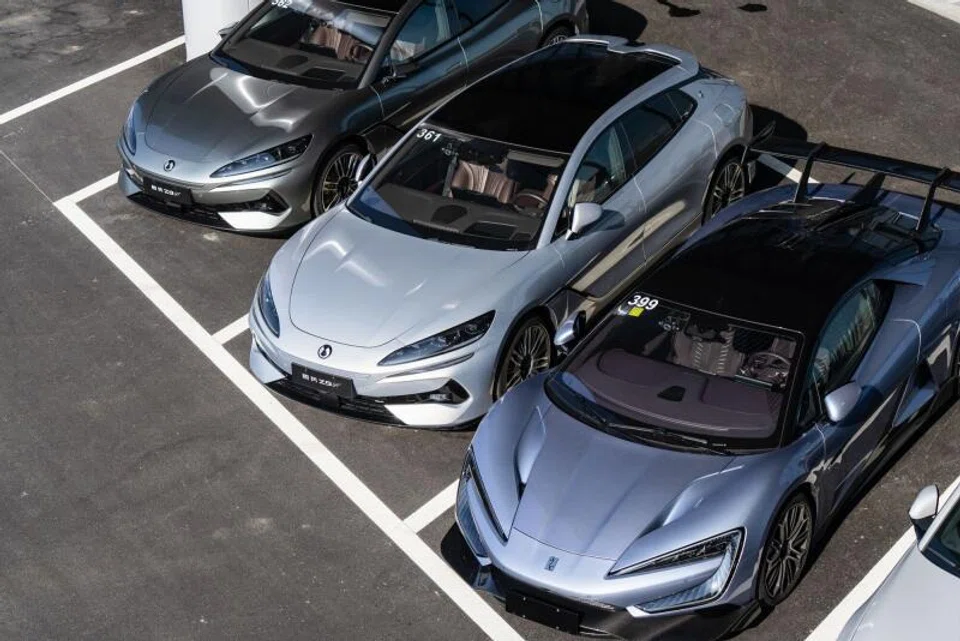
[HONG KONG] A surge in hybrid vehicle exports is set to give Chinese automakers a much-needed third-quarter earnings boost. Import curbs in Europe and exports tax changes at home are now clouding their outlook.
BYD’s net income likely jumped the most in six quarters, estimates show, while Geely Automobile Holdings’ profit probably grew 36 per cent based on the average of two estimates and Zhejiang Leapmotor Technology is set to post record earnings.
All will have benefited from strong exports, making up for sluggish domestic demand, though their views of the months ahead will be monitored closely given growing export hurdles.
The EU has set an import cap of 350,000 hybrid vehicles per year from China as soon as Dec 1. Meanwhile, China plans to reduce its value-added tax export rebate to 9 per cent from 13 per cent effective Apr 1, denting profitability from overseas sales.
“Investors are focusing on 2027: whether domestic demand can stabilise, and how automakers will absorb higher costs from a lower tax rebate on NEV exports and rising trade barriers,” said Bloomberg Intelligence analyst Joanna Chen.
The EU’s annual quota could potentially exclude 60 per cent of Chinese automakers’ hybrid volume in Europe, with BYD, Saic Motor and Chery Automobile the most vulnerable, Chen said in a note.
The global auto industry is struggling to come to terms with an influx of cars from China as the country’s automakers look overseas for growth and profit.
While Chinese automakers are cut off from the US market by tariffs and other restrictions, they have grown increasingly dependent on other overseas markets like Europe to bolster their bottom lines.
China’s trade surplus with the EU reached a record in September, with exports to the region exceeding US$60 billion, making Brussels increasingly receptive to import restrictions.
SEE ALSO

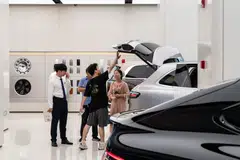
Chinese electric vehicle stocks have underperformed in 2026 as mounting concerns over weak domestic demand and regulatory uncertainty weighed on investor sentiment.
While progress in trade talks between Beijing and the EU and China’s reduction of export VAT tax rebates have cleared some policy ambiguity, carmakers will still need to demonstrate margin resilience to reignite share momentum.
BYD’s Hong Kong-listed shares have dropped 23 per cent in 2026 so far, underperforming a Bloomberg gauge of global EV-related stocks that slid 14 per cent. Smaller rivals Xpeng and Xiaomi have suffered even steeper losses, slumping 53 per cent and 31 per cent in the same period, respectively.
While trade frictions and tax changes pose headwinds, “we believe greater policy visibility should reduce some of the uncertainty that has weighed on the sector”, HSBC analysts led by Yuqian Ding wrote in a note.
Localisation push
Key earnings catalysts include potential shipment front-loading through early 2027 to beat trade curbs and a rapid ramping up of local overseas manufacturing, Jefferies analysts led by Xiaoyi Lei said.
Xpeng already makes cars in Austria, BYD plans to start production in Hungary this quarter and Leapmotor already has a sales and manufacturing partnership with Stellantis.
While localisation involves additional investment and execution risks, it should support long-term growth, reduce exposure to tariffs and export quotas and strengthen the competitive position of leading Chinese automakers in Europe, HSBC’s Ding said. BLOOMBERG
Decoding Asia newsletter: your guide to navigating Asia in a new global order. Sign up here to get Decoding Asia newsletter. Delivered to your inbox. Free.
Share with us your feedback on BT's products and services