

Indian travellers set to compete with Chinese tourists as engines of air travel growth: SIA CEO
The airline’s multi-hub strategy in India, which includes its stake in Air India, comes as global travel patterns shift towards South Asia


[SINGAPORE] Singapore Airlines (SIA) chief executive Goh Choon Phong believes the Indian air travel market is vital to the airline’s plans, with the Indian traveller set to compete with Japanese and Chinese tourists as engines of global air travel growth.
Speaking at a panel at the Changi Aviation Summit on Monday (Feb 2), Goh argued that as global demand patterns shift structurally towards South Asia, airlines must adapt their networks to survive.
“A few decades ago... we used to have the Japanese visitors and tourists all over the world... then in the recent decade, it’s more the Chinese travellers,” he said. “Increasingly we are going to find more Indian travellers and Indian tourists going all over the world.”
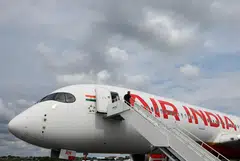
Goh’s comments on Monday appeared to support SIA’s nearly S$1 billion stake in Air India. In November last year, he defended his airline’s investment in the Indian flagship carrier as a long-term play amid questions raised by investors on its drag on SIA earnings.
Air India’s poor performance was the primary factor behind an 82.1 per cent plunge in SIA’s quarterly results last November, as second-quarter net profit fell to S$52 million from S$290 million in the year-ago period.
The Indian airline also suffered a crash in June 2025, which caused 260 deaths on the plane and on the ground. That itself is expected to lead to a record S$2.1 billion loss for the airline.
Despite the setbacks, SIA and Air India signed a commercial cooperation framework aimed at strengthening the airlines’ partnership beyond code-sharing – a move that market watchers have viewed favourably.
Monday’s remarks also pointed to SIA’s “multi-hub” strategy in India being focused on adapting to the next wave of travel demand.
The urgency was similarly underscored by fellow panellist and CEO of Indian budget carrier IndiGo, Pieter Elbers, who outlined India’s ambitions become a global aviation hub, noting that 65 per cent of the world’s population live within a six-hour flight of India.


Elbers highlighted that 90 per cent of India’s 1.47 billion population now live within 100 km of an IndiGo-served airport, and that the airline is aggressively expanding its international footprint with new long-range narrowbody aircraft such as the Airbus A321 XLR.
His bullish pitch on the market’s potential prompted Goh to joke that he should bring the IndiGo chief along to his own meetings to explain to investors “why the India market is such a good thing” and “a good place to invest in”.
Elbers quipped: “We’ll be competing with my neighbour here (Goh) when it comes to connectivity.”
Goh emphasised that an airline’s operational base dictates what it can serve effectively, noting that shifting demand patterns – such as the rise of the Indian traveller – require airlines to adapt their networks beyond their traditional hubs.
Decoding Asia newsletter: your guide to navigating Asia in a new global order. Sign up here to get Decoding Asia newsletter. Delivered to your inbox. Free.
Copyright SPH Media. All rights reserved.






