Inside F1: How ‘reactive’ DHL acted quickly to fit Malaysia race just before Singapore’s
The official F1 logistics partner says the lessons from the Covid-19 pandemic helped it be more adaptive to disruptions

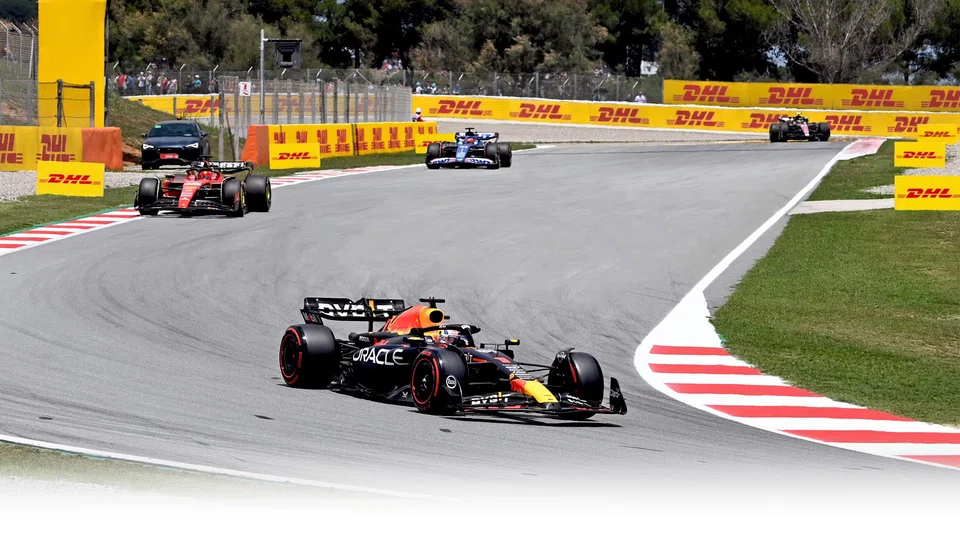
[SINGAPORE] The nature of Formula One (F1) as a globetrotting sport is often one of its greatest strengths, but that can turn into a double-edged sword for logistics provider DHL when unexpected disruptions hit.
With the final round of pre-season testing held in Bahrain from Feb 18 to 20, the last charter flight with F1 equipment departed just hours before the US attacked Iran at the end of that month. This left DHL in limbo as both the Bahrain and Saudi Arabia races – both of which were supposed to be held in April – were indefinitely off the table.
This served as the ultimate test for the logistics giant’s post-pandemic strategy. To absorb sudden calendar rewrites like the late-July confirmation of Malaysia as a stand-in host for Bahrain – to be held in Sepang just one week before the Singapore Grand Prix in October – DHL has had to permanently abandon its traditional model in favour of a much more agile playbook.
“Since the pandemic, we have never had a year that’s remained to plan,” Paul Fowler, vice-president of global motorsports at DHL, told The Business Times on the sidelines of the Singapore Grand Prix. “We have moved probably from a really proactive, planned basis to a reactive model.”
Still, when DHL was first informed about Malaysia as the best and most likely option to host the Bahrain race, Fowler recalled reactions of disbelief.
“A Bahrain race in Malaysia, we were like: ‘Are you crazy? Honestly, you’re joking,’” he said. “But then you could look around the table and it was a serious question.”
Playing freight jigsaw
Making the Malaysia race happen from Oct 2 to 4 meant solving two massive operational bottlenecks at once: extracting multi-million dollar equipment trapped in a suddenly-volatile Bahrain, and implementing a plan to move all that cargo between two neighbouring South-east Asian nations in very little time.
First came the extraction. With Bahrain effectively in lockdown, DHL had to dismantle the event setup, re-box hundreds of tons of hardware and navigate heavily congested ports. Equipment was trucked through Saudi Arabia to Khor Fakkan in the United Arab Emirates (UAE) before being shipped directly to Port Klang in Malaysia.
Then came the Causeway crossing. While sending freight by road might seem like the obvious choice – some drivers opted to arrive in Singapore by road, while Valtteri Bottas even completed the 420 km journey on a bicycle – the emissions suggested otherwise.


Moving the entire F1 paddock by road in Europe requires roughly 400 trucks, said Fowler. Replicating that between Kuala Lumpur and Singapore would have left these empty trucks at the destination needing to make return journeys, which he said would have added unnecessary carbon emissions.
Instead, DHL opted for a hybrid model, using short one-hour air charters for time-critical setup gear while staggering the rest.
“They don’t need everything on day one,” Fowler explained, noting that hospitality gear is not needed until Thursday, the day before the practice session. “So we timeline everything. The urgent equipment is what’s flown.”
That agility was put to the test by teams operating under tight inventory constraints. Red Bull Racing, for instance, maintains only five sets of race equipment globally.
Their kit used in Malaysia had to be packed down at night after the Oct 4 race, reloaded, cleared through land border customs and delivered to the Marina Bay circuit by the next day’s afternoon.
Return to the Middle East
Looking ahead to the conclusion of the 2026 calendar, DHL faces another high-stakes test in the Middle East. There is still plenty of regional volatility, as evidenced by the recent attacks on Riyadh’s King Khalid International Airport that have left at least three people dead.
F1 chief executive Stefano Domenicali said on Oct 3 that the season’s final two races in Qatar and Abu Dhabi will proceed as planned on Nov 29 and Dec 6, respectively.
With teams still wary after having an entire set of equipment locked down in Bahrain for half the season, DHL is managing the finale with a multi-level contingency strategy, said Fowler.
The primary plan commits freight to direct sea shipping through the UAE’s Khor Fakkan port. However, as transport mode deadlines pass, operational choices narrow. If maritime windows close entirely, DHL is prepared to deploy a massive air bridge of up to 22 charter flights – 11 aircraft per race – to guarantee the equipment arrives on time.
For Fowler, executing these high-pressure logistics pivots ultimately comes down to balancing operational capacity with human safety.
“Safety first,” he said, noting that staff comfort and well-being remains non-negotiable when operating near high-risk zones. “There’s a human element and an operational element.”
Decoding Asia newsletter: your guide to navigating Asia in a new global order. Sign up here to get Decoding Asia newsletter. Delivered to your inbox. Free.
Copyright SPH Media. All rights reserved.