

More Singapore drivers plan to return to petrol cars as EV interest dips: EY study
Respondents cite lingering anxieties over charging infrastructure and hidden costs

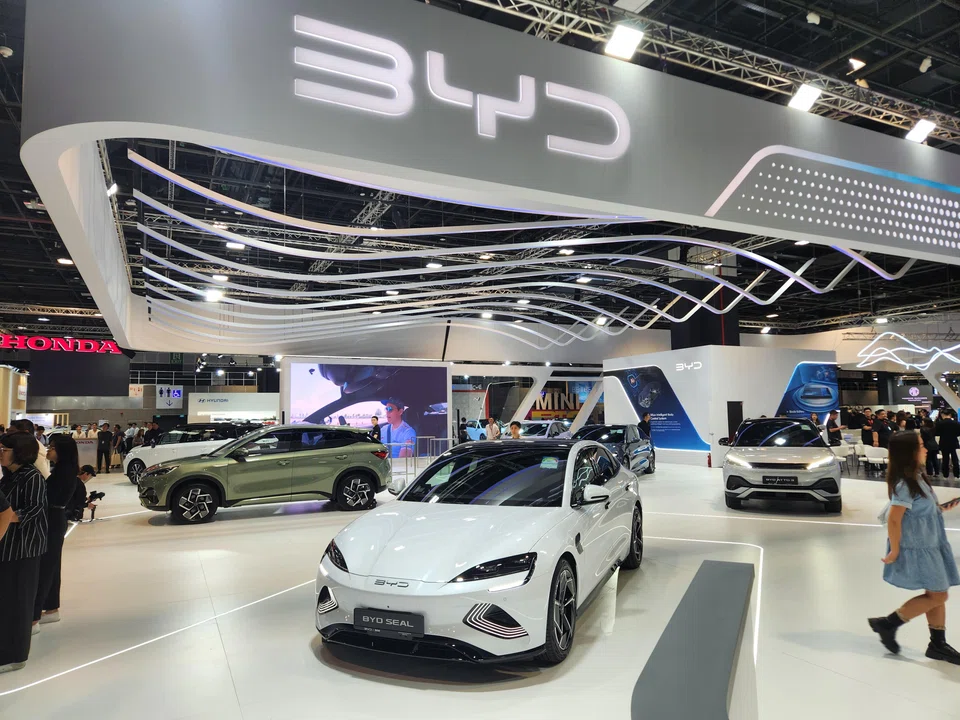
[SINGAPORE] As much as 32 per cent of Singapore respondents in an EY study plan to purchase internal combustion engine (ICE) vehicles in the next two years – an increase from 26 per cent in 2024.
They cited lingering anxieties over charging infrastructure and hidden costs, according to EY’s 2025 Mobility Consumer Index (MCI) released on Friday (Jan 9).
This shift in Singapore mirrors a global trend where drivers are retreating to the familiarity of petrol cars, even as experts note that actual 2025 sales data will likely still show high EV registration numbers.
Still, the preference for ICE vehicles in Singapore appears to be lower than the global average. Fifty per cent of global respondents indicated they are likely to purchase an ICE vehicle, up from 37 per cent in 2024.
While Singapore has been viewed as a leading market for EV adoption in South-east Asia, the EY study revealed that consumer confidence is still lacking. The survey of 300 local car buyers found that “practical” concerns – specifically gaps in the charging network and the price of battery replacements – are overriding the initial optimism for green mobility.
“While last year’s MCI results reflected a strong optimism around EV purchase, this year’s survey reveals that Singapore car buyers are reconsidering ICE options,” said Sriram Changali, EY-Parthenon Asean and Singapore industrials leader. “The cooling of enthusiasm suggests consumers are taking a more cautious, practical view of ownership.”
Despite the cooling sentiment, Singapore remains a regional leader in adoption. In a separate 2025 report, global automotive distributor Inchcape noted that the Republic ranked high in South-east Asia for new-energy vehicle adoption.
EVs still top, but trends have shifted
Fifty-eight per cent of Singapore car buyers expressed interest in buying an EV in the next two years, compared with 73 per cent in 2024. The 2025 data was still higher than the global average of 43 per cent. Meanwhile, 10 per cent of respondents were undecided on the type of vehicle they would buy.
SEE ALSO



Chinese EV giant BYD became the top-selling brand in Singapore in May 2025 – outselling Toyota for the first time – and increased its market share to 19.7 per cent in the first nine months of that year.
Still, in July it launched a car with a petrol engine in Singapore for the first time.
EVs made up 43 per cent of new Singapore car registrations in the first nine months of 2025. In comparison, they accounted for 33.8 per cent of new car sales in the whole of 2024 and 18.2 per cent in 2023.
South-east Asian chemical and infrastructure solutions provider Chandra Asri told The Business Times in October that it projected a “managed transition period where petrol vehicles will remain in use”, even as EV demand increases. The Singapore government is also set to only allow “cleaner energy” vehicles for new car registrations from 2030.
Globally, EY found that the shares of consumers who say they want to buy an ICE vehicle rose by 12 percentage points in the Americas, 11 percentage points in Europe and 10 percentage points in Asia-Pacific, while battery EV buying intent fell across all major markets.
“Policy shifts, including the removal of US EV tax credits and evolving emissions targets, are shaping these trends,” said EY.
“At the same time, major automakers are renewing focus on ICE and hybrid portfolios and moderating EV programs in response to changing consumer demand.”
Charging and battery replacement concerns
In Singapore, EY found that apprehensions over charging gaps continue to be one of the top barriers driving car buyers to choose ICE vehicles over EVs.
More than half of respondents cited concerns with public-charger quality and charging interoperability as a top concern, compared with a quarter globally.
Just over four in 10 also pointed to high battery replacement costs, while 40 per cent cited a “lack of charging infrastructure”, compared with 28 per cent globally for both concerns.
The drop in EV buying interest came “despite government efforts to expand charging infrastructure across Singapore”, noted the report.
“Beyond expanding access, sustained public education that addresses how charging works across different networks, battery performance, long-term costs and good charging habits will be key towards Singapore’s cleaner mobility future.”
Despite a rise in digital retail, EY’s study also found that EV buyers are less likely to purchase online compared with ICE buyers, preferring physical dealerships where they can get in-person guidance on charging, battery life and new features.
Respondents also appeared risk-averse regarding other advanced technologies. While interest in connected safety and navigation features is high, comfort with autonomous driving remains low in Singapore due to fears of accident risks and technology failure.
High costs for these connected services were also cited as a key barrier, further highlighting the price-sensitivity driving the market, with Certificate of Entitlement premiums this year not expected to fall much despite a 20 per cent increase in supply.
Decoding Asia newsletter: your guide to navigating Asia in a new global order. Sign up here to get Decoding Asia newsletter. Delivered to your inbox. Free.
Copyright SPH Media. All rights reserved.
TRENDING NOW

Britain’s mansion tax shows the difficulty of targeting wealth

Once staunchly pro-China, Malaysian Chinese businesses are now distancing themselves from Beijing

The only common thing in S-E Asia is that we all eat rice: Cisco’s Asean president

Singapore data centre operator DayOne opts for US IPO at likely US$20 billion valuation

