Sailing in the ‘dark’
Agnes Wee SCN &
David Hughes
NOT so long ago, and certainly still when I first went to sea, once a ship had left port and slipped over the horizon, she was more or less out of sight and out of mind. Typically, the radio officer would tap out a noon position to the company’s head office.
But to the outside world, her whereabouts could only be the subject of speculation until she made port again or passed and was spotted by, for example, the Lloyds of London lookout on the southern tip of Gibraltar.
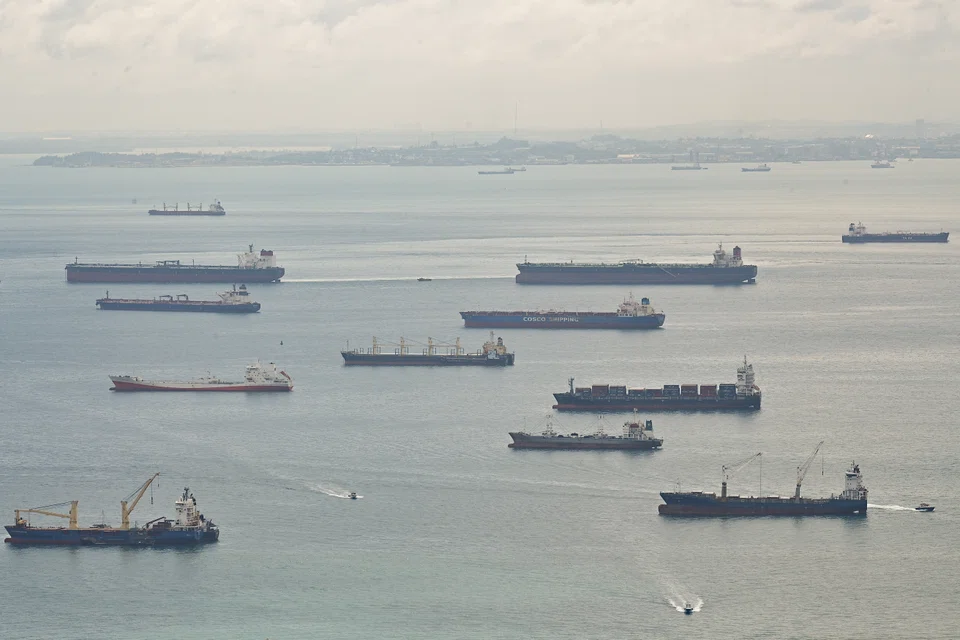
In theory, and generally in practice, the situation now is very different. The globally deployed Automatic Identification System (AIS) uses transceivers on ships to identify which vessel they are and certain other information. AIS is mandatory for all commercial vessels except very small ones. Ships’ positions can be seen by other ships and by shore stations. It is primarily a terrestrial system that gives positions relatively close to shore but the signals can be received by satellites. Its principal purpose is to avoid collisions but is now widely available to anybody with computer access. Effectively, a ship’s position is now visible to anybody who wants to know.
International Maritime Organization (IMO) regulations allow ships’ masters to switch off AIS in specific areas where the threat of attack by pirates or terrorists is imminent. Even then, the guidance is to keep AIS on.
So basically, it is illegal to switch off AIS. Nevertheless, some vessels do ‘go dark’ – switch off AIS - for periods and the number is increasing. Broadly, there are two reasons for doing this: engaging in illegal activity such as fishing without permission in Exclusive Economic Zones (EEZs) or, particularly relevant at present, geopolitics.
However, even going dark is no guarantee that a ship’s position cannot be identified. For example, Unseenlabs, a French company that specialises in radio frequency signal detection from space, says its technologies enable the geolocation of all vessels at sea at near real-time and to the kilometre, with or without active AIS.
In July this year, it conducted a campaign over a period of several days in the Arabian Sea to detect the presence of vessels likely to be engaged in illegal or unreported fishing. During this period, Unseenlabs’ satellites located fishing vessels that shut down their AIS signal for several hours or even days to become invisible. They entered EEZs to fish and often left to unload their cargo in other vessels with large storage capacity, located outside these EEZs.
Illegal fishing is a significant problem but going dark is currently predominantly linked with geopolitics and mainly, but not exclusively, with sanctions against Russia in response to its invasion of Ukraine.
A recent report by S&P Global Market Intelligence looks at the impact of Russia’s invasion from a trade finance perspective. S&P notes that as of Nov 21, the European Union had announced concurrent sanctions packages covering individuals, entities and traded goods, with the most recent eighth package released in October.
In addition, an oil price cap defined by the US should already have been set on Monday this week for crude oil, and one for refined products is due to come into effect on Dec 5. The cap will attempt to curtail the sale of Russian seaborne oil unless it is purchased at or below the price cap.
Both S&P and specialist analyst VesselsValue draw attention to a phenomenon that has emerged since the start of the war and imposition of sanctions. There is effectively a “shadow fleet” emerging that is transporting Russian oil and other cargoes to the rest of the world.
The number of vessels in the Joint War Committee Crimea zone is falling. Previous updates on vessel activity noted that in July, 442 vessels (of which 101 were dark for seven days or more) have now dropped to 361, and 59 are dark for seven days or more.
From April to September, there was a cumulative increase in the number of cargo-carrying vessels going dark in Russian waters. Equally, the number of hours that these vessels have been dark had increased slightly.
S&P notes that sales of crude oil tankers increased throughout September and October 2022, and a number have been purchased by unknown buyers. This indicates, S&P suggests, that a potential shadow network of large crude oil tankers may have been added to the Russian fleet.
VesselsValue notes in the same vein: “There is growing speculation of the Tanker market splitting into two categories; those operating in Russian waters [that] will now move to other trades, and those seeking to capitalise on the premiums resulting from Russian trades despite the sanctions. These vessels are often defined as trading in the ‘dark fleet’, where vessels are being sold out of the market and are then operated by owners not subject to international sanction laws. As a result, there has been an increased interest in vintage Tankers that would otherwise be sold for scrap, in order to take advantage of potential in high earnings.”
Given that this is happening, one would imagine that Unseenlabs and companies providing similar services are likely to be in high demand.
Setting aside the political aspects of having a large fleet operating globally in the shadows, its development is a concern. Over the past several decades, the IMO has put in place a remarkably effective regulatory structure for global shipping. It partly depends on transparency but the omen is that we are in for a decidedly murky period.
Decoding Asia newsletter: your guide to navigating Asia in a new global order. Sign up here to get Decoding Asia newsletter. Delivered to your inbox. Free.
Share with us your feedback on BT's products and services