SIA’s Air India intervention a ‘capability transplant’ crucial to its long-term play: analysts
External headwinds have likely pushed the break-even mark for Singapore Airlines’ investment towards 2030

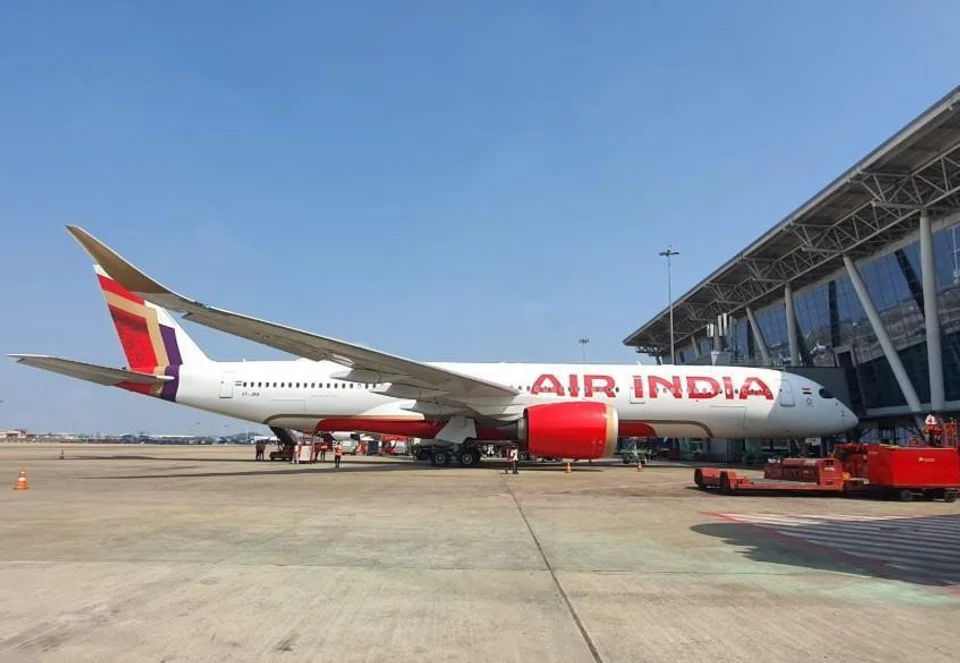
[SINGAPORE] Singapore Airlines’ ( SIA ) decision to embed a limited number of executives deep into Air India’s operations is a positive move to protect an asset battered by record losses and entrenched cultures, said aviation industry analysts.
Linus Benjamin Bauer, founder of aviation consultancy BAA & Partners, called it a direct response to deep-rooted operational failings, but warned that it faces execution risks.
“This is a capability transplant, not a leadership transplant – and that distinction matters.”
Bloomberg News on Apr 23 reported that the Singapore flag carrier is moving executives into key roles across Air India’s flight operations, engineering and maintenance.
This marked an escalation in SIA’s engagement, giving it a more hands-on presence in India’s flag carrier.
SIA has had a 25.1 per cent stake in Air India since the latter’s 2024 merger with Vistara. Founded in 2013, Vistara was a joint venture between SIA and Tata Sons.
Tata retains a 74.9 per cent stake in Air India.
In response to queries from The Business Times, SIA said that it has been “working closely” with Tata to “support Air India’s transformation programme”.
“This includes providing our expertise to Air India, where necessary,” it added.

Air India did not respond to queries from BT.
With Air India’s losses swelling to about US$2.4 billion in 2025, the lack of visibility on when it can turn a profit is a growing worry. In the third quarter ended Dec 31, 2025, SIA’s losses from associated companies – mostly from Air India – hit S$178 million.
Retail investors who hold SIA shares for steady dividend yields have been spooked by the increasing drag Air India has exerted on earnings.
Some have called for SIA to divest its Air India stake. But analysts say that exiting – especially now – is ill-advised and too difficult.
Kapil Kaul, CEO of aviation market intelligence company Capa India, cautioned against overstating the severity of the executive transfers.
“Sending a few more is obviously a reflection that operational stability is critical,” he told BT. “I don’t honestly read too much into a few executives coming into Air India.”
Capability transplant
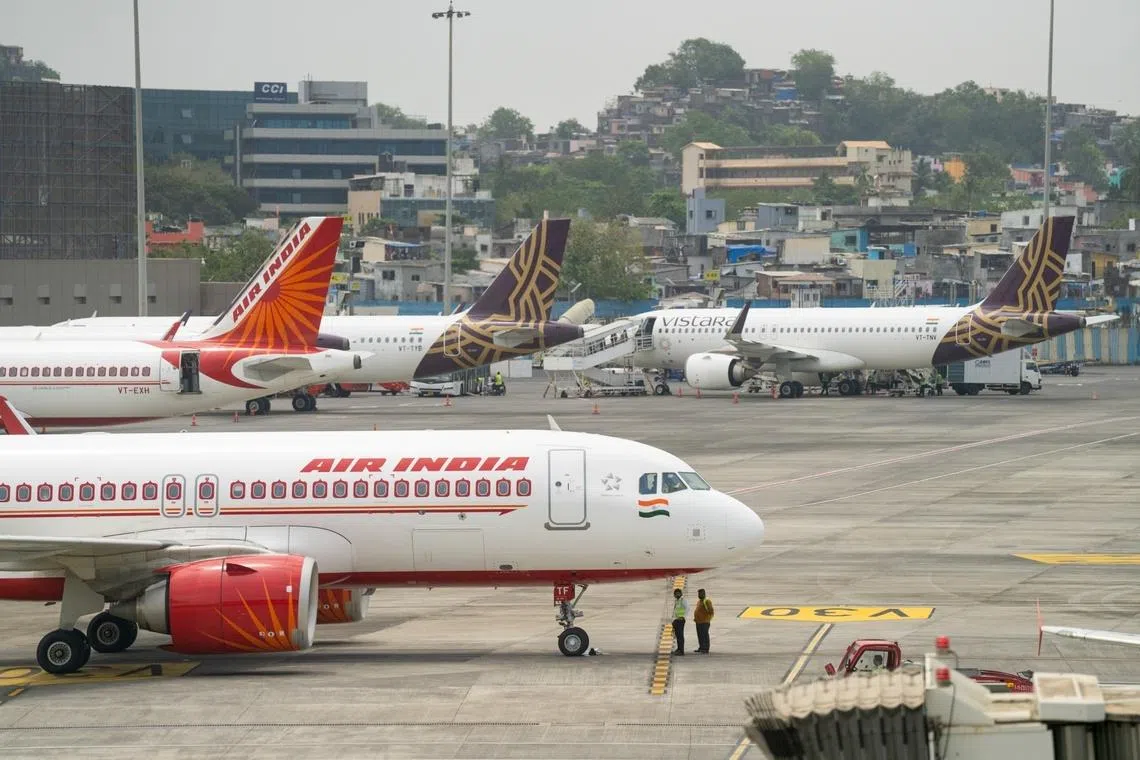
Analysts believe that SIA’s move is a rescue mission, for a transformation that has proven more complex than Tata anticipated when taking a controlling stake.
BAA’s Bauer said that SIA having its people in Air India “means embedding institutional knowledge at the working level”.
“SIA knows what ‘good’ looks like in these domains at a granularity very few carriers can match,” he added.
Maintenance is a particularly large challenge.
Data from India’s civil aviation ministry shows that 82.5 per cent of Air India’s aircraft analysed since January 2025 had recurring technical defects. The figure was 36.5 per cent for rival IndiGo.
There have been Air India planes flown without airworthiness certificates, and regulatory lapses flagged by European regulators.
However, Bauer warned that SIA’s rigorous standards risk triggering a “cultural antibody reaction” within Air India’s heavily unionised, tenured workforce.
“SIA executives arriving with process rigour that Air India’s middle management hasn’t been socialised into can trigger passive resistance: compliance on paper, non-compliance in practice.”
He added that any split operational structure between SIA and Tata would require active management to prevent contradictory signals at the ground level.
Less optimistic was Shukor Yusof, founder of advisory and research firm Endau Analytics, who said the move would not be effective “at all”.
“It’s too much to expect Air India employees to respond efficiently and quickly to ‘outsiders’ who have been parachuted in and may not have a good grasp of the local work culture,” he said.
CAPA India’s Kaul, however, dismissed concerns over a culture clash, arguing that temporary friction is a necessary price for transformation.
“If you are bringing in world-class standards, world-class processes, world-class execution, which is what SQ is known for… even if there is initially going to be some issue, I think that’s par for the course,” Kaul said. “That’s good for Air India. The way things have been working would obviously need to be re-looked at and changed.”
Active protection upgrade
Mayur Patel, regional sales director at travel data provider OAG, said that Air India’s bid to return to its 1970s world-class status has been hampered by external shocks and structural resistance.
About 16 per cent of Air India’s total passenger capacity has been grounded.
“The operational escalation… suggests SIA is now treating Air India not as a portfolio investment but as an asset that requires active protection,” Patel said.
An early shock was in April 2025, when Pakistan closed its airspace to Indian aircraft, forcing those heading to Europe or North America to reroute over the Arabian Sea.
This added up to four hours per journey and an estimated US$600 million in additional annual costs for Air India, said Patel.
The ongoing Iran war has closed another key corridor, hindering access to a region that accounts for nearly half of India’s international passenger traffic.
The added distance means flights such as those from Delhi or Mumbai to New York now have to make a fuel stop in Rome. Jet fuel costs have doubled on some routes, while popular destinations like Dubai have seen demand fall sharply.
OAG data shows that Air India and Air India Express shed over 500,000 seats worth of passenger traffic in April, down 8 per cent from a year earlier.
Yet, SIA still views its Indian investment as a key long-term strategy, given the country’s fast-growing middle-class and massive diaspora.
A longer game
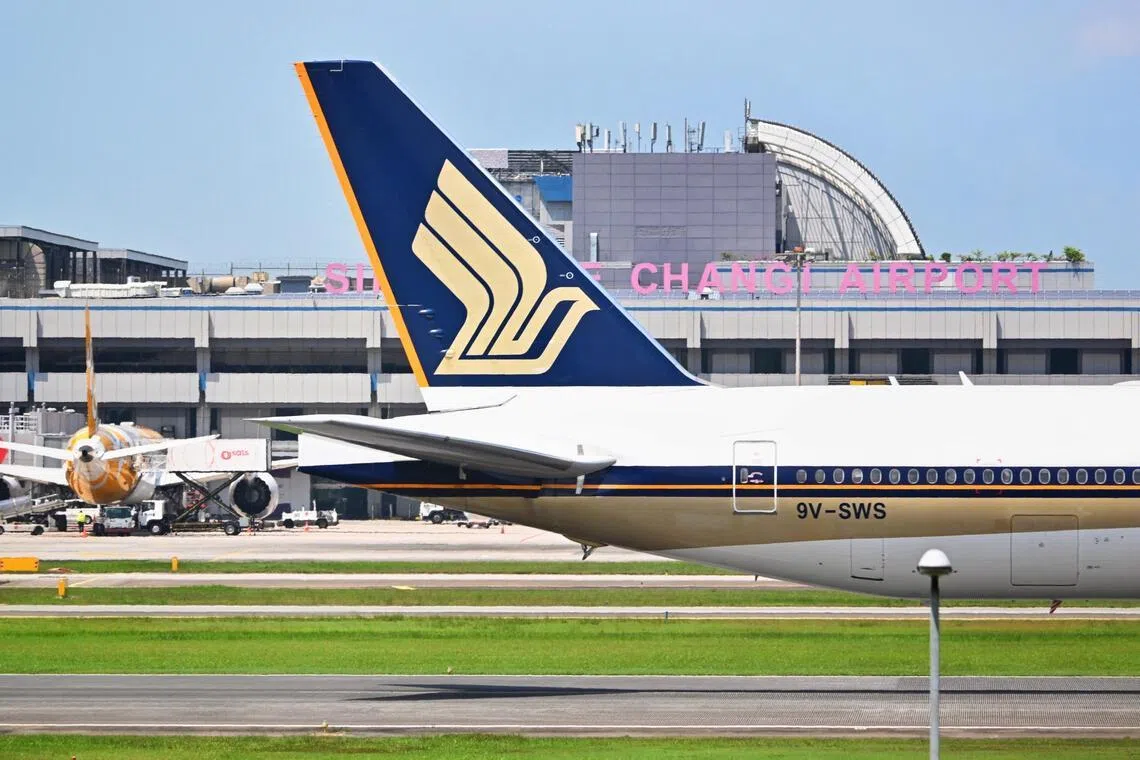
Bauer noted that the airline’s revised plan could push the break-even for SIA’s investment towards FY2029 or FY2030, with FY2028 being the earliest window for operational stabilisation.
This is a significant delay from original estimates, creating a “genuine investor relations challenge” for the Singaporean carrier, he added.
“From a profitability standpoint, they need to be a little more patient,” CAPA India’s Kaul noted, estimating that financial stability is at least three years away. “As long as you stabilise the operation and stabilise the product… that’s a good launching pad to look ahead towards profitability.”
Endau Analytics’ Shukor said SIA would not have an “easy way out” even if it wanted to divest, due to how deeply it is “financially and physically” embedded.
“SIA has said it is in it for the long term, so I guess they’re comfortable to take losses for another decade at least.”
Still, most analysts view SIA’s move as logical.
OAG’s Patel said that “none of (the) structural logic” behind investing in the Indian aviation market has changed. “What has changed is the timeline and the cost of getting there.”
In a February white paper, Alton Aviation Consultancy forecast that India will be one of the fastest-growing air travel markets between 2024 and 2044.
“SIA’s India bet was always strategically sound,” said Patel, noting that it provides protection against Gulf carriers’ longstanding bypassing of Singapore as a transit hub on Europe-Asia routes.
Decoding Asia newsletter: your guide to navigating Asia in a new global order. Sign up here to get Decoding Asia newsletter. Delivered to your inbox. Free.
Copyright SPH Media. All rights reserved.