DPM Gan warns of 3 structural shifts to the global system that will bring greater challenges – and opportunities
The maritime system is becoming more intertwined with geopolitical competition, he says at the Singapore Maritime Lecture

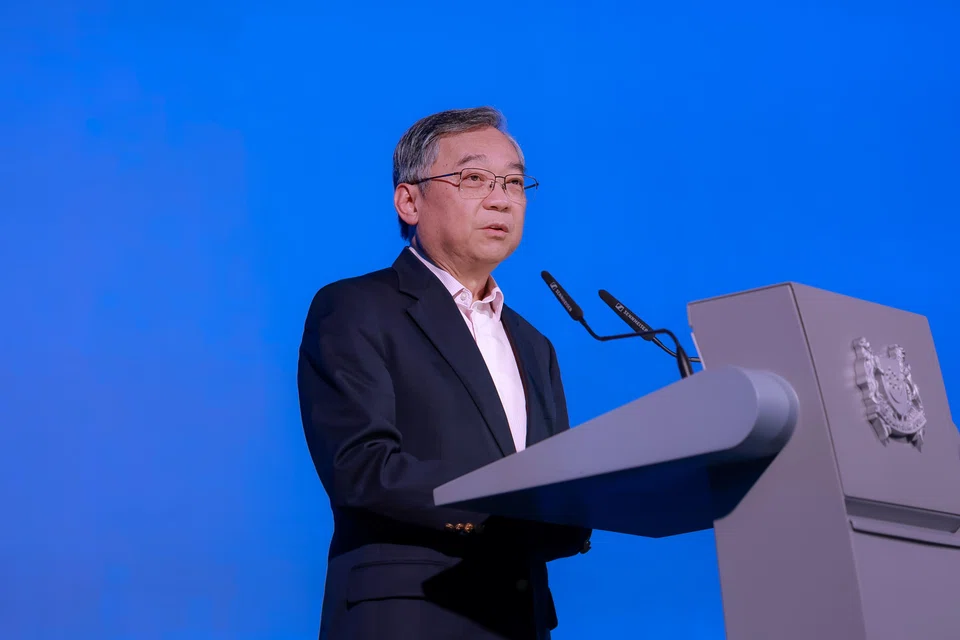
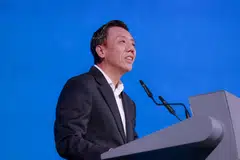
[SINGAPORE] Three structural shifts in the global system will introduce greater challenges, but will also open up new opportunities for businesses and people, said Deputy Prime Minister Gan Kim Yong on Tuesday (Apr 21).
Delivering the Singapore Maritime Lecture, Gan – who is also the minister for trade and industry – identified the shifts as:
One, that trade and connectivity are not purely economic any more, but increasingly shaped by strategic and security considerations.
Supply chains are being reconfigured for resilience as well as for efficiency, even as governments and firms reassess dependencies, diversify supply sources and/or build redundancy into their networks.
Export controls, sanctions and investment restrictions are getting more prevalent, and ocean trade lanes are also being evaluated for risk and reliability, on top of efficiency.
“As a result, the maritime system is becoming more congested, and more closely intertwined with geopolitical competition,” he said.
Two, the fragmentation of rules as regulatory regimes are diverging across jurisdictions; dispute resolution mechanisms are under pressure, and the coordination of crisis responses is becoming more difficult.
“For maritime actors, this means greater uncertainty and complexity,” he added.
Three, digitalisation, energy transition and artificial intelligence (AI) adoption are taking place across supply chains and maritime operations.
SEE ALSO
On his point that these shifts would present greater challenges as well as create opportunities for businesses and people, he said the firms that can quickly adapt to reconfigured supply chains and new standards will be better positioned to compete.
Logistics optimisation, maritime digital services, green shipping and alternative fuels are also emerging, and will create new layers of value in the maritime ecosystem.
New roles and new capabilities will emerge for workers. These range from roles in data and AI specialisation, supporting logistics and port operations, to those in engineering and technical work dealing with new fuels and sustainable infrastructure.
“But to seize these opportunities, we will need to keep systems connected, interoperable and trusted. This is why strengthening the connective infrastructure of the global system is so critical.”
Maritime hubs are central to this, he added.
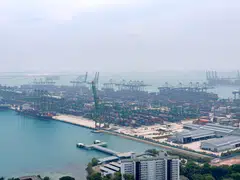
Hubs such as Singapore, which anchor connectivity, standards and trust, become even more important when pressures are pulling systems apart.
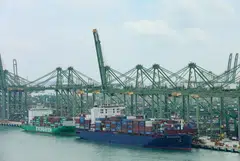
Singapore is the world’s busiest transshipment port, connected to more than 600 ports worldwide. When its Tuas Port is fully operational in 2040s, it will be the world’s largest fully automated container port with an annual handling capacity of 65 million 20-foot-equivalent units.
In the area of shaping standards, Singapore is working with partners in the areas of digitalisation and decarbonisation.
Oceans-X – a unified digital platform enabling seamless data sharing among regulators, port operators, shipping lines and other international partners – is one way that Singapore is building common, standards-based data.
The Republic has also begun to develop multiple net-zero fuel pathways for the maritime industry’s green transition; it has awarded methanol bunkering licenses and introduced a technical reference for methanol.
“Standards enable interoperability. They improve efficiency. And increasingly, they build trust,” said Gan.
He also talked about Singapore’s maritime ecosystem being built on the rule of law, transparent governance and a thriving ecosystem of services. These give confidence to the industry that international frameworks will be respected, ports will operate reliably, rules will be applied consistently, and contracts will be honoured.
“In a fragmented system, trust carries a premium,” he said.
Singapore is committed to upholding the United Nations Convention on the Law of the Sea as the legal framework that underpins navigational rights and freedoms, including the right-of-transit passage, for maritime trade.
The Republic reinforces its relevance in the global network by being deeply engaged in institutions and partnerships that support global trade as well, including the Comprehensive and Progressive Agreement for Trans-Pacific Partnership.
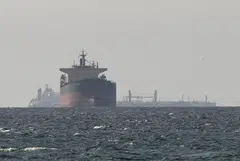
Referring to the repercussions caused by the events in the Strait of Hormuz, Gan said the question is not whether shocks will occur in the future, but whether Singapore’s systems are able to absorb them, and continue to function.
“That is the task before us – and we must approach with resolve, with cooperation, and with a shared commitment to keeping the world connected.”
The lecture was part of the 20th Singapore Maritime Week, which is taking place at Suntec Singapore Convention and Exhibition Centre until Friday.
Decoding Asia newsletter: your guide to navigating Asia in a new global order. Sign up here to get Decoding Asia newsletter. Delivered to your inbox. Free.
Copyright SPH Media. All rights reserved.