

Hidden value: Why SGX consumer stocks deserve a closer look
Fund money is quietly moving from the consumer names everyone knows to the ones they have overlooked

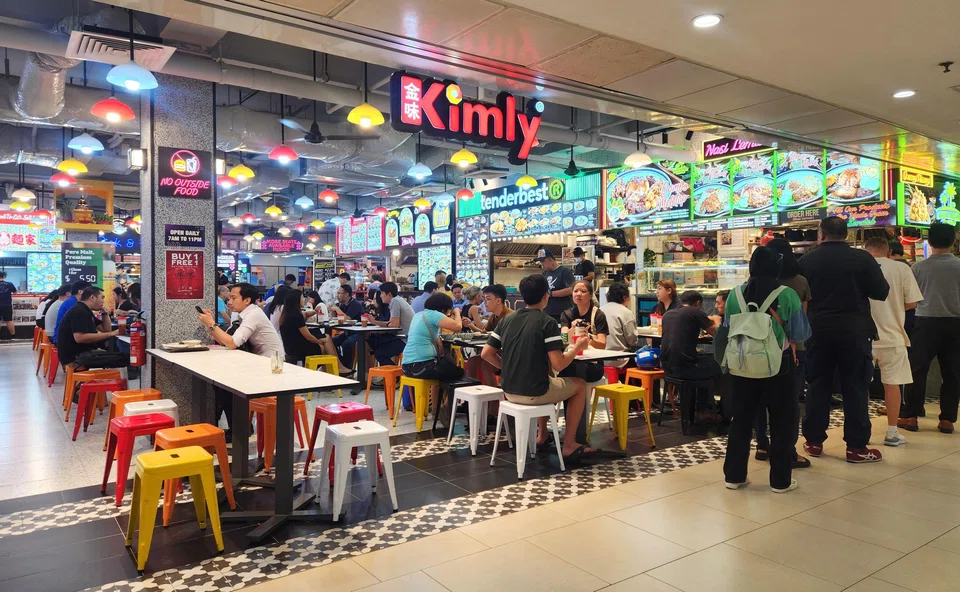
[SINGAPORE] In March 2025, Kimly paid S$13.2 million for a coffee shop in Serangoon Central; the unit came with a three-room flat upstairs. Six months later, it paid S$11 million for another one on Yishun Ring Road, which also had a flat on top.
Deals like these rarely make headlines. Kimly sells coffee, mixed rice and dim sum across more than 90 outlets, mostly in Housing & Development Board (HDB) estates; DBS reckons it holds about 9 per cent of Singapore’s coffee shop market. Most investors know it as a steady dividend payer on Catalist, if they know it at all.
What it has been buying is more interesting, though. HDB stopped selling coffee shops in 1998, so only about 400 of them can change hands on the open market, and the busy ones rarely come up for sale.
Kimly now owns seven of the HDB coffee shops it runs, along with a shophouse and a few industrial canteens.
The group generates property and rental revenue through its outlet investment business division, where revenue climbed more than 40 per cent to S$5.1 million in the six months to March.
Think of it as a coffee shop operator slowly becoming its own landlord. RHT Capital’s Paul Schymyck has called it “a very shrewd move given Singapore’s soaring rentals”.
Kimly now wants a bigger stage as well: in August, it said it would move its listing from Catalist to the mainboard of the Singapore Exchange (SGX).
Kimly is a small example of a bigger point. While artificial intelligence has hogged the headlines, Singapore’s everyday consumer stocks have had a quiet year.
Setting aside the palm oil and plantation-related groups, and the other five names on SGX’s list of its most-traded consumer staples have returned about minus 2.7 per cent on average this year up to Oct 21, according to SGX and Bloomberg data.
SEE ALSO



Sheng Siong is the clear leader of the pack, generating a total return of 11.4 per cent. But the fund flows tell an interesting story. Institutions have been net sellers of Sheng Siong, taking out S$35.6 million this year.
Over the same period, they have put S$16.1 million into Food Empire and S$10.1 million into DFI Retail , even though Food Empire has returned 1 per cent for the year and DFI’s total returns are down 11.8 per cent.
The money, in short, is drifting from what has already worked to what has been overlooked. The next leg belongs to companies working on their own discount, whether by moving boards, spinning off units, selling legacy businesses or handing back cash.
For investors willing to look past the usual names, that is where the hidden value now sits.
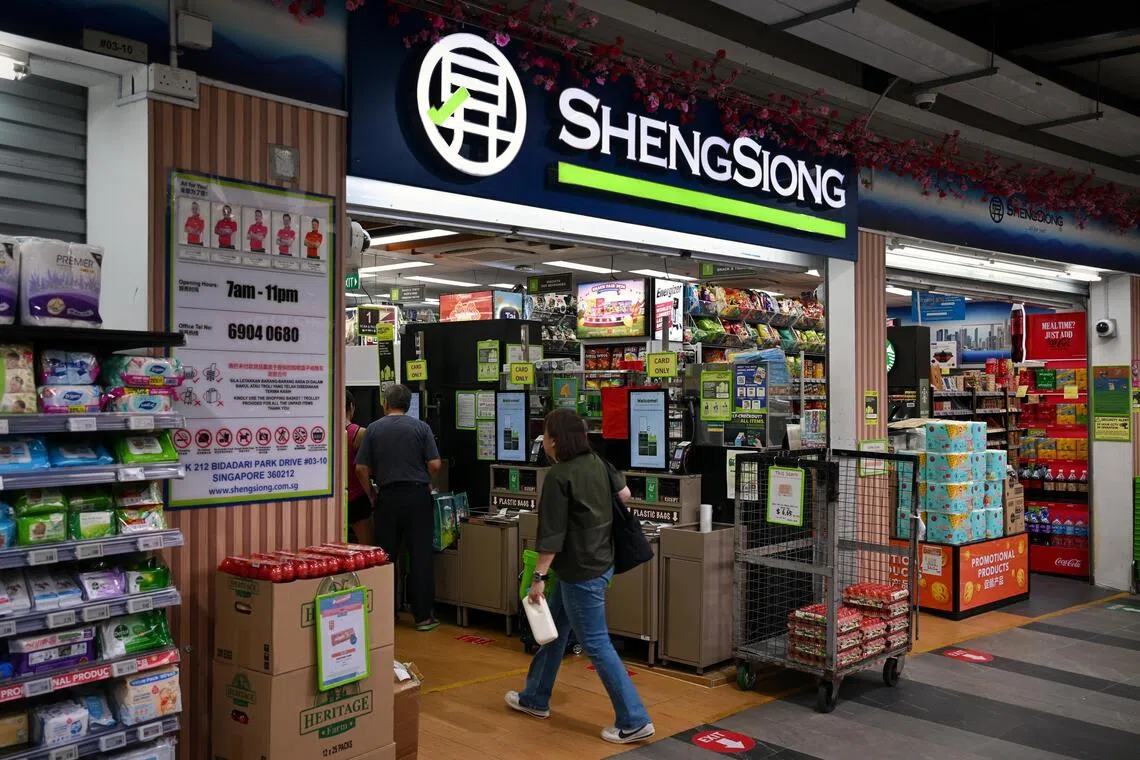
Supermarket sweep
Supermarket chain Sheng Siong has been the steady winner, helped by new stores and fatter margins. It also picked up shoppers as rivals Giant and Cold Storage shut outlets, while government vouchers steered more household spending to its tills.
Much of that is now in the price, and the funds selling it seem to know it. When Maybank cut Sheng Siong to “hold” in October, analyst Hussaini Saifee wrote: “Sheng Siong remains a high-quality operator, but its strong share-price rerating now prices in much of it.”
At about 28 times this year’s earnings, it is among the region’s priciest food retailers.
Some tailwinds are also fading. A tranche of CDC Vouchers was brought forward to June, which lifts this year but raises the bar for next, and Cold Storage’s new owner is expanding again with smaller convenience stores.
DFI sits at the other end of the shelf. Its shares are down, yet institutions have been net buyers. The group runs the Guardian health and beauty chain and 7-Eleven stores here; DBS, studying how the RTS Link to Johor Bahru will affect spending in Singapore, expects both to hold up.
“Supermarket and health and beauty spending should remain resilient, supported by domestic consumption and the convenience-led nature of these categories,” DBS analysts said in a recent report, adding that they prefer DFI to Sheng Siong on valuation.
A discount with a reason
Food Empire is the starkest case of funds buying what the market has shunned.
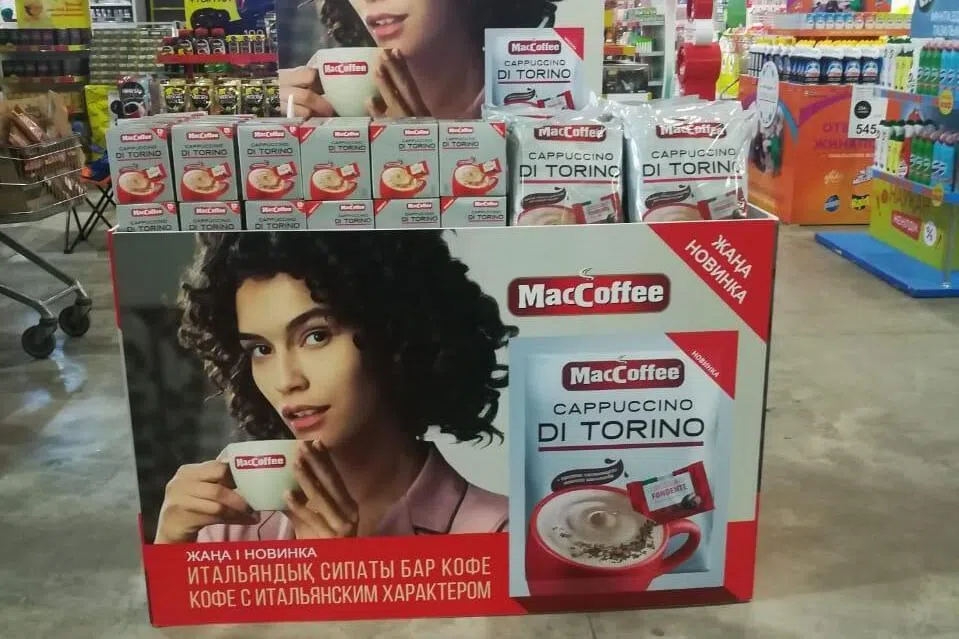
Food Empire makes three-in-one coffee mix under brands such as MacCoffee and Cafe Pho. Russia is its biggest market, and it also sells across Central Asia, South-east Asia and South Asia.
On paper, the company has rarely looked better. First-half revenue rose 15 per cent to a record US$315.1 million and the interim dividend went up to S$0.04 from S$0.03.
A one-for-five bonus issue in June was meant to make the shares easier to trade and more appealing to funds.
The market has gone the other way. The shares were about S$2.51 when its H1 results came out in August, and had sunk to around S$1.85 by mid-October.
The slide picked up pace in September, after reports that Russia was moving against companies from countries seen as backing Ukraine, and after Moscow stepped into Nestle’s local business.
Food Empire responded that its Russian business was running as normal, and on the day its shares fell 10 per cent, it bought back 500,000 of them, well above its usual daily pace.
The way UBS analyst Bernice Chew sees it, investors “remain overly focused on Russia-related risks and underappreciate the group’s future earnings capacity”. In August, she reckoned the share price already implied about a 50 per cent discount on the Russian business, and the shares fell another fifth by mid-October.
She also likes where the products sit, priced above the cheapest instant coffee but well below a caffe latte, which means Food Empire can gain whichever way shoppers move.
UOB Kay Hian’s John Cheong is more direct. “Linear extrapolation from Nestle to (Food Empire) is analytically unsound,” he said, noting that the stock trades at about 12 times 2027 earnings, against 20 times for its peers.
But not everyone is a believer.
“Revenue beat, but it is the only line that beat,” RHT Capital’s George Koh wrote after the results. He added that the jump in H1 profit is flattering because last year’s figure carried a one-off charge; strip that out, and profit grew about 12 per cent.
DBS, meanwhile, trimmed its forecasts because creamer, whose price tracks palm oil, ate up the savings from cheaper coffee.
So the discount has a reason. The question is whether it is too big.
Moving up a board
Kimly’s mainboard move, meanwhile, is a bet that a bigger stage will bring bigger investors.
DBS expects shareholders to vote on it in late January, with the transfer to follow in February.
DBS analyst Chee Zheng Feng reckons Kimly clears the mainboard bar easily. But “a transfer alone is unlikely to drive a sustained uplift in trading volumes”, he said, and it needs to be backed by “active investor engagement and appropriate corporate actions”.
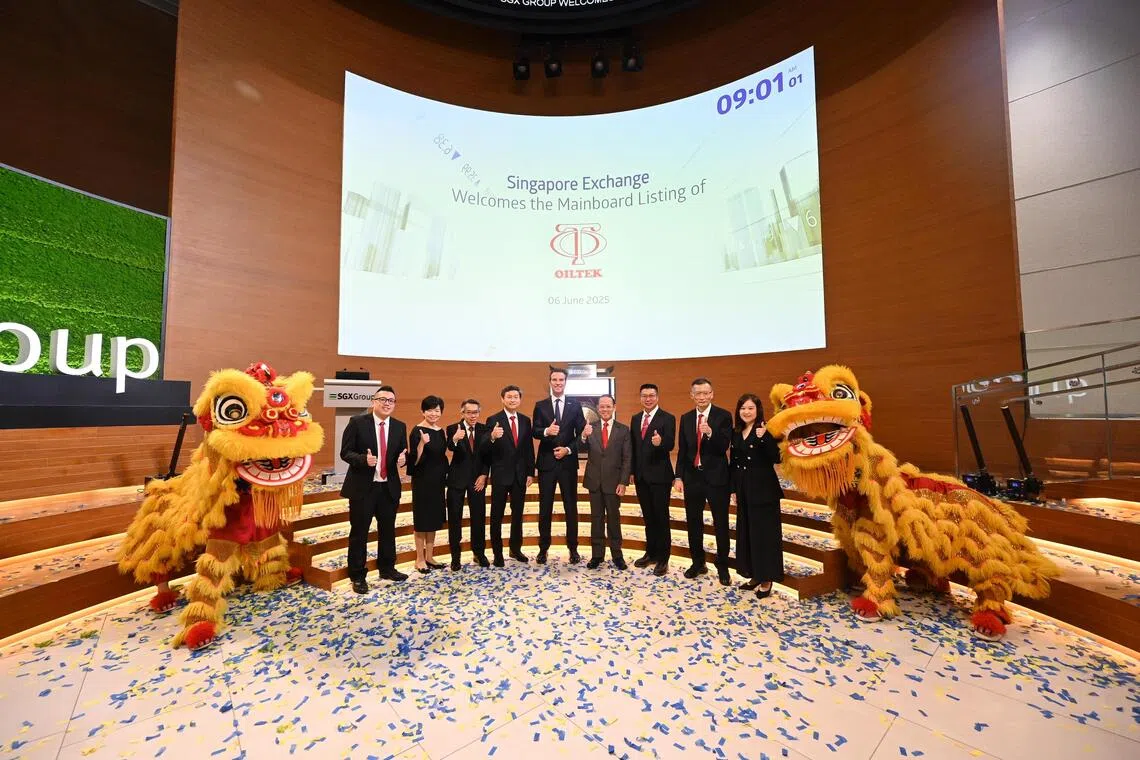
Past transfers bear this out. The average daily trading value of Oiltek jumped from about S$24,000 to S$729,000 in the six months after its move, while that of LHN fell from S$296,000 to S$86,000.
RHT’s Schymyck thinks Kimly has a decent story to tell investors; with Koufu and BreadTalk having been taken private, Kimly is one of the few mass-market food plays still on SGX.
The near term has its tests, though. The early CDC Voucher payout, which can be spent at Kimly’s coffee shops, gives it a lift this year and a higher bar next year.
Aspial Lifestyle has already made the jump to the big leagues.
The group behind the Maxi-Cash pawnshops and the Lee Hwa and Goldheart jewellery brands raised S$84.8 million in May and June. That included a S$60 million placement at S$0.402, which was more than twice covered. It moved to the mainboard shortly after.
The results have backed it up. H1 revenue rose 26.4 per cent to a record S$464.2 million, net profit jumped 88.7 per cent to S$55 million, and the interim dividend more than doubled to S$0.09.
The market may still have the wrong label on it, though. UBS points out that retail now brings in about 60 per cent of pre-tax profit, up from about 20 per cent in 2019, but the stock trades at about six times earnings. That is closer to a pawnbroker than to Asian jewellers, which trade at around 11 times.
In other words, it is a jeweller priced like a pawnshop. Investors who missed the placement may not mind: In late September, the shares were around S$0.35, below what the funds paid in May.
Breaking up, cleaning up
Other groups are reshaping themselves so that investors can see what the parts are worth.
Thakral is the boldest.
In September, it said it plans to list its lifestyle arm on the mainboard. The unit sells premium beauty and fragrance brands – largely in mainland China, Hong Kong and Macau in Greater China – distributes DJI drones in South Asia and runs Nespresso in India; it is also growing fast.
Lifestyle revenue rose 34 per cent in H1 and segment profit climbed 47 per cent to S$10.7 million. Thakral will keep a majority stake and the listing will raise new money, though its size and timing have yet to be set.
This would be Thakral’s third spinoff in two years, after GemLife in Australia and Beauty Tech Group in London. CEO Bethal Thakral has described it as putting a firm value on a business whose worth today is “subjective”.
Jardine Matheson Southeast Asia has taken the simpler route of selling. The group previously named after bicycles and horse carriages is getting out of selling cars in Singapore.
After a strategic review, it agreed in August to sell its Singapore and Malaysia dealerships to Indonesia’s Chandra Asri for S$265 million, plus up to S$30 million more. It has also declared a special dividend and renamed itself from Jardine Cycle & Carriage.
DBS reckons the price, at 6.6 to 7.3 times earnings, beats the roughly six times that listed car dealers fetch.
The sale leaves the group more plainly a holding company for the Jardine group’s stakes in South-east Asia, with most of its earnings coming from Indonesia through Astra International. DBS believes the deal sharpens its focus on Indonesia and Vietnam, and most of the proceeds will go towards cutting debt.
Metro , which began as a textile shop on High Street in 1957, is now mostly a property group, and it has run the rule over what is left of its retail arm.
It will close its last two department stores, at Paragon and Causeway Point, when their leases end and move to smaller concept stores. It also raised S$116 million from asset sales in its latest financial year.
Some companies need no makeover at all. The Hour Glass grew profit 32 per cent to S$179.5 million in the year to March, on revenue of S$1.34 billion. It has no debt and S$157.5 million in cash, and has been spending some of it abroad, buying a Melbourne-based watch retailer for S$75.3 million last year.
Management has warned that geopolitical and economic worries may dampen luxury spending, though it still expects the group to stay profitable this financial year.
The next names
The listed pool could also get bigger. Many of Singapore’s best-known consumer brands are still private, from shoe and bag label Charles & Keith and gaming chair maker Secretlab to F&B group Fei Siong and flour miller Prima.
So are grocery chain Scarlett Supermarket and salad chain SaladStop, along with consumer tech names such as ShopBack and Carousell.
Thakral shows one way new names can arrive: carved out of a listed parent, with a track record already attached. The Monetary Authority of Singapore’s push to deepen trading in small and mid-sized stocks may tempt a few more to follow.
Of course, none of this makes consumer stocks a one-way bet. Food Empire still has a Russia question to answer, and the RTS Link will test how much heartland spending stays on this side of the Causeway.
Still, the broad picture is clear. The consumer names everyone knows are priced for success and the funds have started to take money off the table.
The companies worth a second look are the ones taking steps to close their own discount, whether by owning their premises, moving to a bigger board or listing a fast-growing unit on its own. They are where investors should look next.
Decoding Asia newsletter: your guide to navigating Asia in a new global order. Sign up here to get Decoding Asia newsletter. Delivered to your inbox. Free.
Copyright SPH Media. All rights reserved.
TRENDING NOW

Government to bring forward raising of retirement age, give employers more financial support to create flexi-load jobs

If Europe goes to war, the fallout will be felt in East Asia

Indonesia stocks suffer worst plunge in nearly 30 years as MSCI proposes standalone status

Vietnam’s northern provinces, not Hanoi or Ho Chi Minh City, are powering near 10% GDP growth

