

UOB’s Wee Ee Cheong says S$4.9 billion Citi deal ‘paying off’ as Asean push accelerates
The lender also flags minimal private credit exposure, and says its balance sheet can absorb Middle East shocks

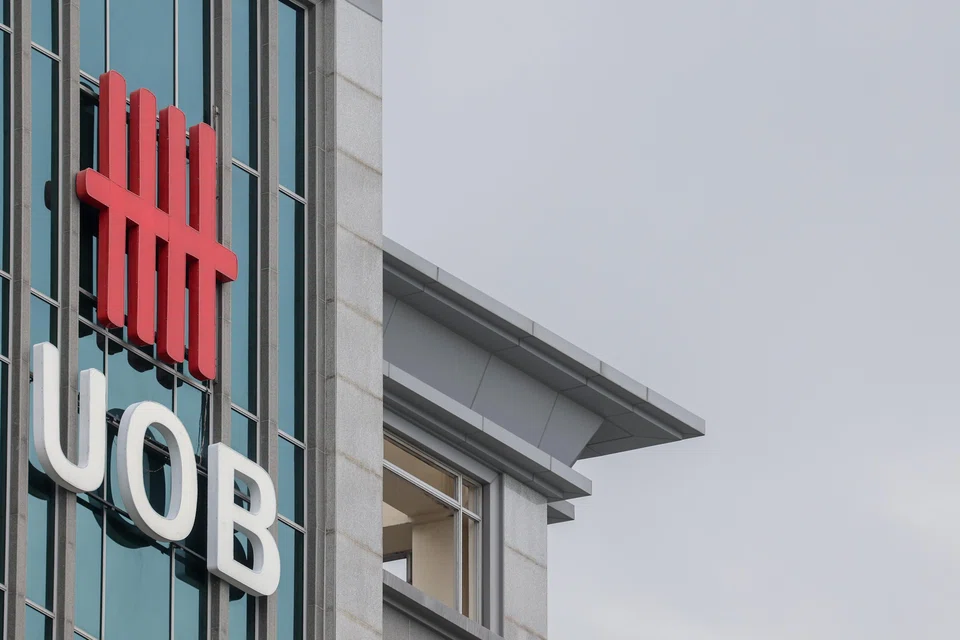
[SINGAPORE] UOB’s S$4.9 billion acquisition of Citigroup’s retail banking businesses in Indonesia, Malaysia, Thailand and Vietnam is now “paying off”, as the lender steps up its push into Asean, said its deputy chairman and chief executive Wee Ee Cheong.
The deal, first announced in 2022, has helped double UOB’s customer base across the four markets, after a “fair bit of time” was needed to integrate the acquired businesses, he said on Friday (Apr 17). He was responding to shareholder questions at the bank’s annual general meeting (AGM) at the Sands Expo and Convention Centre.
“We must then continue to invest in the infrastructure to capture customers,” said Wee, noting that Asean customers are not a homogenous group, with each market having different languages and customer needs.
That means continued investments in areas such as the alignment of technology platforms to better serve customers, as well as broader spending plans for the decade leading up to the bank’s centenary, he added, in response to a shareholder question on the bank’s growth plans for the next 10 years.
UOB marked its 90th anniversary in 2025.
The four markets make up UOB’s “Asean-4” segment, which posted total income growth of 5 per cent for the 12 months ended Dec 31, 2025, outperforming the group, where total income fell 3 per cent.
Even as UOB expands its regional capabilities, the bank remains disciplined about how it competes.
For instance, while domestic lenders are strong in their home markets, they “have hardly any presence” outside their own countries, leaving UOB well-placed to “align the Asean interest in connectivity”, Wee noted.
“We should be able to double down on wealth because we have the customer base,” he said. “It would be unwise for us not to take advantage.”


On wholesale banking, he said strong foreign direct investment inflows into Asean and robust trade loan growth in FY2025 also present opportunities.
Private credit, Middle East risks
Another shareholder question centred on UOB’s exposure to private credit, amid ongoing stresses in the US private credit market.
Wee said the lender has no direct exposure to private credit, while any indirect exposure is “very immaterial”.
“Singapore (is) full of banks, you don’t need private credit,” he quipped.
Asked how the ongoing war in the Middle East could affect the bank, particularly among small and medium-sized enterprise borrowers, Wee said stress tests indicate the lender “should be able to manage”.
Its balance sheet is also “strong enough” to absorb potential bad loans, he said, when asked if UOB expects additional provisions.
UOB has guided for credit costs to normalise to 25 to 30 basis points in FY2026, after total credit costs rose to 55 basis points in FY2025, following additional pre-emptive provisions booked in the previous financial year.
UOB was the last of Singapore’s three local banks to conduct its AGM – all at the same venue – after DBS held its meeting on Mar 31 and OCBC had its AGM on Apr 16.
Resolutions passed at Friday’s AGM included one to re-elect Wee as a board director. He has served on the board since January 1990, as deputy chairman since March 2000, and as chief executive since April 2007.
Shares of UOB closed 0.3 per cent or S$0.12 lower at S$37.40 on Friday. In the year to date, the counter is up 6.1 per cent.
Decoding Asia newsletter: your guide to navigating Asia in a new global order. Sign up here to get Decoding Asia newsletter. Delivered to your inbox. Free.
Copyright SPH Media. All rights reserved.
TRENDING NOW
Malaysian king buys stake in Singapore-listed mining firm expanding into rare earths

Grab CEO’s wife Chloe Tong on life with Anthony Tan and finding her purpose

Once staunchly pro-China, Malaysian Chinese businesses are now distancing themselves from Beijing
Longer wait times expected as S’pore healthcare institutions report system disruptions

