Wealthy clients stocking up on Singapore equities to hedge against sliding greenback: BOS
The increase marks a sharp acceleration from the typical pace of growth in Singapore-focused allocations

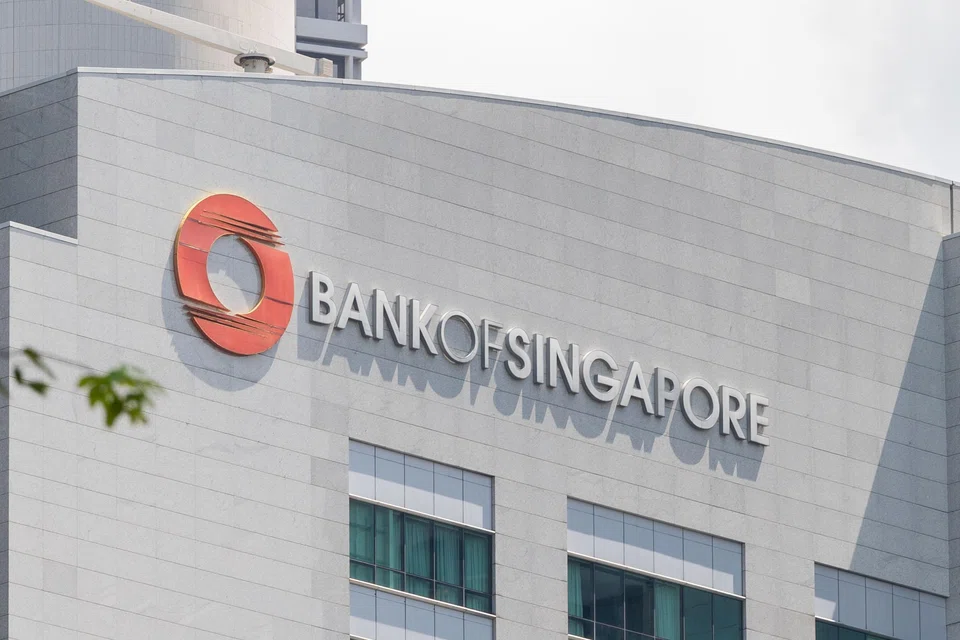
[SINGAPORE] Allocations to Singapore dollar assets through discretionary mandates at Bank of Singapore (BOS) doubled year on year in 2025, as wealthy investors and family offices sought to hedge against US dollar exposure amid weakness in the greenback.
The surge marked a sharp acceleration from the typical pace of growth in Singapore-focused allocations, which is usually in the single digits.
The private banking arm of OCBC said on Wednesday (Jan 7) that assets under management (AUM) in its Singapore-focused discretionary portfolio management (DPM) mandates also grew faster than its overall DPM asset base, which expanded by nearly 20 per cent over the year.
These mandates typically allocate between 40 and 95 per cent to Singapore equities, with the remainder invested in Singapore dollar-denominated bonds and cash.
Under the DPM structure, clients delegate day-to-day investment decisions to the bank, which manages portfolios in line with an agreed mandate and risk profile.
This contrasts with traditional advisory arrangements, where relationship managers propose investment ideas, but clients retain final decision-making authority on each trade.
In the past two years, BOS has observed rising interest among clients – particularly those from China, Hong Kong, Malaysia and Singapore – in diversifying away from US dollar exposure, global chief investment officer Jean Chia told The Business Times.
“You’ve seen the US dollar coming down 9 to 10 per cent (in that period) – just doing nothing, you already see a depreciation in your portfolio,” said Chia.
“That has prompted more clients to explore avenues of how they can mitigate this risk, and provide a hedge for their overall portfolio. The Singdollar is one of the candidates.”


Over the past year, the greenback has fallen more than 6 per cent against the Singdollar.
Even so, clients have generally not rotated out of US dollar assets to fund their Singapore investments, Chia noted, but have added Singdollar exposure alongside existing US holdings.
“I won’t say that it’s zero sum, like ‘Oh, I’m out of US dollars.’ No, not at all,” she added. “I’ll say it’s more complementary.”
Beyond fresh inflows, growth in discretionary AUM was also supported by equity market performance.
Singapore-focused mandates delivered double-digit returns in 2025, with one mandate achieving annualised returns of 12 per cent over the past five years, outperforming the MSCI Singapore Index.
With dividend yields of around 4 to 5 per cent, the Singapore market also offers “attractive income” for investors seeking stability and sustainable long-term returns in a low-interest rate environment, the private bank said.
It added: “Furthermore, with property cooling measures limiting foreign ownership of residential real estate, Singapore equities present a compelling alternative for investors holding Singapore dollars.”
Decoding Asia newsletter: your guide to navigating Asia in a new global order. Sign up here to get Decoding Asia newsletter. Delivered to your inbox. Free.
Copyright SPH Media. All rights reserved.