

Why tech, data centre IPOs are facing delays – and what investors can expect of the market now
Market volatility and rising interest rates are some reasons for the pause on listings

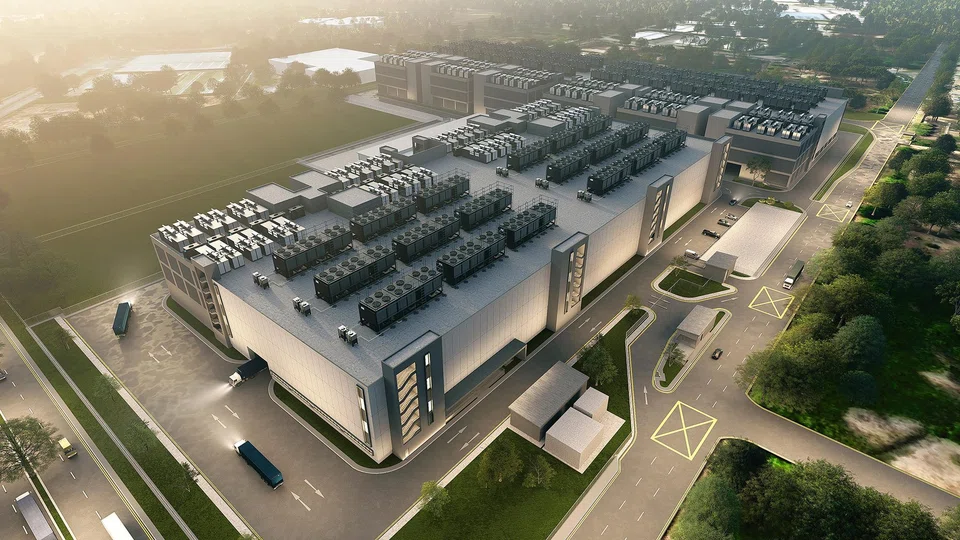
[SINGAPORE] Major tech, artificial intelligence and data centre companies have put the brakes on their initial public offering plans since September, citing uncertain market conditions.
This includes the proposed listing of Blackstone-backed Airtrunk’s Singapore real estate investment trust (Reit), which could have raised US$1.5 billion, and Australia-based data centre operator Firmus’ potential IPO, which was withdrawn in October.
AI giant OpenAI is another player which has delayed its listing, with founder and CEO Sam Altman saying it will not go public in 2026 amid AI safety concerns.
So why have these IPOs been paused now, and what can investors expect moving forward? The Business Times spoke to experts to find out more.
Rising interest rate woes
Companies are delaying or shelving listing plans altogether because interest rates have risen significantly in the past month, analysts told BT.
Borrowing costs have risen since the US Federal Reserve hiked rates by 25 basis points on Sep 16 to a range of 3.75 to 4 per cent.
This makes fund raising via equity or bonds more difficult for companies.
Data-centre Reits that pay dividends, in particular, are affected as they must refinance any debt at higher interest rates. This will impact yield as dividends are squeezed by loan repayments.
Reits’ dividends will struggle to outpace rising long yields of government bonds, said Nirgunan Tiruchelvam, head of consumer and Internet research at Aletheia Capital.



In this hawkish environment, asset managers may re-allocate capital away from dividend-paying counters such as Reits into US Treasuries or high-grade corporate bonds.
This puts AirTrunk’s proposed Singapore data centre listing in a bind, said Tiruchelvam.
Reits in Singapore have felt the impact of a higher interest-rate environment, as the benchmark iEdge S-Reit Index has fallen 12 per cent year to date while bond yields escalate.
An overcrowded space
At present there are a number of AI-related projects seeking funding, which is leading to an overcrowded market.
“Companies late to the IPO game are now thinking twice about listing and getting lower subscription (levels),” said Francis Tan, chief strategist, Asia, at Indosuez Wealth Management.
Firmus sought to raise US$5 billion for its IPO on the Australian Securities Exchange. This would have valued the company at US$30.6 billion, nearly triple the US$10.5 billion valuation after its August funding round – an “extravagant price” to experts.
The company would go on to scrap its IPO plans after investors pulled out, with media reports of Firmus seeking private funding instead.
Other companies which have shelved public listings recently include advanced materials manufacturer Amaero and smart ring maker Oura. Both were slated to list in the US in September.
Market uncertainty was a reason for Oura’s IPO delay. It could have been valued as much as US$15 billion, as it sought to raise US$2.2 billion.
IPO underwriters may hesitate amid a volatile market due to risks of undersubscription, and how a strong listing debut is uncertain, said Lorraine Tan, director of equity research, Asia at Morningstar.
She added: “Pulled IPOs...reflect weakness in investor sentiment so companies may not get the pricing they want in the IPO.”
But this is not a sign of the broader AI trade wobbling, said Tiruchelvam.
“The AI trade is becoming more discerning (now). The market now separates those who earn from AI from those who spend on it.”
This is evident within the data-centre space, as traditional data centres firms see their spreads widen, signalling risks. However hyperscalers such as Microsoft, Amazon and Meta have seen the reverse, with their spreads tightening as investors seek less risk.
Some are pushing ahead, however, like Singapore-headquartered data centre operator DayOne.
Not all doom and gloom
DayOne’s revenue more than tripled to US$512 million in the first half of this year, while raising over US$6 billion in equity since 2024 – with no sign of any “forced selling” qualities.
This is “a better story told at a dangerous moment”, amid a data-centre operator listing freeze, said Tiruchelvam.
But he notes the company’s US$20 billion valuation is roughly 20 times annualised sales of US$1 billion based on its Nasdaq IPO filing, with losses widening, too.
Net losses stood at US$81.9 million for the six months ended Jun 30, surging from US$13.5 million a year prior.
“I expect a valuation haircut, not a retreat,” said Tiruchelvam. “But if yields keep climbing, it may join AirTrunk in the 2027 (IPO) queue.”
DayOne officially filed for a US Nasdaq IPO directly in October this year, citing plans to raise as much as US$5 billion.
Previously the company considered a dual listing via the Singapore Exchange’s (SGX) Global Listing Board, though it was not mentioned in the prospectus.
BT understands that a subsequent listing on the SGX has not been ruled out.
Decoding Asia newsletter: your guide to navigating Asia in a new global order. Sign up here to get Decoding Asia newsletter. Delivered to your inbox. Free.
Copyright SPH Media. All rights reserved.
TRENDING NOW

Once staunchly pro-China, Malaysian Chinese businesses are now distancing themselves from Beijing

Stocks to watch: HPL, Aims Apac Reit, Zico, Advanced Systems Automation, ComfortDelGro

‘How many will survive?’: Bubble fears arise as China’s humanoid robotics face reality check

Smaller board lots can’t fix a market run by three banks

