

Japan’s greenhouse gas emissions hit record low in FY2024
This marks a third straight annual decline
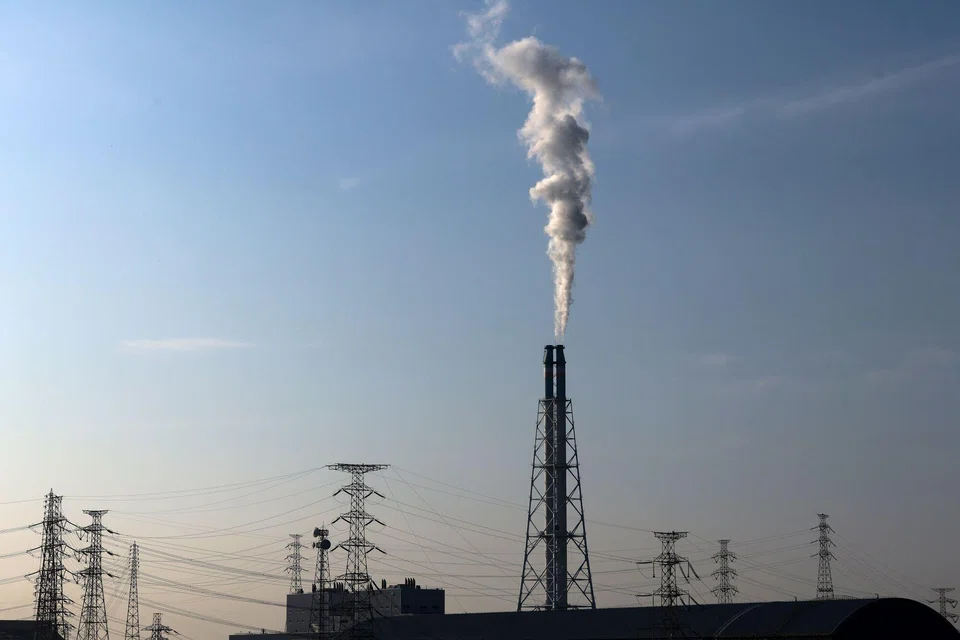
[TOKYO] Japan’s greenhouse gas (GHG) emissions fell by 1.9 per cent in fiscal year 2024, which ended in March 2025, government data showed on Tuesday (Apr 14).
This marked the third straight annual fall and the lowest since records began. It also came on the back of lower manufacturing energy use and greater use of renewable and nuclear power.
Japan’s GHG emissions totalled 1.046 billion tonnes of carbon dioxide equivalent in FY2024, down from 1.067 billion tonnes a year earlier, environment ministry data showed.
The figure marks the lowest level since records began in 1990/91 and the third consecutive annual decline.
By sector, CO2 emissions from industry fell 2.5 per cent, while the commercial and services sector saw a 0.2 per cent increase. Household emissions declined 0.7 per cent, and the transportation sector recorded a 1.6 per cent drop.
Japan aims to cut GHG emissions by 46 per cent from 2013 levels by 2030. The FY2024 figure represents a 24.9 per cent reduction from 2013.
GHG absorption by forests and other sinks fell 2.9 per cent to 52.3 million tonnes, the ministry said, adding that Japan’s total GHG emissions, after accounting for absorption by sinks such as forests, stood at 994 million tonnes, down 1.9 per cent from a year earlier.
Emissions surged after the 2011 Fukushima nuclear disaster, which led to widespread nuclear reactor shutdowns and greater reliance on fossil fuels. They peaked at 1.394 billion tonnes in FY2013, before trending downward, supported by the increased use of renewable energy and the gradual restart of nuclear reactors.
In FY2024, renewable energy accounted for 23.1 per cent of the 991.1 billion kilowatt-hours of electricity generated, up 0.2 percentage points from a year earlier. Nuclear energy contributed 9.4 per cent, up 0.9 percentage points.
Thermal power accounted for 67.5 per cent of total electricity generation, down 1.1 percentage points year on year, consisting of 28.1 per cent coal, 32.2 per cent natural gas and 7.2 per cent oil. REUTERS
Decoding Asia newsletter: your guide to navigating Asia in a new global order. Sign up here to get Decoding Asia newsletter. Delivered to your inbox. Free.
Share with us your feedback on BT's products and services
TRENDING NOW

Government to bring forward raising of retirement age, give employers more financial support to create flexi-load jobs

If Europe goes to war, the fallout will be felt in East Asia

Indonesia stocks suffer worst plunge in nearly 30 years as MSCI proposes standalone status

Vietnam’s northern provinces, not Hanoi or Ho Chi Minh City, are powering near 10% GDP growth

