Low-carbon transition to face ‘stronger headwinds’ at COP31, says Grace Fu
Energy security concerns will pull countries in different directions at the UN climate summit, she adds


[SINGAPORE] As energy security takes centre stage and developed countries face mounting fiscal constraints, the low-carbon transition is likely to encounter stronger headwinds at this year’s United Nations climate summit.
Minister for Sustainability and the Environment Grace Fu said coming to a global agreement to transition away from fossil fuels would be “as difficult, if not more difficult, than before” in an interview with the media on Nov 5.
This was ahead of her trip to attend the 31st Conference of the Parties of the UN Framework Convention on Climate Change (UNFCCC), more commonly known as COP31.
“The headwind is getting stronger, not weaker, from a few perspectives,” she added.
“Energy security is real, and is becoming even more so on a daily basis, impacting people in a very real and concrete way. You’re already seeing countries running out of fuel. Their truckers are queueing up. They are unhappy. They’re taking their unhappiness to the street.
“On the other hand, you also see that the fiscal ability of developed countries are also waning because of their attention towards defence and other priorities.”

The annual climate conference will have more than 190 countries gather in Antalya, Turkey, to negotiate a collective course of action to tackle the climate crisis.
For the first time, this year’s COP will be the first with a shared presidency. Turkey will serve as the official COP31 president, and is managing voluntary action from non-state entities such as businesses, while Australia will lead the formal UN climate negotiations.
Energy security
The climate summit kicks off on Monday (Nov 9), with energy security concerns – which took on greater urgency in the wake of the Iran war – looming large over what is expected to be two weeks of heated negotiations.
SEE ALSO



These concerns will pull countries in different directions, said Fu.
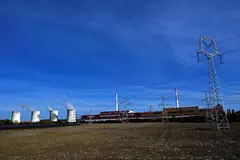
Some countries have responded to the sharp rise in oil and gas prices, as well as supply disruptions, by turning to cheaper but more carbon intensive sources of fossil fuel, such as coal.
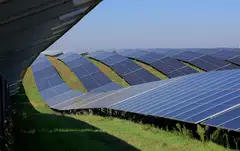
In others, renewable energy deployment, especially in the form of solar power, accelerated.
“So, countries are now evaluating their longer-term energy policies and how they (can) protect themselves a bit more against shortages in fossil fuels,” she added.
Nevertheless, she said it is important that COP31 remains the platform to draw global attention of political leaders on climate action.
“The Middle East crisis has caused inflation around the world. Governments around the world are very focused on the here and now – social unrest... in many countries, (worries) about inflation, (worries) about other issues such as jobs and security. So, the attention on climate has to be called for,” she said.
“So, it’s not going to be easy. But much better for us to go head-on in the meeting, than people being disinterested,” she added.
Fu said it was important for Singapore, which has limited domestic renewable energy resources, to remain actively involved in the negotiations, given the challenges it has faced in advancing its renewable energy plans.
“We have shown in the last few years that sometimes (the) delay in the renewable energy track has actually held us back. We wanted the renewable energy routes to be more established than before, but unfortunately, given our very limited options, we didn’t have those plans being implemented.
“We’ll continue to look for low-carbon solutions. We want to bring forward our national position at the UNFCCC, to basically explain our pathways.”
Renewable energy acceleration
While Fu warned that energy security concerns could complicate climate negotiations, Marisa Drew, chief sustainability officer at Standard Chartered, offered a more optimistic assessment of how the crisis could shape the energy transition.
She noted that many corporations had responded to the energy crisis by accelerating investments in renewable energy infrastructure and bringing forward their climate targets and ambitions. Permitting processes for renewable energy projects have also been fast-tracked.
As governments, especially those that have traditionally imported most of their energy, look to secure reliable supplies, renewable energy would inevitably feature as one of the alternatives, she said.
“What we’re seeing is the recognition now that when the shock happened, these economies need an alternative source of energy. And if they do then accelerate their transition, that speaks to having energy security on the one hand, with an alternative source.
“And then secondly, it reduces your exposure to commodity price volatility. So, this affordability question is very key.”
Beyond the immediate energy crisis, the rapid adoption of artificial intelligence is another potential driver of investment in clean energy, given the technology’s substantial and growing electricity needs.
“If we are going to create a global energy deficit, then looking at alternative sources of supply is really critical. In the near term, perhaps economies will turn to existing sources, and some of those sources will be needed in the interim while we bridge that gap,” said Drew.
This means that the low-carbon transition could come at a higher cost in the near term.
Anjali Viswamohanan, director of policy at the Asia Investor Group on Climate Change, said the immediate response to energy supply disruptions has included extending the operating lives of coal-fired power plants, increasing the cost of financing the low-carbon transition.
The Asia Investor Group on Climate Change is a non-profit representing institutional investors focused on the investment implications of climate change.
Nevertheless, she noted that energy security would remain a key concern for economies heavily reliant on imported fossil fuels at COP31.
“The Iran crisis strengthens the case to shift to renewable energy, prioritise electrification and develop grid infrastructure, as doing so in the long term would be beneficial to economies to protect their energy sovereignty,” she added.
Electrification target
While COP31 does not have a single overarching agenda item of the kind seen at previous climate summits, the two COP presidencies have jointly launched an initiative setting an ambitious global electrification target.
Dubbed “35 by 35”, the initiative aims to raise the share of global energy demand met by electricity to at least 35 per cent by 2035, from around 20 per cent currently.
Fu said it would be “good to have” the target, which falls under the climate mitigation pillar, endorsed by all parties at the end of the negotiations, describing it as “bite-sized, tangible and actually achievable”.
Singapore, however, is still working out the specific mechanisms through which it can contribute to the pledge.
Fu also noted that other priorities, such as climate adaptation, may not lend themselves to quantifiable targets. Nevertheless, reaching some form of agreement and advancing discussions on potential solutions in these areas would be equally important, she said.
Having the “35 by 35” electrification target make it to COP31’s final decision text would demonstrate a credible fossil-fuel transition commitment for investors, and would be the clearest long-term demand signal for capital allocation, said Viswamohanan.
“Action agenda priorities on the electrification initiative and others should focus on these commitments translating into country-level commitments, and feed into implementation through mechanisms like sector road maps, to give investors more assurance on credibility, as well as clarity on factors like sources of power supply,” she added.
In the context of Asean – which has been among the most impacted region from the Iran war, given its dependency on importing oil and gas from the Middle East – having an electrification goal would be the clearest answer to the region, because it shifts demand from imported fuel to domestically generated power.
However, whether the 35 by 35 target is achievable for coal-dependent Asean power systems will depend on the region’s pace of grid expansion and energy storage development, said Viswamohanan.
If COP31 manages to create a global coalescence around these electrification targets, that shared ambition can be a catalyst to mobilise private finance, said Drew.
“If you get global coalescence around that type of a target, it is helpful to debt providers, because if you’re supporting that ambition and you have a goal, it is useful,” she said.
However, she noted that such global targets are not the “be-all and end-all”.
“If (COP31) couldn’t get agreement on that, it’s not that these projects will not occur. There is an underlying requirement or need that will continue to underpin all of this. But it is helpful to have that additional goal, and an agreement across nations if it were to be possible,” she added.
Decoding Asia newsletter: your guide to navigating Asia in a new global order. Sign up here to get Decoding Asia newsletter. Delivered to your inbox. Free.
Copyright SPH Media. All rights reserved.