

OCBC cuts financed emissions in all targeted ‘dirty’ sectors in 2024
The bank’s reductions in oil and gas already surpass its 2030 goal, but annual performance depends on factors that may be outside control

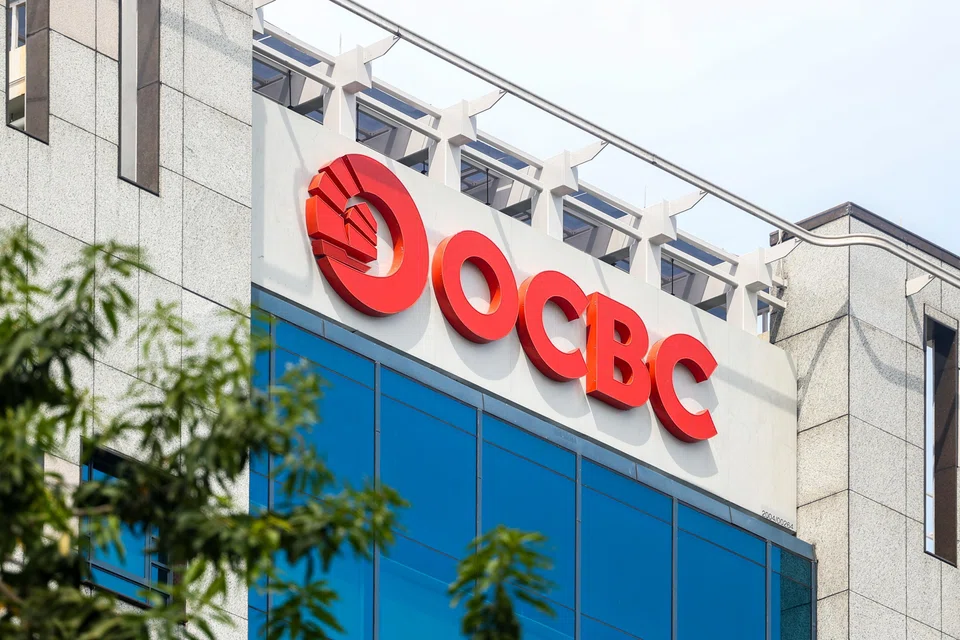
[SINGAPORE] The financed emissions of six sectors for which OCBC has set decarbonisation targets declined in 2024, the lender’s latest sustainability report, released on Tuesday (Mar 24), showed.
These six sectors – power, oil and gas, real estate, steel, aviation and shipping –- make up 40 per cent of the corporate and commercial lending portfolio of South-east Asia’s second-largest bank.
In addition to providing an annual update on OCBC’s net-zero progress, the report highlighted that the lender committed S$80 billion in sustainable financing in 2025, up from S$71 billion in 2024.
It noted that more than 280 loans with an environmental, social and governance label were extended last year, with OCBC serving as sustainability adviser in 210 of these transactions.
This also marks the first time the bank’s sustainability report is aligned with recommendations from the International Sustainability Standards Board, after new disclosure requirements came into effect for Straits Times Index constituents.
In the steel sector, OCBC’s financed emissions came in at 1.7 tonnes of carbon dioxide equivalent for every tonne of steel in 2024. This was down from 1.91 tCO2e/tSteel in 2023. Further, the 2024 level was a contrast to 2023’s financed emissions, which actually rose year on year.
Shift in portfolio exposure
OCBC said that the improvement in emissions intensity was due to a shift in its exposure. The bank tilted its overall steel portfolio towards clients that have embraced low-carbon technologies as part of their decarbonisation strategies. The progress was also partly because of growth across Asia in steel produced from electric arc furnaces.
Yet, the bank noted that several steel companies in China – which produces half of the world’s steel – are still relying on carbon-intensive blast furnaces as they are the most cost-effective.
Nonetheless, many of the largest steel players have announced reduction targets for their carbon emissions, signalling the Chinese steel sector’s collective willingness to transition to a low-carbon future.
SEE ALSO


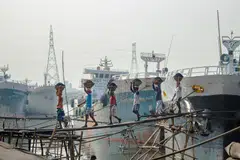
OCBC’s aviation-sector financed emissions also made progress in 2024, after remaining at the same level previously.
Portfolio emissions declined slightly to 0.09 kg of carbon dioxide equivalent per passenger travelling 1 km, from 0.097 kgCO2/passenger-km in 2023.
While production volumes for sustainable aviation fuel doubled to one million tonnes year on year in 2024, such fuel accounted for just 0.3 per cent of global jet fuel demand. This fuel remains the only viable alternative to green the industry thus far.
The report noted that “production delays and high costs remain key barriers”, with sustainable aviation fuel prices more than treble that of conventional jet fuel.
“Governments and industry stakeholders are increasingly calling for stronger policy incentives and mandates to accelerate (sustainable aviation fuel) adoption and improve commercial viability,” it added.
Continued progress
OCBC’s power-sector portfolio emissions continued their decline in 2024 to 286 kg of carbon dioxide equivalent for every megawatt-hour, a 5 per cent decrease from the previous year’s level.
The bank attributed this to “the continuous and active engagement with our clients in their transition journeys, better data collection on emissions data, our commitment to supporting our clients in increasing the energy efficiency of new and existing plants, and in scaling up renewable energy deployment”.
Amid growing global energy demand, OCBC said that it will continue to prioritise growth in this sector to support the clean energy transition.
Its portfolio emissions for oil and gas also extended their fall in 2024 to 8.8 million tonnes of carbon dioxide equivalent – a 21.4 per cent reduction from 11.2 million tonnes in 2023.
Although this already surpassed its 2030 target, OCBC noted that its annual performance is dependent on factors that may not be within the bank’s or its clients’ control, such as geopolitics and fluctuating oil and gas prices.
“We also continue to see heavy reliance on gas, especially as a transitional fuel within the region including Singapore, hence we need to continue to support our clients as they meet the energy demands of this region,” the report added.
Therefore, “year-on-year fluctuations” in OCBC’s financed emissions are expected, it said.
Decoding Asia newsletter: your guide to navigating Asia in a new global order. Sign up here to get Decoding Asia newsletter. Delivered to your inbox. Free.
Copyright SPH Media. All rights reserved.
TRENDING NOW

Once staunchly pro-China, Malaysian Chinese businesses are now distancing themselves from Beijing

Looking beyond looming CEO succession, should UOB potentially pursue a transformative merger?

Could stablecoins be the future of money?

Grab CEO’s wife Chloe Tong on life with Anthony Tan and finding her purpose

