

Policy reforms needed to decarbonise Singapore’s industrial heating: report
Electrification policy is a ‘foreign direct investment retention question’, says industry association

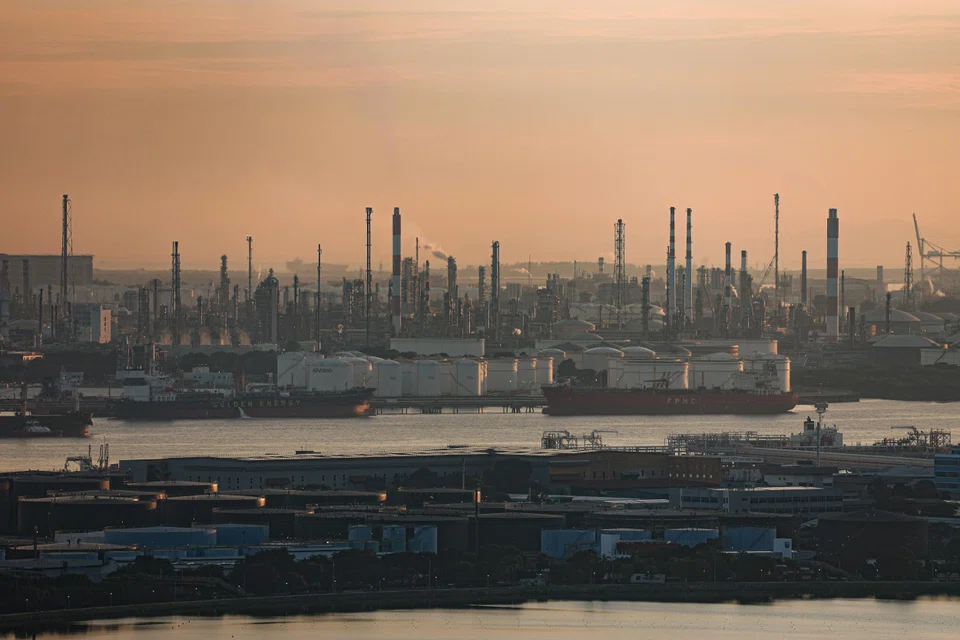
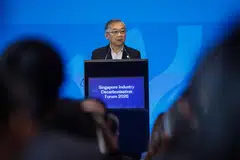
[SINGAPORE] A tariff reform road map on industrial electricity costs, requiring industrial facilities to have an electrification pathway for their heating processes, is among policy suggestions that have been set out in a new white paper.
A government-funded programme that conducts feasibility studies on electrification options for such facilities is also among the Sustainable Energy Association of Singapore’s (SEAS) recommendations released on Tuesday (Oct 27).
The industrial sector is responsible for 40 per cent of Singapore’s national electricity consumption and 90 per cent of end-use natural gas, much of it used to process heat.
To decarbonise the sector, there is a need to electrify industrial heating, which involves replacing fossil fuel-based equipment with electric-powered alternatives to generate thermal energy.
The non-profit industry association’s suggested industrial heat electrification strategy is banking on Singapore meeting its target of importing 6 gigawatts (GW) of low-carbon electricity from other countries in the region.
The Energy Market Authority has awarded conditional approvals and licences to projects across Australia, Cambodia, Indonesia, Malaysia and Vietnam totalling more than 10 GW of renewable energy capacity, but none have reached financial close.

While industrial heat processes that are already electrified will still run on gas-generated electricity – given that 95 per cent of Singapore’s energy mix is sourced from natural gas – the city-state is exploring various ways to transition its power grid to be less carbon-intensive, beyond cross-border import projects.
A company that electrifies its heat processes now would therefore be positioning itself to benefit directly from that when the grid gets cleaner in the future through imported renewable electricity, regional power grid interconnections and hydrogen-ready systems.
Although much effort has been made to decarbonise Singapore’s energy supply, SEAS noted in the paper that there are insufficient incentives to transform the industrial demand for cleaner power sources. Most facilities still rely on industrial boilers, furnaces or diesel generators for heat processes.
SEE ALSO



However, this is not because solutions are too costly or not readily available.
The technologies to electrify low and medium-temperature heat – below 200 deg Celsius and representing the majority of Singapore’s heat process demand – are commercially mature and deployed at scale in economies such as Denmark, Germany and Australia.
“The market is not moving, not because firms are unwilling or unaware,” said the report, which was released during Singapore International Energy Week, “but because three structural conditions that would make electrification the rational economic choice – competitive electricity pricing, accessible financing, and a clear regulatory signal against fossil lock-in – have not yet been created.”
Singapore’s industrial sector, which accounts for 20 per cent of its economy, also faces certain structural vulnerabilities if its heating processes are not electrified.
The dependence on imported natural gas means that the companies operating these facilities are subjected to price volatility and supply risks in the global oil and gas market. A significant share of emissions is concentrated on Jurong Island, where integrated petrochemical and chemical clusters dominate.
“This makes industrial heat electrification one of the highest-impact decarbonisation levers for Singapore, while strengthening energy resilience,” the association pointed out.
The business case for industrial heat electrification extends beyond environmental reasons. Besides being a hedge against the volatility of natural gas, it also sends a signal to global capital markets.
“Singapore’s industrial base is overwhelmingly internationally oriented,” said SEAS.
“If Singapore does not create the enabling conditions for electrification, the multinationals anchoring Jurong Island have both the motivation and the operational flexibility to act on that preference.”
It added that industrial electrification policy is therefore “not just a climate question”, but also “a foreign direct investment retention question”.
“The technologies exist, the carbon price signal is strengthening and the grid is being decarbonised. What remains is to align the economics in the right direction to boost market support for electrification.”
Decoding Asia newsletter: your guide to navigating Asia in a new global order. Sign up here to get Decoding Asia newsletter. Delivered to your inbox. Free.
Copyright SPH Media. All rights reserved.
TRENDING NOW

Chairman’s role in spotlight with raft of proposed new rules for Singapore boards

Director of PR firm sacked for secretly recording internal meeting loses wrongful dismissal claim

Indonesia stocks suffer worst plunge in nearly 30 years as MSCI proposes standalone status

If Europe goes to war, the fallout will be felt in East Asia

