

SaladStop! bets on practical steps to reach net zero as sustainability loses its buzzword appeal
The 27-year-old food and beverage chain is pursuing net zero through changes to store operations and design, while nudging customers towards more sustainable choices.
Jermaine Fok
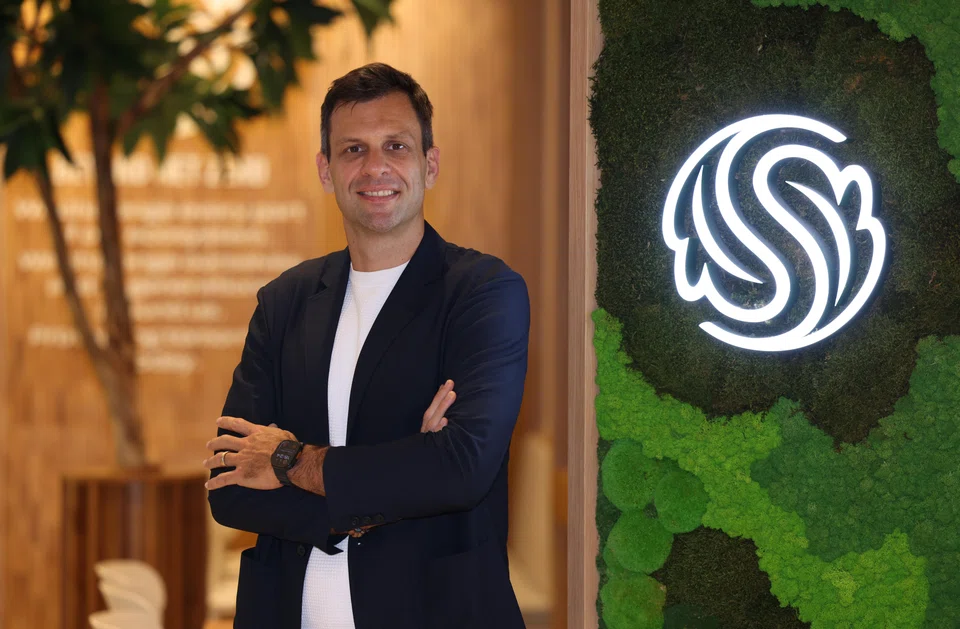
[SINGAPORE] SaladStop! is betting on small, practical changes to keep customers engaged with sustainability, as the issue loses some of its prominence amid shifting consumer priorities.
Chief executive Adrien Desbaillets told The Business Times that sustainability had become less prominent than it was a few years ago, when it was more of a “buzzword”, as inflation and other pressures weigh on households and businesses.
The food and beverage chain clinched the Impact Enterprise Excellence Award under the SME category, presented by The Business Times and UOB, for its efforts to make sustainability part of its business operations.
That approach extends to its goal of achieving net-zero emissions across its outlets by 2030, through changes to store operations and design.
Desbaillets said every new store it opens, or existing outlet it renovates, in Singapore and Hong Kong is designed as a net-zero store.
The company currently has two net-zero outlets in Singapore, at CapitaSpring and Marina Bay Link Mall.
'%3e%3cpath%20d='M12.1475%2025.5262C13.7713%2025.4295%2014.94%2023.913%2014.94%2021.8832C14.94%2019.5359%2013.474%2018.093%2011.5917%2018.093C11.3745%2018.093%2010.9582%2018.093%2010.8393%2018.1413V25.2086L11.8891%2025.5745C11.8891%2025.5745%2012.207%2025.5262%2012.1475%2025.5262ZM11.4934%2017.6281C13.2567%2017.6281%2014.3843%2016.4292%2014.3843%2014.4501C14.3843%2012.372%2013.275%2011.2973%2011.4339%2011.2973H10.8393V17.6305H11.4934V17.6281ZM6.66078%2025.6482L7.39265%2025.5492C8.02617%2025.4502%208.26403%2025.3053%208.26403%2025.1097V11.6149C8.26403%2011.4193%208.1451%2011.3709%207.23484%2011.249L6.68137%2011.173L6.6219%2010.7588H11.9508C15.7153%2010.7588%2017.0624%2012.0797%2017.0624%2014.1578C17.0624%2015.9666%2015.7748%2017.1909%2013.4969%2017.6305V17.7041C16.111%2017.948%2017.6571%2019.5382%2017.6571%2021.7636C17.6571%2024.3318%2015.8937%2026.0417%2012.1109%2026.0417H6.60132L6.66078%2025.6482Z'%20fill='%232B2B2B'/%3e%3cpath%20d='M20.6287%2025.6505L21.5596%2025.5515C22.1725%2025.4779%2022.4104%2025.3076%2022.4104%2025.112V11.249H21.9346C20.073%2011.3479%2018.982%2013.0095%2018.408%2014.6227L18.1907%2015.5018H17.6555L18.1701%2010.7588H29.3837L29.6421%2015.4787H29.1664L28.9491%2014.6227C28.3728%2012.8645%2027.3047%2011.2743%2025.5002%2011.249H24.9856V25.1856C24.9856%2025.3812%2025.1251%2025.4548%2025.9965%2025.5515L26.7695%2025.6505L26.829%2026.0417H20.5693L20.6287%2025.6505Z'%20fill='%232B2B2B'/%3e%3c/g%3e%3cdefs%3e%3cclipPath%20id='clip0_5242_21648'%3e%3crect%20width='24'%20height='16.8'%20fill='white'%20transform='translate(6%2010)'/%3e%3c/clipPath%3e%3c/defs%3e%3c/svg%3e)
The company has reduced the carbon footprint of its newer stores by 30 per cent compared with earlier non-net-zero outlets, through measures including greater use of recycled and upcycled materials.
One store, for example, features chairs made from recycled plastic and a wall constructed from 57,000 recycled chopsticks.
In Thailand, tables are made from coffee husks, while similar efforts to use local and upcycled materials are being adapted across its other markets.
SEE ALSO












“Over time, as we renovate our outlets, we try to bring that carbon footprint down,” Desbaillets said.
Such measures do not necessarily come at a significant premium.
Desbaillets said net-zero stores cost about the same as, or slightly more than, conventional outlets when considered in totality.
The company’s sustainability efforts also extend beyond its stores to its menu.
About 88 per cent of ingredients in SaladStop!’s salad bar are plant-based.
The company continues to offer animal-based proteins while giving customers more plant-based choices, given the carbon footprint and emissions associated with animal farming.
Local sourcing is another part of its approach to reduce emissions.
In Singapore, this includes working with local vertical and mushroom farms. In the Philippines, the company spent years developing a local supply chain.
The strategy can also offer benefits beyond emissions reduction.
Shorter supply chains can improve freshness and provide greater resilience when imports are disrupted – something SaladStop! experienced during Covid-19.
“It meant building a supply chain from the ground up for 10 years and constantly refining that. So we are big believers in building that out from day one, and that’s been a big part of our success even through the pandemic,” Desbaillets said.
Bringing customers on board
But Desbaillets said reducing its environmental impact cannot be achieved through changes to its stores and supply chain alone.
“Ultimately, we can build a beautiful net-zero store. We can do a lot on the supply chain. We can source our ingredients locally, etc. But you know, we also need customers to be involved,” he added.
That belief has shaped SaladStop!’s efforts to bring customers into its sustainability push.
In 2024, the chain launched its Bring Your Own Bowl initiative at its two net-zero outlets in Singapore.
On the last Friday of each month, customers who do not bring their own bowls cannot be served takeaway meals. Instead, they can borrow a free reusable container, purchase one of the stores’ collapsible bowls while receiving a free signature salad, or choose to dine in.
The initiative is intended to encourage regular customers to switch to reusable packaging, rather than simply charging them for disposable containers.
“We just felt that you know in order to nudge them in the right direction or incentivise them to change behaviour, we needed to give them something,” Desbaillets said.
Ultimately, the company sees consumers as an important part of its sustainability push.
“We can do a lot on the supply chain side but a lot of the decision and the purchasing power ultimately comes from the customer,” Desbaillets said.
Decoding Asia newsletter: your guide to navigating Asia in a new global order. Sign up here to get Decoding Asia newsletter. Delivered to your inbox. Free.
Share with us your feedback on BT's products and services
TRENDING NOW

Companies still in search of AI use cases with worthwhile ROI, says Broadcom’s CEO

Malaysian king buys stake in Singapore-listed mining firm expanding into rare earths

Once staunchly pro-China, Malaysian Chinese businesses are now distancing themselves from Beijing

Singapore’s wealth management success should extend to everyday families

