

From sustainability ambition to business action


[SINGAPORE] Sustainability is no longer simply about setting targets for a greener future. Increasingly, it is about changing how businesses operate today and finding ways to make environmental and social progress work in the real world. You can see that common thread running through this year’s Sustainability Impact Awards key winners.
Greenphyto, Berge Bulk and Clean Kinetics operate in very different industries. One is rethinking how food is grown, another is tackling the carbon footprint of shipping, while the third is building clean-energy infrastructure across emerging markets.
Yet all three are united by a willingness to take on difficult problems, experiment with new technologies and turn sustainability challenges into opportunities for business transformation.
For Greenphyto founder and chief executive Susan Chong, the challenge is food security in a land-scarce and climate-vulnerable Singapore. Its 23m high vertical farm in Jurong West is a working demonstration of how automation, artificial intelligence and hydroponics can make food production more productive and less dependent on land, labour and weather. But the farm is only part of the ambition. Greenphyto ultimately wants to take its technology beyond Singapore, building a replicable model for climate-resilient food systems around the world.
Berge Bulk is tackling an equally complex challenge: how to decarbonise a global shipping fleet of more than 100 vessels. Rather than relying on a single solution, the company is testing and deploying a range of technologies, from wind-assisted propulsion and lower-emission fuels to onboard carbon capture and more efficient ship designs. Its approach reflects a broader reality facing the maritime industry, and the transition to cleaner shipping will require multiple technologies to work together, with solutions judged not only by their environmental benefits but also by their cost, safety and operational practicality.
For clean-energy specialist Clean Kinetics, sustainability is itself the growth engine. The Singapore SME has ventured into markets where regulatory, geopolitical and operational complexities might deter larger players, while using partnerships to extend its capabilities. Its ambitions now stretch beyond solar into electric vehicle charging, smart parking, water infrastructure and solar recycling.
SEE ALSO






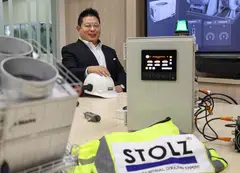


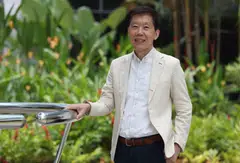


Together, the three winners illustrate how sustainability is becoming embedded in business strategy. Their journeys show that impact is not necessarily determined by the size of an organisation, the maturity of its industry or the scale of its resources.
What matters is the willingness to innovate, collaborate and act; and to find solutions that can ultimately be scaled.
Decoding Asia newsletter: your guide to navigating Asia in a new global order. Sign up here to get Decoding Asia newsletter. Delivered to your inbox. Free.
Copyright SPH Media. All rights reserved.
TRENDING NOW
Malaysian king buys stake in Singapore-listed mining firm expanding into rare earths

Grab CEO’s wife Chloe Tong on life with Anthony Tan and finding her purpose

Once staunchly pro-China, Malaysian Chinese businesses are now distancing themselves from Beijing
Longer wait times expected as S’pore healthcare institutions report system disruptions

