After interim deal, Rubio faces tough task of selling US-Iran reset to wary Gulf allies
Top US diplomat to meet with partners concerned about elements of Iran deal
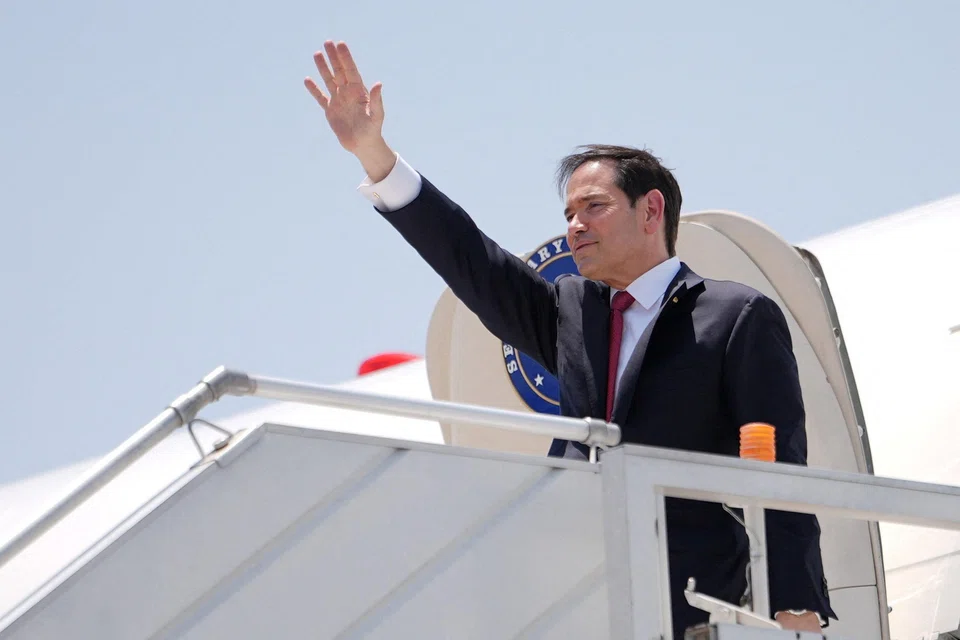
[ABU DHABI] US Secretary of State Marco Rubio faces a delicate mission this week pitching Washington’s Iran peace deal to Gulf Arab leaders who fear excessive concessions will strengthen Teheran and reshape the region’s security balance and oil flows.
Rubio will meet them in the United Arab Emirates on Tuesday (Jun 23), before travelling to Kuwait and Bahrain, where he will meet officials from the Gulf Cooperation Council (GCC), a grouping of monarchies that also includes Saudi Arabia, Qatar and Oman.
At issue are elements of a draft agreement that include no limits on Iran’s ballistic missiles, a proposed US$300 billion reconstruction fund and provisions that could expand Tehran’s regional influence and control over critical oil shipping lanes.
All six GCC nations are strategic US allies that offered some degree of logistical support to Washington during the US-Israeli war with Iran that began in late February and all were buffeted by Iranian airstrikes as a result.
Some of those countries are feeling privately disappointed - and surprised - by an interim deal that could open the door to US normalisation with Iran, a predominantly Shi’ite country that most Sunni GCC states consider their main adversary.
The opinions of these nations matter to US policymakers.
The UAE, Saudi Arabia, Qatar, Kuwait and Bahrain all host US military bases that in turn make up the backbone of America’s security architecture in the Middle East. Should any of those countries rethink their security relationship with the US, even in a subtle way, it could have a significant impact on US military strategy in the region.
For Rubio personally, the trip requires a balancing act.
While America’s top diplomat needs to assuage regional allies, he must do so without appearing to criticise the US-Iran memorandum of understanding. President Donald Trump, who signed the accord on Jun 17, remains firmly behind it despite criticism from some of his fellow Republicans in Congress who have accused the administration of capitulating to Teheran.
SEE ALSO

Andrew Peek, a former deputy assistant secretary of state for Iraq and Iran who served on Trump’s National Security Council during both his terms, argued that Rubio could reassure any nervous allies by pointing out that Trump has a history of being tough on the Islamic Republic.
“I think you can just remind them that the president has conducted extremely hawkish policies toward Iran - and if this MOU falls through, he will have no compunction about going back to striking them,” said Peek, who is now at the Atlantic Council think tank.
Peace, but at what cost?
Leaders from all GCC countries hosting Rubio or present at the upcoming talks at least publicly pushed for a diplomatic solution before the war kicked off in February. Most also pushed for a diplomatic off-ramp during the conflict, even as they in practice facilitated the US war effort.
Still, the specific terms of the MOU privately shocked regional officials, according to analysts and diplomats.
One concern relates to ballistic missiles. Throughout the war, the Trump administration said that destroying Iran’s ballistic missile capacity was a central goal. That objective aligned with the interests of the Sunni Gulf states as - unlike the US - all are well within Iran’s ballistic range and have been targeted by Iranian missiles.
The MOU, however, does not mention Iranian missiles at all, and Trump himself has in recent days said that denying Teheran such weapons would be “unfair.”
The MOU also foresees a $300 billion reconstruction fund for Teheran, which regional neighbours fear could allow the Islamic Republic to build up its military capacity, while increasing support for regional proxy groups that could destabilise governments throughout the region.
Bahrain’s mainly Sunni leadership, in particular, is concerned that a well-funded Iran could foment an uprising among the island nation’s mainly Shi’ite populace, analysts say. During the Arab Spring, the nation of roughly 1.65 million was the site of massive recurring street protests.
Iran has denied any covert attempts to stoke unrest but has publicly expressed support for Bahraini Shi’ite activists in the past.
The accord, as written, also appears to concede that Iran could have a key role in controlling the Strait of Hormuz going forward, a major concern for Kuwait, Qatar and Saudi Arabia, which rely on the strait to export oil and gas.
More broadly, US officials have begun speaking about a broader reset for Teheran, a potential transformation that most GCC states are wary of. On Jun 20, US Vice-President JD Vance said the US was willing to “fundamentally transform” its relationship with Teheran.
“The agreement rehabilitates Teheran’s regime as a regional power,” veteran Saudi columnist Abdulrahman Al-Rashed wrote in Saudi English-language daily Arab News on Jun 19.
“Most of the funds Teheran will acquire in the coming weeks are likely to go primarily towards strengthening the military position, not to support living conditions or the Iranian economy.” REUTERS
Decoding Asia newsletter: your guide to navigating Asia in a new global order. Sign up here to get Decoding Asia newsletter. Delivered to your inbox. Free.
Share with us your feedback on BT's products and services