

Apac could feel energy supply chain disruptions for years, says ADB
The development bank cuts its regional GDP growth forecast for 2026 to 4.7% from 5.1% previously

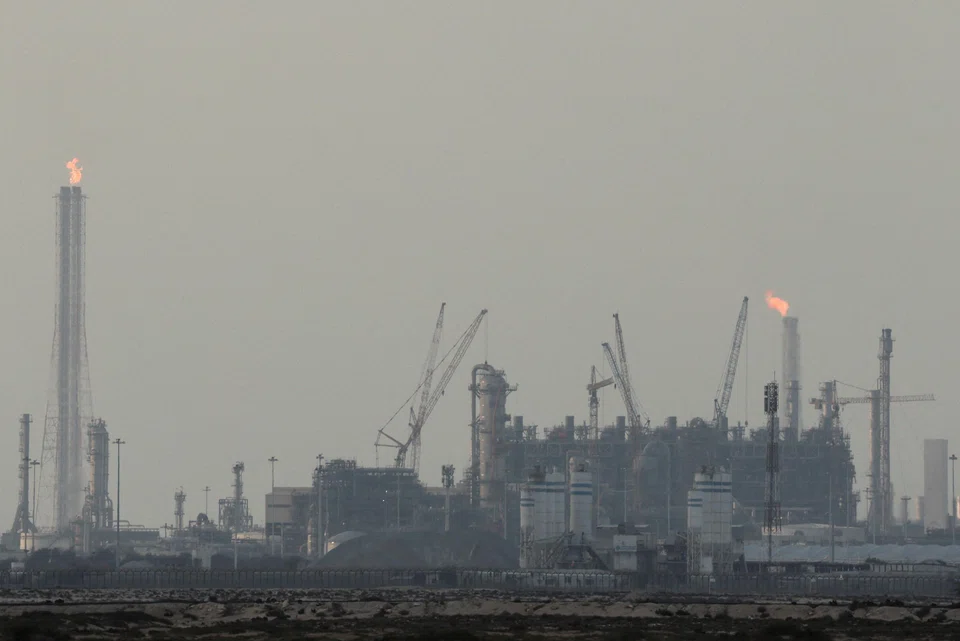
[SINGAPORE] Hopes that the conflict in the Middle East would stabilise quickly have grown narrower as the war moves past its two-month mark.
Prolonged disruptions in energy supply chains suggest that Asian economies are set to feel a blow even larger – and longer – than initially expected, the Asian Development Bank (ADB) said in a note on Wednesday (Apr 29).
This was an update to the forecast in its Asian Development Outlook report released in early April, which had projected a scenario in which the conflict would be relatively short-lived and last a month or two.
ADB revised its gross domestic product growth forecasts for the Asia-Pacific to 4.7 per cent in 2026 and 4.8 per cent in 2027, down from the 5.1 per cent it had earlier estimated for both years.
Infrastructure damage
Key energy infrastructure facilities have been affected by military strikes across the Middle East, including oil depots, pipelines, ports and refineries, noted ADB.
It said that damage to critical liquefied natural gas (LNG) infrastructure in Qatar could pose the most difficult recovery.
For example, in the country’s Ras Laffan complex, major damage to two LNG mega-trains and gas-to-liquids units is expected to take three to five years to repair, with long lead times required to obtain specialised turbines.
These facilities supply about 6 per cent of global natural gas liquefaction capacity, out of a total capacity of 16.9 per cent that has been affected by the conflict.
In comparison, oil could have a smoother route to recovery. Damaged upstream oilfields and refineries across the Gulf may see disruptions lasting between a few weeks and several months, ADB said.

In total, 2.6 per cent of oil production capacity, 0.7 per cent of transport and storage capacity, and about 2.4 per cent of global refining throughput have been affected by the war.
These disruptions are likely to keep energy prices elevated for an extended period, the report indicated. This is not merely a result of physical damage – continued security risks could also continue to weigh on shipping costs, keeping energy prices high.
“As long as these risks remain elevated, insurers will demand higher (premiums),” Abdul Abiad, ADB’s deputy chief economist, said in the report.
The development bank’s reference scenario assumes oil prices averaging US$96 per barrel in 2026, then easing to US$80 in 2027. Meanwhile, natural gas is assumed to peak below US$30 per million British thermal units in the second quarter of this year, but remain higher than initial expectations throughout 2026 and 2027.
ADB said it incorporated broader supply chain and financial market shocks – peaking in Q2 2026 before gradually unwinding – into its forecasts.
In this scenario, it projected that developing South-east Asia (excluding Singapore) will experience slower growth at 4.2 per cent in 2026, down five percentage points from earlier projections; and 4.1 per cent in 2027, a reduction of seven percentage points.
Meanwhile, inflation is forecast to have a harder-than-expected impact on the region. In developing South-east Asia, ADB projects inflation rates to reach 4.5 per cent in 2026 before moderating to 3.6 per cent in 2027, compared with earlier forecasts of 3.2 per cent and 2.8 per cent, respectively.
“Spillovers to domestic fuel prices and inflation have become evident,” ADB said. “Surging fertiliser prices could add to food inflation, particularly for economies most dependent on imports from the Middle East.”
Targeted policy responses
ADB noted that many economies in the Asia-Pacific have opted to respond through price-distorting policies, such as price controls, blanket subsidies and tax cuts.
But it warned that such measures can blur price signals, which may impede energy-conserving behaviour, weaken incentives for energy suppliers, and increase the likelihood of shortages.
Instead, it suggested that economies target measures that “allow price signals to work, use fiscal space prudently and build longer-term resilience”, such as targeted cash transfers and energy bill rebates.
The development bank also warned that central banks should be careful not to tighten monetary policy prematurely, which could dampen growth.
“The Middle East conflict is an exogenous external shock to energy and food prices rather than an aggregate demand shock,” said Abdul.
“(Central banks) should closely monitor core inflation and consider policy tightening only if second-round effects suggest price pressures are spreading beyond energy, or if inflation expectations show signs of de-anchoring,” he added.
Decoding Asia newsletter: your guide to navigating Asia in a new global order. Sign up here to get Decoding Asia newsletter. Delivered to your inbox. Free.
Copyright SPH Media. All rights reserved.
TRENDING NOW

Once staunchly pro-China, Malaysian Chinese businesses are now distancing themselves from Beijing

Cliff Tan has 7 million followers and a 4-month waitlist. Why won’t he expand his business?

Grab CEO’s wife Chloe Tong on life with Anthony Tan and finding her purpose
Singapore F1 to proceed despite haze; no changes planned to outdoor entertainment

