

Asean firms need practical help to tap region’s US$10 trillion potential, says PM Wong
Deeper integration and AI cooperation could strengthen region’s resilience amid global uncertainty, he adds

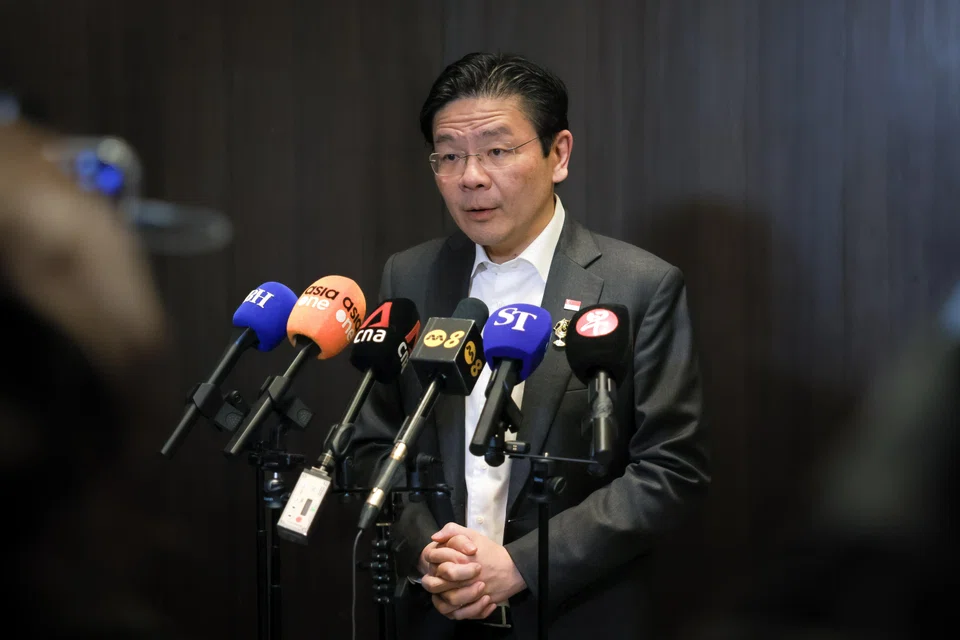
[MANILA] Governments across South-east Asia must do more to help businesses take advantage of the region’s newly signed digital economy agreement, said Singapore Prime Minister Lawrence Wong on Tuesday (Nov 17), as he outlined how deeper economic integration could help the Asean grouping grow into a US$10 trillion economy by the early 2040s.
This would include raising awareness and providing practical guidance to companies on how to use regional agreements to expand their businesses across borders.
Speaking to Singapore journalists at the conclusion of the 49th Asean Summit in Manila, PM Wong said securing the new Digital Economy Framework Agreement (Defa) had already been difficult, but ensuring businesses could benefit from it would be equally important.
He noted that companies often struggled to understand how regional trade agreements translated into tangible benefits.
“Well, you have got free trade agreements now, you have got the Defa, but what does it mean for me as a business? How do I make use of this?” he said, illustrating the questions businesses commonly raise.
Governments would therefore need to develop practical guides to help companies scale up digitally and operate more seamlessly across Asean markets, he added.

Defa, signed by Asean’s 11 member states on Saturday, aims to reduce barriers to digital trade through common rules in areas such as electronic payments, cross-border data flows and cybersecurity.
The agreement could make it easier for companies to serve customers in different Asean countries without having to navigate vastly different digital regulations.
PM Wong acknowledged concerns that Defa could expose Singapore’s small and medium-sized enterprises (SMEs) to greater competition from businesses operating in lower-cost markets.
SEE ALSO
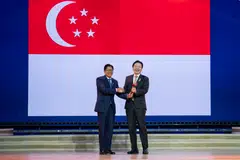
But he said competition was inevitable, and businesses should focus on becoming more competitive rather than seeking greater protection.
“The competition is going to be there whether we like it or not,” PM Wong said. “Companies will have to embrace the competition, but then we, as a government, will help our SMEs make good use of Defa.”
He cited a survey by the Asean Business Advisory Council showing that many businesses across the region were not seeking greater protection from their governments, but wanted help capturing opportunities arising from economic agreements.
For Singapore, this would mean providing SMEs with more support to transform their operations, improve productivity and adopt digital and artificial intelligence tools, he said.
Building a more resilient Asean
PM Wong said closer economic integration would also help Asean withstand geopolitical tensions and disruptions to global trade and supply chains.
While individual member states are relatively small, the grouping has a combined economy of about US$4.5 trillion. But greater economic weight would be increasingly important amid competition between major powers, he said.
“Collectively, we are US$4.5 trillion, which is not bad. But if we were to do even more, to integrate, to reform, to grow, then perhaps by the early 2040s we could be a US$10 trillion-dollar economy.”
A larger and more integrated economy would give Asean greater resilience against external shocks, while creating more opportunities for businesses and workers, he noted. The grouping would also seek to expand its partnerships beyond the US and China, including with Canada, the European Union and the Gulf Cooperation Council.
PM Wong said this would give Asean greater room to pursue its own priorities amid intensifying rivalry between major powers.
“Not everything we do is defined by America and China and the rivalry between them,” he said, stressing the need for Asean to retain the ability to shape its own future.
AI cooperation with China
One area of potential cooperation is AI, with China proposing that 2027 be designated the Year of Asean-China AI Cooperation.
PM Wong said Asean had agreed to the proposal, and both sides would now discuss specific applications and projects. These could include autonomous vehicles, industrial AI and advanced manufacturing, although no concrete initiatives have been identified.
“China is a leader in AI applications, and across Asean countries there is tremendous interest to harness AI more effectively to transform and uplift our economies,” he said.
Such cooperation could give businesses opportunities to use AI, although specific projects have yet to be agreed. However, PM Wong said cybersecurity and data privacy would have to be taken into account when designing and implementing projects.
The projects must “ultimately benefit our businesses and our workers”, he said.
Decoding Asia newsletter: your guide to navigating Asia in a new global order. Sign up here to get Decoding Asia newsletter. Delivered to your inbox. Free.
Copyright SPH Media. All rights reserved.
TRENDING NOW

South-east Asia has lost Nvidia’s best salesman
UN says Singapore’s Penguin International broke Libya arms embargo; company disputes panel’s findings
Is Singapore still South-east Asia’s headquarters haven?
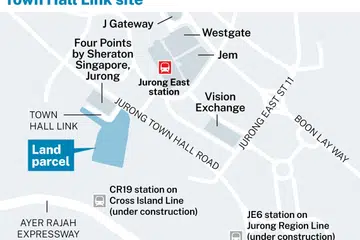
CapitaLand, Far East, Sing Holdings team up for S$1.82 billion bid for Jurong Lake District site

