



PM Wong pitches deeper Asean ties on digital payments, energy and haze
He also seeks stronger action against forest fires and a clearer road map for Myanmar

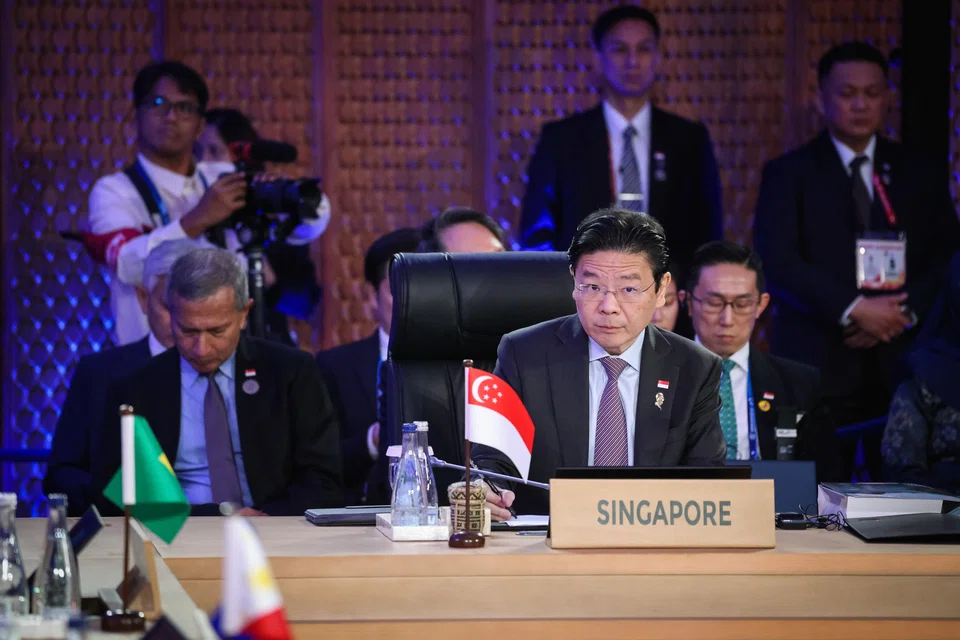
[MANILA] Asean should develop a region-wide network of cross-border payment systems to make transactions cheaper and easier for businesses and consumers, Singapore’s Prime Minister Lawrence Wong said on Sunday (Nov 15).
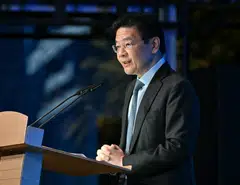
Speaking at the 49th Asean Summit in Manila, PM Wong outlined proposals to deepen regional economic integration amid growing global uncertainty, while seeking stronger cooperation against transboundary haze and progress on Myanmar’s eventual return to political representation in Asean.
At the summit’s plenary session, he pointed to existing bilateral payment linkages between Singapore and countries such as Malaysia and Thailand, which could serve as the foundation for a wider regional network.
Such a network would “make it easier and cheaper for our businesses and citizens to transact with one another”, benefiting tourists and those sending remittances home, he said.
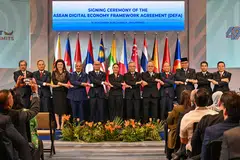
PM Wong also welcomed the signing of the Asean Digital Economy Framework Agreement (Defa) on Saturday, describing it as a significant milestone in regional integration.
But he said the agreement was only a first step, with more work needed to link up Asean’s economies digitally and enable businesses to operate more seamlessly across borders.

Another priority was expanding access to artificial intelligence tools and capabilities to raise productivity and accelerate economic growth.
PM Wong noted that Asean’s economies had grown by around 4 to 5 per cent annually in recent years, but had the potential to grow faster and become a significant growth centre over the next 10 to 20 years.
Greater digital integration must also be accompanied by stronger regional coordination against cyberthreats and online scams, he said.
SEE ALSO

Turning to energy security, PM Wong said the growing adoption of AI and other digital technologies would increase demand for electricity in the region.
Citing recent disruptions in the Middle East, he urged member states to swiftly ratify the Asean Petroleum Security Agreement and prioritise the development of the Asean Power Grid.
At the summit’s retreat session later on Sunday, PM Wong proposed extending cooperation against transboundary haze beyond Singapore and Indonesia.
The Singapore-Indonesia joint task force was announced on Oct 27 to coordinate investigations into companies linked to the fires, including through financial intelligence, cross-border evidence gathering and potential asset recovery.
“It should be an Asean-wide platform where we can share information more readily and where we can share evidence on those that are responsible,” he said.
The prime minister also welcomed Indonesian President Prabowo Subianto’s efforts to tackle the fires and his commitment to investigate their causes and hold errant companies accountable.
On Myanmar, PM Wong proposed a clearer road map towards the country’s eventual return to political representation in Asean.
Asean has excluded Myanmar’s military-backed leaders from high-level meetings since 2021, following the military coup that year and a lack of progress in implementing the bloc’s peace plan.
PM Wong identified three key areas under Asean’s Five-Point Consensus: humanitarian assistance, dialogue with stakeholders and the cessation of violence. While progress had been made on humanitarian assistance, Myanmar needed to do more to foster reconciliation and dialogue, as well as achieve a sustained reduction in violence, he said.
“We would like to see that outcome eventually, but it takes two hands to clap,” he said.
PM Wong also urged Thailand and Cambodia to exercise restraint over their border tensions, with Singapore set to assume leadership of the Asean Observer Team next year.
The two countries fought two rounds of deadly clashes in 2025 over long-running territorial disputes, before agreeing to a ceasefire in December. The truce remains fragile, with both sides accusing each other of violations. The Asean Observer Team monitors its implementation.
Beyond regional issues, PM Wong stressed the importance of maintaining strong relationships with external partners amid growing geopolitical competition.
“Asean has been the arena for proxy fights between major powers before,” he said. “We have been through that difficult experience. We don’t want that to happen again.”
Singapore, which assumes the Asean chairmanship in 2027, will build on initiatives advanced under the Philippines’ chairmanship and work with Thailand, the subsequent chair, to maintain momentum, he added.
Decoding Asia newsletter: your guide to navigating Asia in a new global order. Sign up here to get Decoding Asia newsletter. Delivered to your inbox. Free.
Copyright SPH Media. All rights reserved.
TRENDING NOW
Ex-Nvidia CEO Jensen Huang carried a secret for more than a year. It led to his downfall

Higher rates, weaker spending: Is the Philippines entering stagflation?

Nuclear potential, data centre boom may be addressed in new Asean energy master plan

Demand, tech capabilities position Apac and AI as Skyscanner’s next growth frontiers: CEO Bryan Batista

