



Asean manufacturing faces slowdown amid rising costs linked to Middle East conflict
S&P Global’s Asean manufacturing PMI falls to 51.8 in March, from 53.8 a month earlier

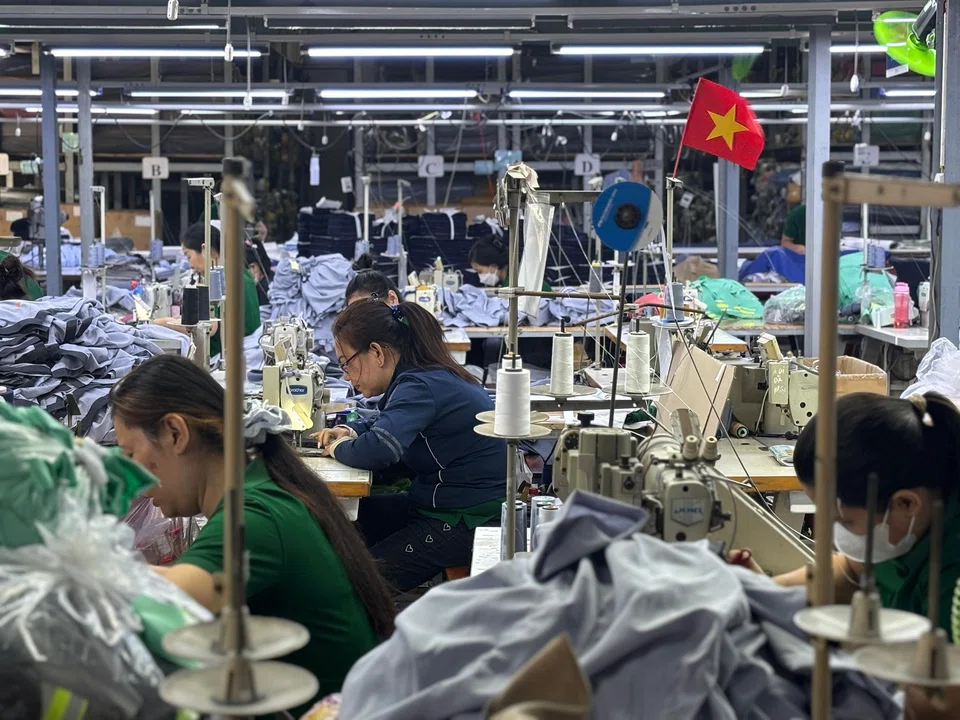
[JAKARTA] Manufacturers in South-east Asian economies are beginning to feel the strain from rising costs and supply chain disruptions, a consequence of the ongoing US-Israeli war against Iran.
The Asean manufacturing purchasing managers’ index (PMI), released by S&P Global on Wednesday (Apr 1), fell to 51.8 in March, from 53.8 a month earlier.
This was the regional manufacturing sector’s weakest performance in six months, and came as it recorded notable slowdowns in several demand indicators, alongside sharp upswings in input costs and output charges.
Growth in output and new orders remained positive, but both were considerably softer than the sharp expansions recorded in February.
“The initial signs of the war in the Middle East were visible across the Asean economies,” said Maryam Baluch, an economist at S&P Global Market Intelligence.
“The most visible development was a notable intensification of price pressures.”
The monthly survey evaluates how companies’ business activity has shifted from the previous month, looking at factors such as production levels, new orders and overall operational performance.
A score above 50 indicates expansion, while a score below 50 indicates contraction.
Logistics disruptions have further dampened business sentiment, as fuel shortages have intensified operational challenges and added pressure to already-strained supply chains.
Input price inflation
Price pressures surged in March, with input price inflation across Asean manufacturers reaching its highest level since October 2022.
Indonesia took a hit, with the country’s PMI slipping to 50.1 in March from 53.8 a month earlier.
S&P Global Market Intelligence economist Usamah Bhatti said the war has caused significant pressure on prices and raw material supply, affecting both production and demand, and pushing cost inflation to a two-year high in South-east Asia’s largest economy.
Input costs for Filipino manufacturers surged in March, fuelled by higher energy prices, as much of the Philippines’ oil supply comes from Gulf countries now affected by disruption.
After a strong boost in February, the Philippines PMI fell to 51.3 in March from 54.6 in February, marking a three-month low.
Vietnam also saw a notable decline in manufacturing PMI, to 51.2 in March from 54.3 in February. The South-east Asian nation saw the strongest rise in selling prices in almost 15 years as the war in the Middle East boosts cost inflation.
“Intensifying price pressures acted to limit demand, and rates of growth in both new orders and output slowed as a result. In turn, employment and purchasing activity were scaled back,” the Vietnam PMI report read.
S&P noted that despite a renewed improvement in Malaysia’s manufacturing sector, driven by higher production and modest job gains, the Middle East conflict has weighed on activity, slowing purchasing and lengthening delivery times.
“Confidence has already fallen to a seven-month low, suggesting that the coming months will bring these concerns further into focus.”
By contrast, in Thailand, the PMI climbed to 54.1 in March from February’s 53.5, driven by growth in new orders and ongoing efforts by firms to meet client demand.
The expansion was also supported by rising backlogs and increased purchasing activity.
“There is further room to the upside,” said Joe Hayes, principal economist at S&P Global, while cautioning that Thailand’s reliance on imported oil and gas leaves the economy vulnerable in the near term.
Decoding Asia newsletter: your guide to navigating Asia in a new global order. Sign up here to get Decoding Asia newsletter. Delivered to your inbox. Free.
Copyright SPH Media. All rights reserved.
TRENDING NOW

DBS, OCBC, UOB rout lops billions off STI as inflation, rate concerns spook investors

Grab CEO’s wife Chloe Tong on life with Anthony Tan and finding her purpose

OCBC sheds S$8 billion in value as shares close nearly 6% down; analysts cautious on banks

Deal between tycoon friends sparks scrutiny of Philippine power sector

