



Asean+3 growth to ease slightly in 2026 amid external uncertainty: Amro
Key downside risks include more tariffs, a global tech slowdown and financial market volatility

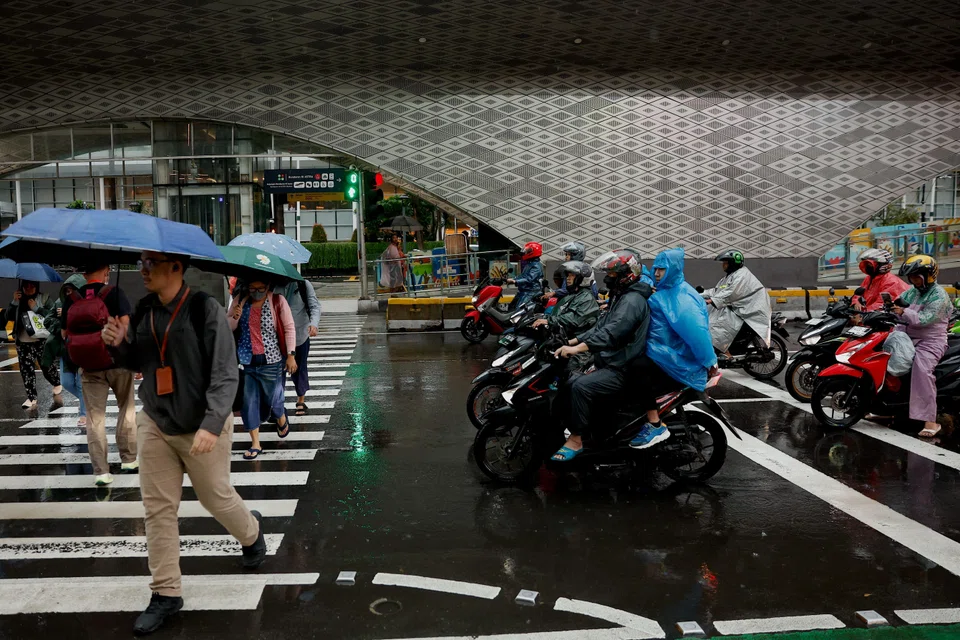
[SINGAPORE] The Asean+3 region – China, Japan, South Korea and 10 Asean countries – is expected to grow at a pace of 4 per cent in 2026, as growth moderates after a better-than-expected 2025.
This marks a marginal slowdown from an estimated growth rate of 4.3 per cent in 2025, as US tariff uncertainty weighs on external demand, according to projections by the Asean+3 Macroeconomic Research Office (Amro) in a report released on Wednesday (Jan 21).
Amro’s Asean+3 outlook does not include Timor Leste, which officially became the 11th member of Asean in October 2025.
“Asean+3 growth has exceeded expectations,” said Allen Ng, principal economist at Amro, at a media briefing during the launch of the quarterly update of the organisation’s flagship report.
Amro slightly raised estimates for both years by 0.2 percentage point from its previous predictions in October. It noted that the impact of tariffs on the region were less severe than initially anticipated, buoyed by a number of key drivers, including technology exports and private investments.
Robust growth in 2025
The region’s exports remained firm in 2025, particularly boosted by robust technology and semiconductor-related demand.
“Private consumption remained resilient, underpinned by favourable labour market conditions and low inflation,” Ng noted.
In addition, strong domestic investment – particularly in the 10 Asean countries – provided a boost to growth in 2025.
Excluding South Korea, Japan and China, the region’s growth projection in 2026 was revised upwards to 4.6 per cent, up from Amro’s forecast of 4.3 per cent in October.


Amro economists said that the region had enjoyed robust foreign domestic investment commitments in emerging sectors, including advanced electronics, electric vehicles and digital services.
At the same time, policy support from regional authorities also enabled Asean+3 economies to be cushioned from headwinds, noted Ng.
Most central banks across the region held policy rates steady in 2025 to maintain an accommodative stance – with Thailand’s additional rate cuts and the Bank of Japan’s rate hike in December being the notable exceptions.
This was possible due to subdued inflation pressures, as estimated headline inflation remained low in 2025 at 0.9 per cent. This reflected subdued global energy and food prices as domestic demand remained steady, added Amro.
It projected headline inflation to remain contained in 2026, but at a slightly higher rate of 1.2 per cent as some economies rationalise subsidies.
Balanced risks
All but three Asean+3 economies received upgrades to their 2026 growth forecasts, compared with last October’s iteration of Amro’s report. The Philippines, Thailand and Brunei Darussalam received downward revisions.
The region’s growth is expected to remain robust on steady domestic demand. However, Amro noted that external uncertainty would remain elevated.
For instance, a downturn in global tech demand could spell a significant downside risk for the region, warned its economists.
“A sharp and unanticipated slowdown in technology demand, which has supported both equity markets and exports in recent quarters, could weigh on regional activity given the region’s deep integration in global technology value chains,” stated the report.
However, Amro acknowledged that the likelihood of this happening was low. “It’s quite possible this tech boom will last for another couple of years,” said Dr He Dong, Amro’s chief economist.
This was one of several downside risks for the region that Amro said could affect its baseline forecast for 2025 and 2026.
Other short-term risks included global macro factors such as an escalation in US tariff policy, which may be further extended to currently exempted sectors like semiconductors, or a spike in global commodity prices causing inflationary pressure in the Asean+3 region.
Meanwhile, global financial markets could experience greater volatility in the year as elevated valuations and narrow credit spreads leave markets prone to shocks – which could be driven by geopolitical tensions or changing sentiments on the durability of investment flows towards artificial intelligence.
“Heightened financial market volatility could expose underlying vulnerabilities and undermine macroeconomic stability,” pointed out Amro.
Elsewhere, softening macroeconomic conditions in major economies could induce a knock-on blow to the Asean+3 region. These could include dampened private demand should inflation spike in the US, or heightened energy and shipping costs due to geopolitical tensions having an impact on Europe.
Amro added that while uncertainty towards the external environment remains, the overall balance of risk for the region had improved.
“In the near term, maintaining policy readiness to respond to emerging shocks is critical,” said Dr He.
“Over the longer term, diversifying growth drivers and deepening regional economic integration will be essential to strengthen the region’s resilience,” he added.
Decoding Asia newsletter: your guide to navigating Asia in a new global order. Sign up here to get Decoding Asia newsletter. Delivered to your inbox. Free.
Copyright SPH Media. All rights reserved.
TRENDING NOW

Two Singapore-listed palm oil firms named in Greenpeace report on Indonesian plantation fires
Singapore Airlines flight returns to San Francisco after ‘unruly’ passenger incident

Singapore looking into which companies responsible for haze-causing fires: PM Wong
Deluge IPO 3.86 times subscribed ahead of SGX debut

