



Asian markets rebound, oil retreats under US$100 a barrel on optimism Iran conflict may ease
US President Donald Trump says the war could end ‘very soon’

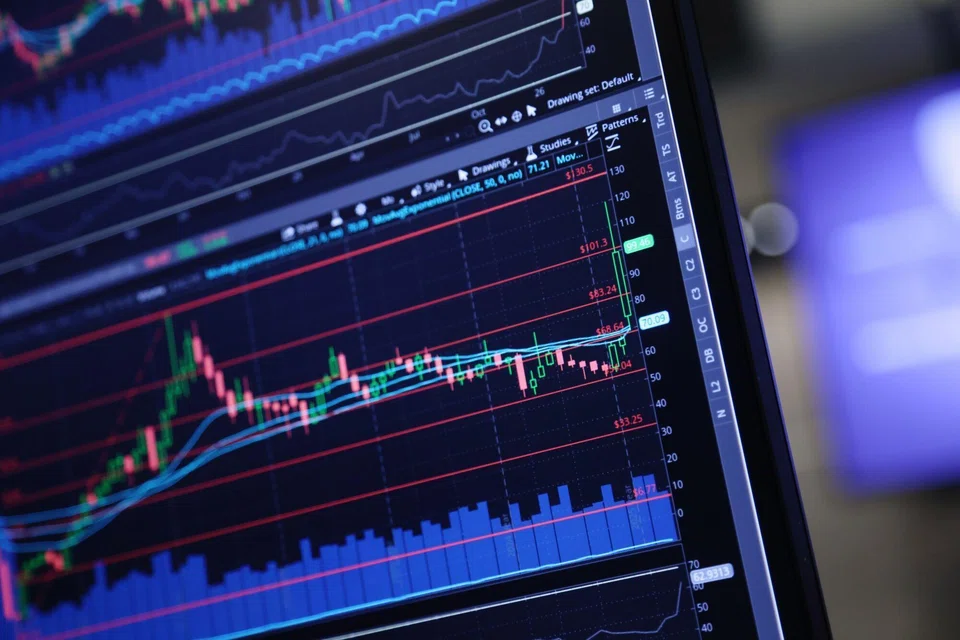
[SINGAPORE] Positivity returned to Asian markets on Tuesday (Mar 10), after oil prices dropped back below US$100 per barrel on hopes that the fighting in Iran will not continue for much longer.
US President Donald Trump on Monday mentioned plans to waive oil-related sanctions, saying that the war with Iran could end “very soon” – albeit not this week.
The Group of Seven, which comprises some of the world’s largest economies, also issued a statement declaring that it is ready to take “necessary measures” to support energy supplies.
In response, WTI crude oil fell about 6.9 per cent to US$88 a barrel during Asian trading hours on Tuesday, while Brent crude was down about 6.5 per cent at just over US$92 per barrel.
“Asia’s macroeconomic impact should stay manageable,” said Julius Baer on Tuesday. “Energy markets are entering a short and intense phase rather than a prolonged oil shock.”
Markets in Asia rebounded as oil prices normalised overnight, tracking Wall Street’s recovery.
Singapore’s Straits Times Index closed 2.2 per cent higher, the Kuala Lumpur Composite Index rose 1.6 per cent, the Jakarta Stock Exchange Composite Index gained 1.4 per cent, and Thailand’s SET 50 was up 1.6 per cent.
Outside Asean, Hong Kong’s Hang Seng Index climbed 2.2 per cent, Shanghai’s CSI 300 added 1.3 per cent, and South Korea’s Kospi jumped 5.4 per cent. In Japan, the Nikkei 225 was up 2.9 per cent and the Topix rose 2.5 per cent.
Oil prices to stay above US$80 a barrel
Despite the rebound, there remains a ways to go for Asian markets to fully recover, with the Strait of Hormuz still effectively shut.

On Monday, higher energy costs hit Japanese, South Korean and Taiwanese equities the hardest, noted Morningstar’s director of equity research, Lorraine Tan.
Julius Baer said that India will contend with higher import costs and inflation sensitivity, while China and Japan could face margin headwinds – but still avoid any material shifts in their broader policy or recovery trajectories.
The private bank added that its base case is still Brent crude prices holding at between US$80 and US$90 per barrel in March, though this hinges on no structural damage to regional assets as well as the end of the Strait of Hormuz blockage.
Swissquote senior analyst Ipek Ozkardeskaya noted that Saudi Arabia is rerouting its crude towards Yanbu in the Red Sea, from where it could export up to five million barrels a day.
However, she warned that this might still not bring oil prices back to pre-war levels of about US$68 per barrel. Instead, it could stay above US$80 a barrel “until there is a clear resolution”.
Emerging market currencies in Asia also had an uplift, with the net oil importers – the Philippines and South Korea – noting “strong gains” in their currencies, said Maybank.
The Australian dollar also recovered somewhat.
“Given the lack of clarity on a ramp-off for the conflict, we are choosing to be cautious on the US dollar index and the wider currency markets at this point,” Maybank added.
The index measures the greenback against a basket of six major foreign currencies: the euro, yen, pound, Canadian dollar, Swedish krona and Swiss franc.
DBS Research also noted that liquidity remains strong across Singapore and Hong Kong, though for different reasons.
In Singapore, steady investor demand for asset diversification is keeping the currency stable despite lower interest rates compared with the US, said the bank.
In Hong Kong, meanwhile, the year-end cash crunch has faded, leading to lower borrowing costs. However, a strengthening economy and rising US long-term yields are preventing rates from falling too far, DBS said.
It added that the Hong Kong dollar remains within a safe trading range, with no immediate risk to local stability despite softening slightly.
Decoding Asia newsletter: your guide to navigating Asia in a new global order. Sign up here to get Decoding Asia newsletter. Delivered to your inbox. Free.
Copyright SPH Media. All rights reserved.
TRENDING NOW

Once staunchly pro-China, Malaysian Chinese businesses are now distancing themselves from Beijing

Looking beyond looming CEO succession, should UOB potentially pursue a transformative merger?

Could stablecoins be the future of money?

Grab CEO’s wife Chloe Tong on life with Anthony Tan and finding her purpose

