

Beyond the utility bill, into the boardroom: The business case for investing in water resilience
Firms should not wait till a major disruption to recognise the risks: Sustainability Impact Dialogue panellists

[SINGAPORE] Water is cheap – until it isn’t.
Amid worsening climate swings and growing digital-infrastructure demand, water-related hazards worldwide, whether in the form of a deluge, a drought or degradation, have only become deadlier and costlier.
Businesses today can no longer afford to treat water as a simple utility bill, and must see the natural resource as an asset that belongs on balance sheets, said panellists at the latest edition of the Sustainability Impact Dialogue.
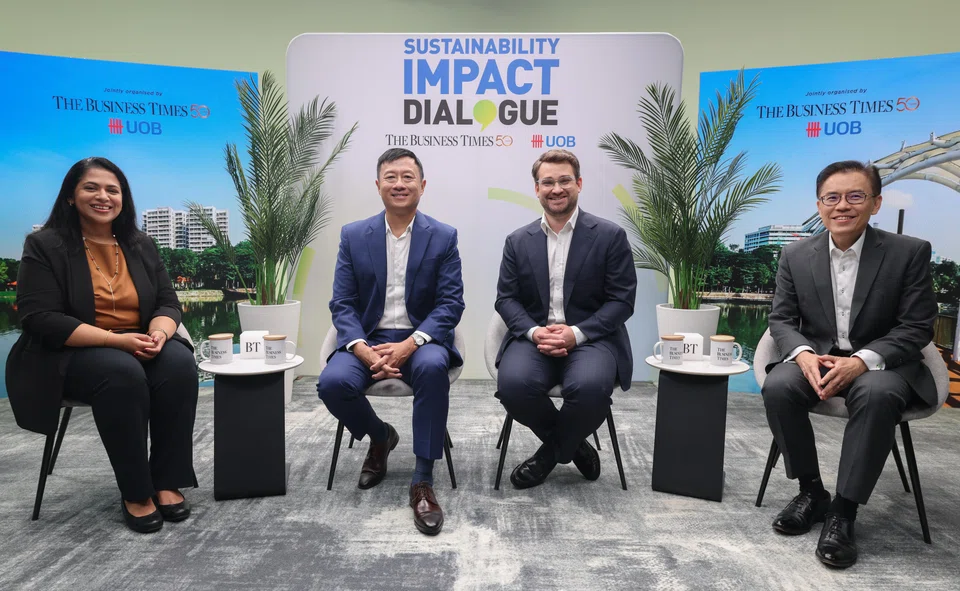
Jointly organised by The Business Times and UOB, the closed-door dialogue on Aug 19 was centred on the theme of “Building Climate and Business Resilience through Water”.
The hour-long dialogue was moderated by the Singapore Sustainable Finance Association’s director Kavitha Menon, who has more than 15 years of experience in equity investment management, specialising in global financials.
The session explored how governments and businesses are navigating water-related hazards; effective management of the resource; and how water resilience can support climate and business continuity and long-term growth.
Water risk could cost global economies some US$1.3 trillion between 2025 and 2030, according to estimates by global engineering and advisory services firm GHD.
In particular, the manufacturing and distribution sector will be hardest hit, with losses of more than US$4.2 trillion by 2050. The fast-moving consumer goods and retail sector could lose over US$1.1 trillion; the banking and insurance sector some US$514 billion; and the energy and utilities sector around US$237 billion.
Yet for all these projections, water risk still remains largely an afterthought for company boards and senior management teams until something goes wrong, said Graeme Riddell, managing director at insurance broking and risk management firm Marsh Risk.
SEE ALSO


As the firm’s Asia-Pacific lead for climate and sustainability consulting and a former climate risk and resilience consultant at the World Bank, Riddell advises both the public and private sector on environmental, social and governance standards.
Businesses in countries that have suffered significant floods or droughts typically learn and adapt. The crux, said Riddell, lies in ensuring others do not have to face a major disruption before recognising the value of investing in water resilience.

Who pays?
But a vast funding gap stands between investor appetite and climate-resilient infrastructure.
An estimated US$4 trillion is required to meet water infrastructure needs across Asia and the Pacific region from 2025 to 2040, according to calculations by the Asian Development Bank. Yet the current annual investment is less than two-fifths of what is necessary, leaving a yearly shortfall of over US$150 billion.
In South-east Asia, about US$26.6 billion is needed annually – but only 40 per cent of that has been funded, said UOB’s head of construction and infrastructure (sector solutions group), Jasper Wong. Moreover, only some 2 per cent of the funding is accounted for by the private sector, he added.
There is still a lot of reliance on regional governments to get the regulatory regime right, said Wong, whose expertise spans sector-specific solutions in the built environment, including solar, energy efficiency, waste and infrastructure projects.
He noted that, in many Asian countries, water tariffs do not fully reflect the costs of supplying water, which makes infrastructure projects likely less economically attractive to investors.
Another challenge for businesses lies in building the capabilities to develop their own internal tools to properly price water risks, said UOB’s Wong.
Internally, companies are beginning to take water risks more seriously, he noted, pointing out that multinational corporations are increasingly incorporating water-related targets into the performance indicators of their senior procurement executives – a trend that is likely to accelerate as climate-related disruptions intensify.
But identifying and pricing the risks is only part of the equation; the next challenge is in ensuring that the water projects are investable and bankable.
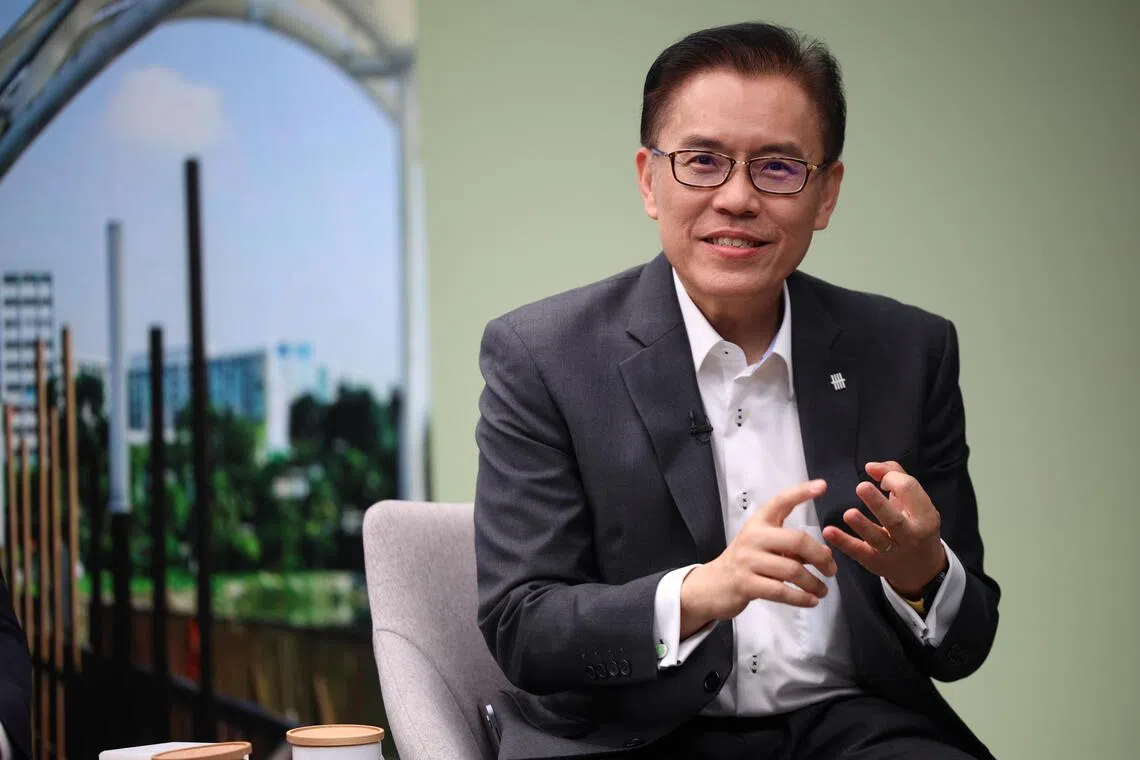
When determining investability, investors such as infrastructure funds would scrutinise the project’s scalability and growth potential, said Wong.
For commercial lenders, five traits determine bankability: revenue assurance, counterparty risk, the actual project, its risk allocation and its impact.
“If five of these are aligned, you have a bankable project,” he said. “The challenge is always that the tariff itself is primarily lower than the capital expenditure.”
To ensure bankability, there are several solutions, he continued. Companies can work with philanthropic funds and multilateral development banks to explore blended finance options, or look into long-term green sukuk issuances.
Wong concluded: “There are various ways to structure this, and the challenge is always finding the right parties. The three questions to answer, if you want to do a project, are: who pays for it, what is the project economics and how is risk being measured or reduced?”
What gets insured?
Putting a price on water hazards is only the first step. The next question is what companies can do with that risk – and how much of it can be transferred to insurers.
Not all water-related risks fit neatly within insurance models, said Marsh Risk’s Riddell. Insurance typically covers sudden-onset, damaging events such as floods, but water stress and droughts are chronic risks that do not necessarily result in a clearly defined physical loss.
“In the traditional sense of insurance, it’s an uninsured peril,” he noted.
What is also hard to insure is anything along the supply chain. Riddell explained: “If you don’t own it, if you can’t tell the insurer about it, it’s very hard for them to understand that risk that they’re taking on.”
Contingent business interruption insurance – which helps businesses safeguard against lost income and extra costs that arise when operations are interrupted by supplier or customer disruptions – comes in handy here, but, as Riddell acknowledged: “Inherently, it’s a much smaller limit that insurers are typically willing to cover.”
Parametric solutions, on the other hand, could provide businesses with the financial certainty needed. These refer to custom-built insurance that pay out a pre-agreed sum when predefined indicators, such as wind speeds or rainfall totals, are triggered.
“You don’t need to suffer an explicit loss, but you can get that payout, and we see that being played out to manage some of these residual risks,” said Riddell.
Little red dot
At home, Singapore is experiencing more intense rainfall and flooding; yet it is also one of the most water-stressed countries in the world.
According to Singapore’s Third National Climate Change Study, the mean sea level is projected to rise up to 1.15 metres by 2100, and could even reach up to 5 metres with storm surges and high tides.
Ong Tze-Ch’in, the chief executive of Singapore’s national water agency PUB, told the panel that while water-related hazards cannot be eliminated entirely, quality long-term investments in infrastructure can significantly reduce the risks for businesses.
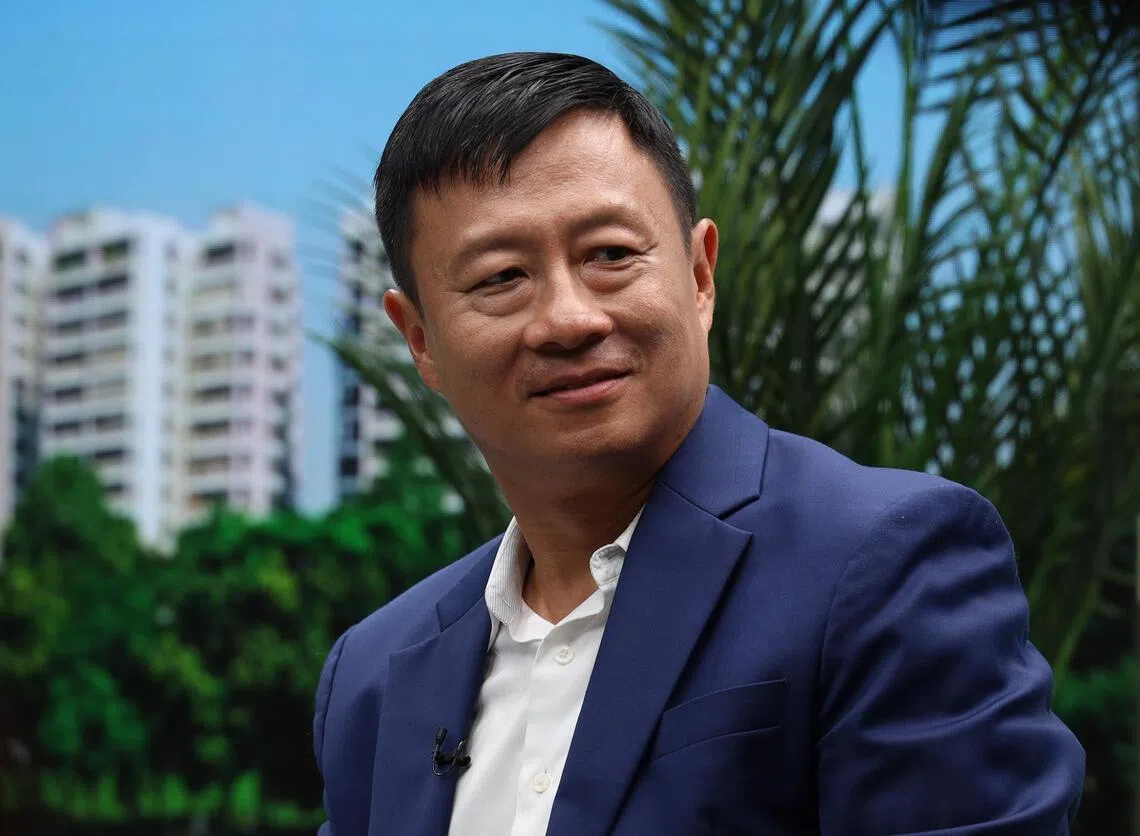
Ong – who is responsible for the country’s supply of clean water, reclamation of used water, management of storm water and coastal protection against sea-level rise – pointed out that 2026 has been designated the year of climate adaptation by the Ministry of Sustainability and the Environment.
The national effort involves a comprehensive review of climate adaptation measures across key domains such as heat resilience, coastal and flood resilience, as well as water and food resilience.
When it comes to national water supply and wastewater treatment, Singapore takes the long view, looking ahead to as far as 2065, noted Ong.
Singapore has four national taps: rainwater from local catchments; imported water from overseas; reclaimed NEWater; and desalinated seawater.
Over time, these water supply sources are likely to become more expensive and energy-intensive, said PUB’s Ong. “And so the rising demand for water that comes from the economy and the population does mean that water infrastructure is going to be more expensive to build and operate.”
Calling on more businesses to take up climate adaptation efforts, PUB’s Ong concluded: “We continue to invest in new technologies, and we hope for many of these to come into fruition: more efficient desalination, more efficient water reclamation technology, wastewater treatment, NEWater production – all this will go a long way to bring down costs.”
Relooking water
For Marsh Risk’s Riddell, the crux lies in risk ownership.
“Return-on-investment metrics aren’t always the golden catalyst to action,” he said. “What I think corporates really struggle with is this concept of risk ownership when the risk sits beyond their own sights.”
He raised the example of a client who is dependent on a single stretch of road leading to a port, where all the business’ manufactured goods are distributed. The road does not belong to the company, but a flood there would shut down the company’s operations.
“How do you create the business case to invest in that road?” asked Riddell, pointing out that the key lies in corporates understanding these single points of dependency and being more engaged in the conversations surrounding collective action.
The way UOB’s Wong sees it, the current perception of water simply as an operating cost to be paid every month must shift towards viewing it as an asset.
“You can insure your fire risk; you can do your foreign-exchange hedging; you can do your risk mitigation, but (not) addressing your energy transition or water risk now will definitely impact your business in the next five to 10 years.”

Decoding Asia newsletter: your guide to navigating Asia in a new global order. Sign up here to get Decoding Asia newsletter. Delivered to your inbox. Free.
Copyright SPH Media. All rights reserved.
TRENDING NOW
8 public officers referred to police over property buys near unannounced MRT stations: Chan Chun Sing

Grab CEO’s wife Chloe Tong on life with Anthony Tan and finding her purpose
Retrenched PMETs who return on lower pay see median 25% wage cut

Hao Mart owner resisting OG’s mortgage foreclosure on his Tanglin GCB

