



‘To build a bank in Vietnam was very enticing’: The Singaporean turning Techcombank into an AI-first lender
The private bank’s first-ever chief data officer bets on cross-ecosystem data sets, proprietary AI models

The strategies and stories that shape today’s leaders
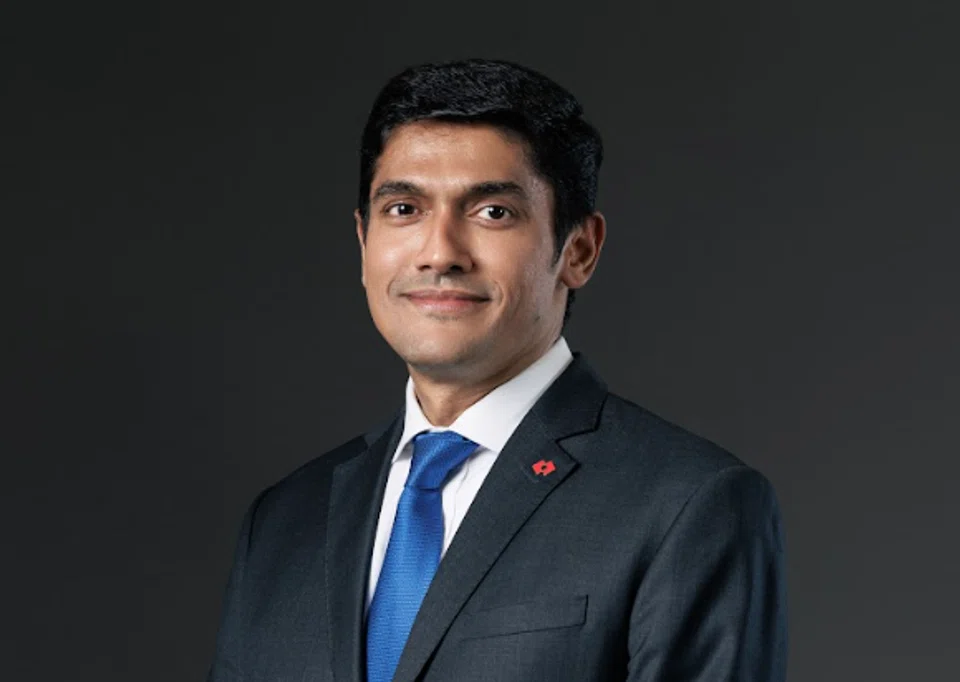
[HANOI] When Santhosh Mahendiran arrived in Vietnam from Singapore in the middle of the Covid-19 pandemic in 2020, he stepped into a role that barely existed in the country’s banking landscape.
Vietnam’s third-largest private lender by total assets, Techcombank, had hired him to build a data-driven banking operation from scratch, making him one of the first chief data and analytics officers in a Vietnam bank.
He spent his first few weeks in Hanoi in quarantine. Outside, Vietnam’s banking industry was still in the early stages of its digital transformation.
Inside Techcombank – for which Warburg Pincus became a key backer through a US$370 million investment in 2018 – chairman Ho Hung Anh and CEO Jens Lottner were outlining their ambitions to build one of Asean’s top 10 banks, with data, digital capabilities and talent at its core.
“The aspiration to have data as a key differentiator was right from the top,” he said. “The ability to build a bank in Vietnam was very enticing.”
For Mahendiran, the move meant leaving behind a decade-long career at Standard Chartered, where he had risen from executive director of enterprise data management in 2010 to global head of digital foundation, overseeing a team of about 1,000 people.
But the opportunity in a fast-growing market of 100 million people proved too compelling to ignore.
“I started here with zero people,” he said. “I (eventually) built and ran it as a self-contained unit which supports the entire business.”
His division in the 33-year-old bank is now a 300-person operation spanning artificial intelligence, data engineering, advanced analytics, machine learning, business intelligence, as well as data products, governance and a data academy.
Nearly two-thirds of the team are AI and data engineers and scientists, and nearly all are Vietnamese.
They are part of the bank’s more than 12,700 employees today, making up about 15 per cent working in IT, data and digital transformation, up from only 5 per cent in 2020.
Such growth illustrates Techcombank’s broader ambitions.
The lender ended Q1 2026 with around 18 million customers and total assets of 1,190 trillion dong (S$57.5 billion). It has spent the past five years positioning itself as one of Vietnam’s most technology-driven banks, investing roughly US$500 million in technology and data infrastructure.
“Five years back, we were 20 years behind regional markets in banking regulation and talent. Now, we are probably only a couple of years behind and are vigorously catching up,” Mahendiran said, noting that the Vietnam market has narrowed the gap significantly with mature ones such as Singapore’s.
“However, when it comes to technologies and the ability to create impact, we are there with the very best, not just the region, but in the world,” he said.
The fruits of the bank’s 2021 to 2025 transformation phase have been sweet, particularly alongside the rapid growth of Vietnam’s digital economy. Techcombank’s customer numbers nearly doubled, digitally acquired users quadrupled and e-banking transaction volumes quadrupled over the five-year period.
Total operating income (TOI) and profit after tax rose roughly 1.5 times to 53.4 trillion dong and 26 trillion dong, respectively.
Headcount and branch numbers, however, changed little, resulting in sharply improved productivity as the TOI per employee rose by about half to 4.2 billion dong per employee.
“We have been able to scale all those parameters without increasing headcount,” Mahendiran said. “That’s a very good yardstick to say how we see the future of AI – companies requiring fewer people, but smarter people.”
Building an AI-first bank
Techcombank’s next chapter appears even more ambitious.
For the 2025 to 2030 cycle, the bank’s strategy shifts decisively with AI becoming a critical enabler across the three pillars of digital, data and talent. Executives are now increasingly describing Techcombank not simply as a digital bank, but as an “AI-first bank”.
Lottner, the German CEO who came on board two months before Mahendiran in 2020, believes AI will fundamentally reshape how banks operate – to the point where these huge financial institutions could eventually be run by virtual agents.
“We will probably see a proliferation of (AI) capabilities very quickly across the bank. What we need to manage very carefully is the cost,” he said at a media briefing after the lender’s 2026 annual general meeting of shareholders in Hanoi in April.
Lottner told The Business Times that Techcombank plans to invest an even “bigger” amount into technology until 2030 than the US$500 million spent in the past five years – an effort that culminated in 2025 and which entailed migrating roughly 70 per cent of the lender’s systems to the cloud.

But for Lottner and Mahendiran, the transformation is not about replacing workers, but redesigning how decisions are made.
“The difference between a traditional bank and an AI-first bank is whether you are simply automating, or whether you are embedding intelligence,” Mahendiran said. “You probably need fewer executors, but more knowledgeable people who can work with AI tools.”
Techcombank now plans to deploy AI across operations, software development, customer management and hyper-personalised services, supported by an open-stack AI studio that will be rolled out to employees progressively this year.
The bank collects more than eight billion customer data points daily, feeding over 100 AI and machine-learning models, Mahendiran said, adding that “more data trumps smarter algorithms”.
It uses open-source models while building proprietary ones at scale as a differentiator, spanning fraud detection, compliance, customer acquisition, risk and personalised lending, he added.
The data, meanwhile, comes from the bank’s extensive ecosystem beyond traditional banking, including insurance (Techcom Life), investment (Techcom Securities), retail (through its partnership with Masan, which holds a near 15 per cent stake in Techcombank), technology (through affiliate One Mount), and real estate (via strategic ties with major property developer Masterise).
“The fundamental premise is about ensuring the data is shared in a confidential and secure manner with customer consent.”

AI-backed diversification
Techcombank’s property exposure remains a key concern for global ratings agencies, even as it has been gradually reduced. Real estate accounted for 29 per cent of its loan book as at end-March, down from 33 per cent in 2024, suggesting some progress in easing concentration risk – although it is still high. The bank said it is working to cut real estate exposure further to 25 per cent of total gross loans and corporate bonds in the next few years.
Part of the strategy is to use AI to diversify and expand access to underserved segments of the economy, particularly smaller merchants and household businesses that often remain outside traditional credit-scoring systems.
“Data and AI opening up new businesses is definitely a big tick mark,” said Mahendiran. “We are using non-financial data and are often able to lend to customers even when they lack financial information.” One example is its ShopCash working-capital product, which provides unsecured overdraft-style financing for small businesses and household merchants.
Some of the bank’s experimental AI models now use image-based assessments, where a tool analyses photos of a shop taken at specific times of the day to gauge how well the business is actually performing before credit is extended.
The approach has helped Techcombank rapidly expand its merchant customer base, which has grown four times over the past five years to 2.6 million, alongside 266,000 small and medium-sized enterprises (SMEs) and micro SME clients as at end-2025, the lender said in its report.
Unsecured lending balances also tripled during the period, while corporate non-real estate credit jumped by two times.

According to Moody’s in March, Techcombank’s other asset quality metrics rank among the strongest in Vietnam. The ratings agency recently affirmed the bank’s “Ba3” ratings and revised its outlook to “positive”, citing strong profitability, capitalisation and improving portfolio diversification.
Whether Vietnam can ultimately produce a globally competitive AI-driven bank remains an open question. Techcombank’s leadership has noted that the bank sees limited strategic need for a physical overseas footprint at this stage, given its strong position in Vietnam and the continued attractiveness of the domestic market.
For Mahendiran, the opportunity that first drew him to the country still feels unfinished, as the chairman, board and CEO have given him what he describes as “a great platform”.
“We have a symbiotic relationship in which we can feel and measure impact on society,” he said. “As long as we are creating value for customers and for Vietnam, the journey will continue.”
Three questions with Techcombank chief data and analytics officer Santhosh Mahendiran
Q: Was there a pivotal moment in your career or personal life that changed your approach to leadership?
Here at Techcombank, I don’t feel like an employee. I feel like this is my bank, and I’ve been empowered to think that way. The moment you start having that “ownership mindset”, you begin to think and act like an owner – that has been a very pivotal change for me.
Q: What is one piece of “unconventional wisdom” you swear by that most business schools would tell you is wrong?
I think business schools emphasise processes and frameworks, but ultimately, it’s all about keeping the people at the heart of what you do.
Q: When you feel burnout creeping in, what’s your non-business-related “panic button” activity or routine that reliably resets your focus?
Almost every day, I cook my own meals – all kinds of vegetarian food. Cooking is very therapeutic. What I like about it is that you don’t need to follow a specific formula, so you can be innovative and experiment.
TRENDING NOW

Singapore bars Alice Huang, woman tied to affair with Nvidia’s Jensen Huang, for misleading police

Nvidia prepares to oust Jensen Huang after news of second affair, with executive: reports

Higher rates, weaker spending: Is the Philippines entering stagflation?
Nvidia’s market value sinks below US$4 trillion after CEO Jensen Huang resigns

