



Consumer spending can be an important pillar for Vietnam in hunt for double-digit growth
The country is setting an ambitious target to expand its GDP by at least 10% for 2026

[SINGAPORE] Manufacturing, exports and construction have been the narrative of Vietnam’s growth story for at least the last five years, as the South-east Asian economy benefited from the restructuring of the global supply chain.
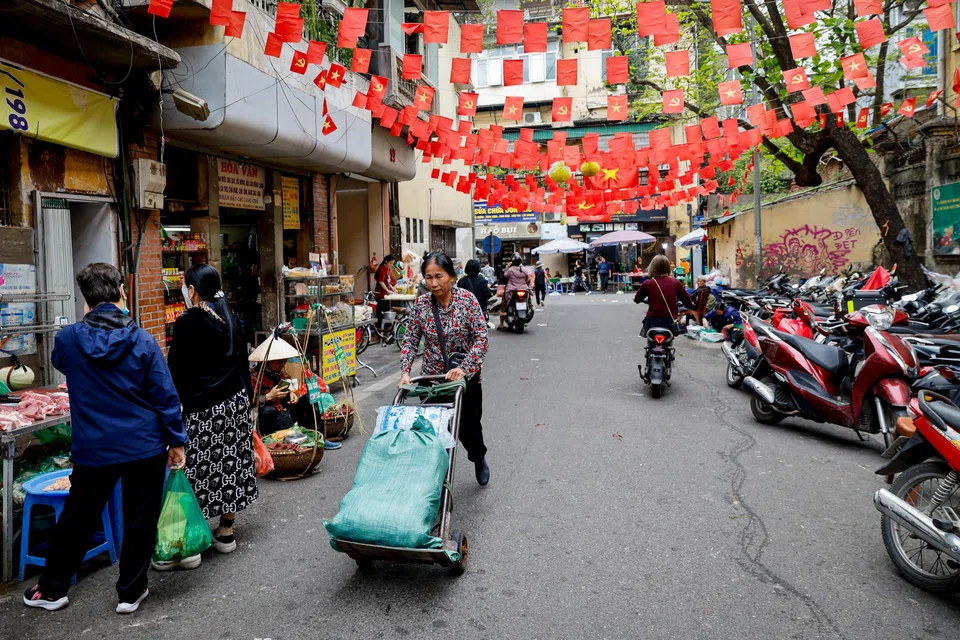
In the background, a quieter engine is now picking up steam, as retail sales and consumer-service spending surge to prominence.
Industrial production and construction are still expected to lead Vietnam’s economic growth, but analysts who spoke to The Business Times highlighted the growing importance of domestic consumption, as Vietnamese consumers increasingly become a beneficiary of the country’s economic expansion.
Dr Dam Nhan Duc, the chief economist at Vietnam’s MB Bank, said: “Domestic consumption has solidified its role as the primary engine for Vietnam’s economic growth... (it) has become a stabilising force amid volatile global trade.”
Recently released economic data showed Vietnam’s gross domestic product expanded by 8.18 per cent for the first six months of this year, with the manufacturing sector being a continued key growth driver.
Vietnam targets an average GDP growth of at least 10 per cent a year from 2026 to 2030.
Total retail sales of goods and consumer services surged 12.9 per cent year on year in the first six months of 2026. Dr Duc noted that it was the strongest domestic demand momentum since early 2023.
He was speaking to BT on the sidelines of Maybank’s Invest Asean forum at The Fullerton Hotel in Singapore, held from Tuesday (Jul 7) to Wednesday.
The two-day annual event connects companies and investors.


Le Hong Lien, head of institutional sales at Maybank Securities, said: “Household consumption accounts for about 55 per cent of Vietnam’s current GDP structure, with government spending contributing around another 10 per cent.” (see Amendment note)
Consumers prioritise “lifestyle-enhancing expenditures”
Vietnam’s middle class has expanded alongside the country’s economic growth.
The country’s gross national income per capita reached US$4,970 last year, resulting in its recent elevation to upper-middle-income status by the World Bank. The threshold to be classified as upper middle income is US$4,636.
And as Vietnam gets richer, Dr Duc noted that Vietnamese consumers are increasingly prioritising “lifestyle-enhancing expenditures”.
That trend is also being noticed by Phu Nhuan Jewelry (PNJ). Its CEO Phan Quoc Cong told BT that the younger generation in Vietnam no longer view jewellery purchases solely as a store of value.
“In the past, the core target of PNJ was people who bought jewellery because of the stock value. But younger consumers, because of lifestyle changes, are now buying jewellery because of self-expression. It’s something new for us,” he said.
The chief executive also sees Vietnamese consumers, particularly those of the younger generation, as the “most important growth engine” of the country due to a combination of increasing purchasing power and the evolution of consumer expectations.
But Lien cautioned that while consumption can emerge as a primary engine of Vietnam’s economic growth, industrial production and construction are still expected to be the bigger growth drivers in the near term.
“Once the infrastructure buildout is largely behind us, the government will have greater fiscal space to shift its focus towards boosting household incomes – for example, through personal income tax reductions – which would directly stimulate consumption,” she said.
PNJ and MB Bank were among the 14 Vietnamese companies that sent representatives to the Invest Asean conference.
The event connected some 200 investors with 54 companies from six Asean markets – Malaysia, Singapore, Thailand, Indonesia, the Philippines and Vietnam – and India.
The pool of Vietnamese companies was the largest, arguably reflecting investor interest in the economy and also an interest from these companies in interacting with foreign investors.
Both Dr Duc and Cong said the forum was a platform for them to inform potential investors about the sentiment in Vietnam and learn about foreign investor expectations.
Amendment note: An earlier version of this story had a different title for a spokesperson.
Decoding Asia newsletter: your guide to navigating Asia in a new global order. Sign up here to get Decoding Asia newsletter. Delivered to your inbox. Free.
Copyright SPH Media. All rights reserved.






