



Indonesia bourse’s new CEO targets global top ranking after MSCI scare
Jeffrey Hendrik wants to grow the country’s stock market capitalisation to US$1.8 trillion by 2030

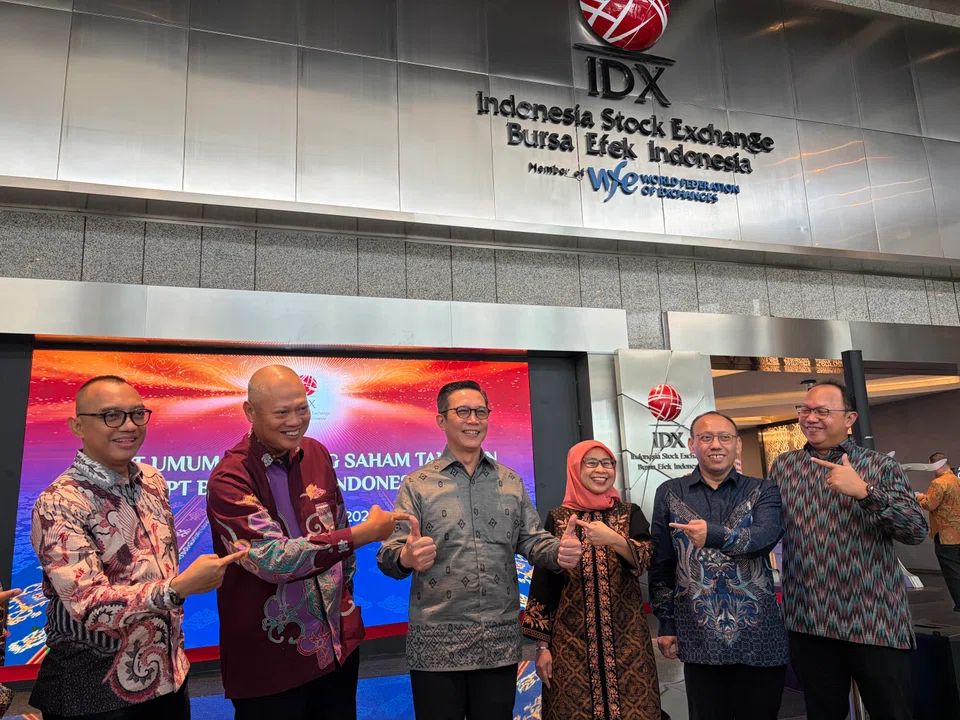
[JAKARTA] Indonesia’s new stock exchange chief is taking over one of Asia’s worst-performing equity markets with a bold promise: to turn the Jakarta bourse into one of the world’s top 10 by 2030.
Shareholders of the Indonesia Stock Exchange (IDX) on Monday (Jun 29) approved the appointment of Jeffrey Hendrik as CEO for the 2026-to-2030 term, formalising a leadership change announced earlier this month by the Financial Services Authority (OJK).
The latest development formally installs Hendrik as IDX’s turnaround chief. He has been acting CEO since January, stepping in after his predecessor resigned following a sharp sell-off in Indonesian equities and as MSCI scrutiny intensified concerns over market transparency.
The Jakarta Composite Index closed 1.28 per cent lower on Monday and has lost more than 30 per cent this year, making it one of the world’s worst-performing major equity markets.
Hendrik said that IDX’s goal now extends beyond becoming South-east Asia’s largest bourse, to ranking among the world’s top 10 by both market capitalisation and trading activity.
Its 2030 road map targets stock market capitalisation of 30,000 trillion rupiah (US$1.8 trillion), or more than 83 per cent of gross domestic product, up from 66.5 per cent currently.
The blueprint also calls for:
- Average daily trading value to jump to 31 trillion rupiah from 18.3 trillion rupiah;
- The number of listed companies to surpass 1,100 from 956; and
- The country’s capital market investor base to swell to 35 million from 20.3 million.
The bourse’s fundraising activity moderated last year, with around 279.3 trillion rupiah raised via 26 initial public offerings, down from 41 listings in 2024.
Hendrik said deepening Indonesia’s capital market would require strengthening both the supply of quality listed companies and investor demand.



On the supply side, the exchange wants to attract more large-cap companies to list. On the demand side, it hopes to broaden participation from domestic institutional investors alongside the country’s rapidly growing retail investor base.
At the same time, Hendrik said, restoring foreign investor confidence remains a priority.
“Liquidity cannot rely solely on retail investors,” he told reporters after the annual shareholders’ meeting in Jakarta. “We want foreign investors, domestic institutional investors and retail investors to jointly create a healthier market dynamic.”
Winning back investor trust
The exchange’s new long-term vision comes as Indonesia seeks to rebuild its standing among global investors after a multibillion-dollar sell-off this year weighed on sentiment.
Indonesia lost its status as South-east Asia’s largest equity market to Singapore in May, as declining share prices and persistent foreign outflows shrank the Jakarta bourse’s market capitalisation.
In January, MSCI froze the inclusion of Indonesian stocks in its indices and warned the market could be downgraded to frontier status over concerns including limited investability and high ownership concentration.
Last week, the index provider extended its review until November to evaluate reforms introduced by the Indonesian authorities.
“We will continue to implement the reforms consistently and intensify communication with MSCI, FTSE Russell and global investors to better understand what they need,” Hendrik said.
Indonesia has introduced a series of reforms requested by MSCI, including greater disclosure requirements, more granular investor data, tighter free-float rules and enhanced monitoring of stocks with highly concentrated ownership.
“We will continue to consistently improve transparency, enforce free-float rules and screen stocks with concentrated ownership,” Hendrik said. “Consistency is what MSCI is looking for.”
Decoding Asia newsletter: your guide to navigating Asia in a new global order. Sign up here to get Decoding Asia newsletter. Delivered to your inbox. Free.
Copyright SPH Media. All rights reserved.






