



Indonesia stock exchange chief resigns after MSCI shock triggers market turmoil
The sell-off has drawn swift reactions from global investors

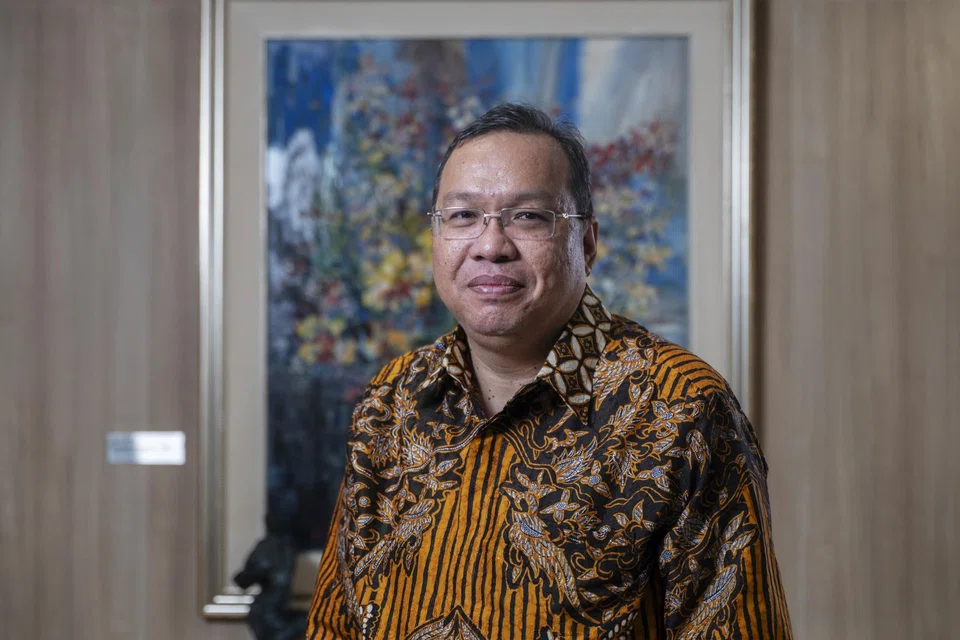
[JAKARTA] The chief executive of the Indonesia Stock Exchange (IDX) has resigned following a sharp market sell-off that led to two consecutive trading halts, triggered by an MSCI warning over free-float and investibility concerns.
Iman Rachman, president director of the IDX, announced his resignation on Friday (Jan 30) morning, as the benchmark Jakarta Composite Index (JCI) rebounded after days of heavy losses.
“Even though market conditions have improved this morning, I want to state that as president director of the Indonesia Stock Exchange, and as a form of responsibility for what happened over the past two days, I am resigning,” Iman said.
He added that the decision was made in the interest of restoring confidence in Indonesia’s capital market.
“I hope this will be the best outcome for the market. With my resignation, I sincerely hope our capital market will improve. I believe this is a form of accountability, and I hope the index, which opened stronger this morning, will continue to improve in the coming days,” he said.
Iman, 53, has served as president director of the IDX since 2022.
The resignation follows a period of intense volatility in Indonesian equities after MSCI announced it had frozen changes to Indonesian stocks in its global indices, citing concerns over limited transparency in ownership structures and potential coordinated trading activity.
The index provider also recommended that Indonesia’s market authority adopt a stricter definition of “free float”.
Free float has become a growing concern in Indonesia, where investors say many large-cap stocks are thinly traded and tightly held by a small group of wealthy shareholders, amplifying volatility and raising the risk of market manipulation.

MSCI has warned that without sufficient progress by May 2026, Indonesia could be reclassified from an emerging market to a frontier market, a move that would sharply reduce its weighting in MSCI’s emerging-market indices.
The warning sparked a sharp sell-off, pushing the JCI down more than 9 per cent over two sessions and triggering automatic trading halts on back-to-back days, a rare occurrence in the Indonesian market.
Shoulder the responsibility
Analysts see Iman’s resignation after two consecutive days of trading halts triggered by MSCI’s warning as an opportunity for Indonesia to strengthen its governance framework.
Nafan Gusta, senior market analyst at Mirae Asset Sekuritas, said the resignation was seen by the market as a sign of accountability from the authorities. “Seeing Indonesia’s market hit trading halts for two consecutive days, especially without any global crisis, is highly unusual,” he noted.
Oktavianus Audi, vice-president of equity retail at Kiwoom Sekuritas, said the resignation could create an opportunity for governance reforms, particularly under new leadership.
However, he noted that from the perspective of meeting MSCI’s evaluation timeline, the timing of the move was less than ideal.
“The leadership transition risks creating decision-making delays and could weaken the need for a single, authoritative counterparty with full mandate to engage consistently with MSCI,” he said.
The market turmoil also drew swift reactions from global investors. Goldman Sachs downgraded Indonesian equities to “underweight”, warning that MSCI’s investibility concerns could lead to more than US$13 billion in potential capital outflows.
In response, Indonesia’s financial authorities said they would move swiftly to address MSCI’s concerns.
The Financial Services Authority and the IDX said they would strengthen disclosure requirements, improve transparency around ultimate beneficial ownership and review free-float rules to ensure compliance with global investibility standards.
Shares rebounded by 1.08 per cent at the open on Friday, providing temporary relief, but analysts warned that confidence in the market remains fragile.
Market participants are now closely watching how regulators and exchange officials respond to MSCI’s concerns, viewing the episode as a critical test of Indonesia’s commitment to transparency, corporate governance and capital-market reforms.
Radhika Rao, a senior economist at DBS, said she expects more decisive steps to reassure investors and global index providers, while addressing opaque business structures and resolving any remaining governance issues over the medium term.
Decoding Asia newsletter: your guide to navigating Asia in a new global order. Sign up here to get Decoding Asia newsletter. Delivered to your inbox. Free.
Copyright SPH Media. All rights reserved.
TRENDING NOW

Once staunchly pro-China, Malaysian Chinese businesses are now distancing themselves from Beijing

Looking beyond looming CEO succession, should UOB potentially pursue a transformative merger?

Could stablecoins be the future of money?

Grab CEO’s wife Chloe Tong on life with Anthony Tan and finding her purpose

