

Why Singapore overtook Indonesia to become S-E Asia’s largest stock market – and what happens next
SGX’s market capitalisation climbs to US$644 billion as IDX’s falls to US$618 billion
Jermaine Fok
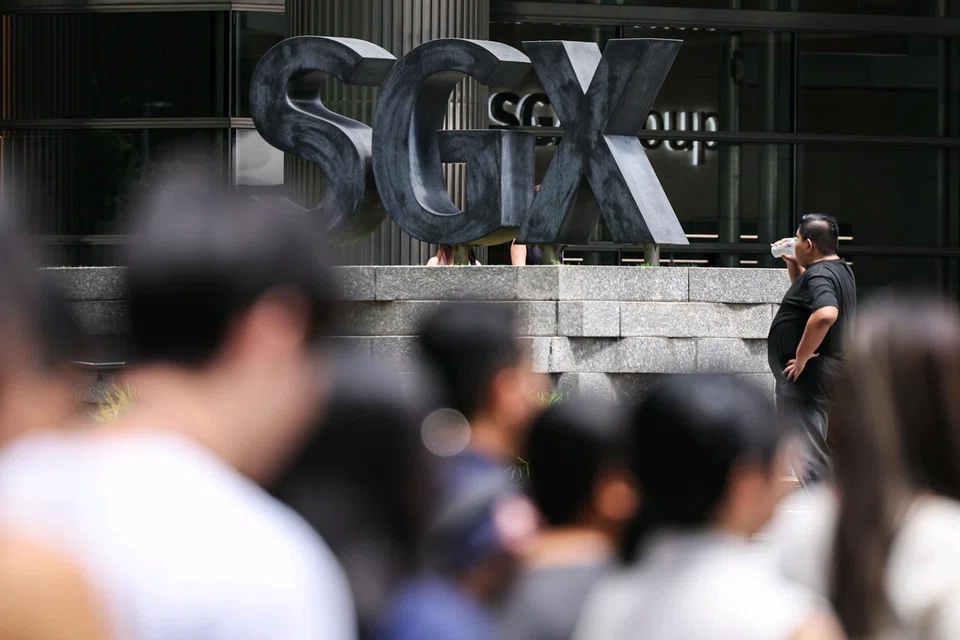
[SINGAPORE] Singapore has emerged as South-east Asia’s largest stock market, overtaking Indonesia after a downturn in Indonesian equities amid a weakening outlook and deteriorating investor sentiment, analysts say.
The total market capitalisation of companies listed on the Singapore Exchange (SGX) has climbed to about US$644 billion. It surpasses Indonesia’s stock market, which has fallen to about US$618 billion following a prolonged decline in Jakarta-listed shares, indicated Bloomberg data as at May 19.
Thailand is now the region’s third-largest stock market at about US$576 billion, followed by Malaysia, Vietnam and the Philippines.
Ng Yao Loong, head of equities at SGX Group, said that the Singapore bourse’s development reflects growing market confidence in the depth and liquidity of the country’s stock market.
“In a more uncertain global environment, Singapore has benefited from its role as a trusted hub for capital formation and price discovery,” he noted. “At the same time, we see this not as an endpoint, but as a reminder that more needs to be done to further deepen liquidity, enhance listings diversity, expand global connectivity and broaden investor participation.”
Indonesia weighed down by sentiment and policy concerns
The shift comes as Indonesia’s currency and equities face pressure from investor concerns over government spending plans, market transparency and central bank independence.
The Jakarta Composite Index (JCI) has slumped more than 26 per cent year to date.
Against this backdrop, Jayden Vantarakis, head of Asean equity research at Macquarie Capital, told The Business Times that a weaker rupiah, coupled with concerns over the macroeconomic and policy outlook, has driven a contraction in stock market turnover.
The rupiah fell to a record low on Monday (May 18), declining more than 1 per cent to 17,668 against the US dollar.



Meanwhile, Shekhar Jaiswal, head of equity research at RHB Bank, pointed out that Indonesia has faced challenges from opaque ownership structures, low free-float levels and MSCI-related developments, which have triggered significant outflows.
In January, the Indonesia Stock Exchange (IDX) suffered a US$80 billion market rout as mounting concerns over ownership structures and trading transparency triggered a broad sell-off. These concerns were further compounded by warnings from global index provider MSCI over a potential downgrade of Indonesia from “emerging” to “frontier” market status, citing issues including transparency, market manipulation and high shareholding concentration.
MSCI subsequently said that it would temporarily freeze index treatment for Indonesian stocks amid persistent concerns over free-float levels and overall market accessibility. It also removed several tycoon-linked companies from its global indices, including Barito Renewables Energy, Dian Swastatika Sentosa, Amman Mineral Internasional and Chandra Asri Pacific.
In addition, MSCI’s proposals to tighten free-float requirements for Indonesian stocks have drawn scrutiny in a market where many large conglomerates maintain tightly controlled ownership stakes.

Singapore sees stronger performance
Against continued weakness in Indonesia, Singapore has seen comparatively stronger market performance.
The benchmark Straits Times Index (STI) has posted a year-to-date gain of 8.28 per cent and rose 0.6 per cent month on month, indicated SGX’s April market statistics report released on May 13.
At the same time, total securities market turnover value on the bourse rose 6 per cent year on year to S$43.2 billion in April.
On that note, Macquarie’s Vantarakis said that Singapore’s value-unlock initiatives, the equity market development programme and positive sentiment across the broader market have supported liquidity. “Based on what we are seeing now, I see no reason for the trend to reverse (Singapore retaining the ranking),” he added.
RHB’s Jaiswal added that Singapore has been benefiting from stable governance and strong foreign inflows, supported by its safe-haven appeal.
He also cited ongoing regulatory reforms that are improving domestic liquidity, enhancing research coverage of under-covered stocks, and supporting overall market vibrancy.
What’s next for the markets?
With Singapore overtaking Indonesia to become South-east Asia’s largest stock market, analysts said that the shift could have broader implications for Asean markets.
Jaiswal noted that investors are favouring Singapore amid the current macroeconomic environment. Markets with structural issues, such as Indonesia, face heightened scrutiny and capital outflows.
“For Singapore, this divergence reinforces its position as the region’s financial hub; for Indonesia, it underscores the urgency of market reforms – including improved transparency, free-float and corporate governance – to attract and retain foreign investment,” he added.
He explained that Singapore is likely to retain its lead barring major shocks, given its improving market depth, regulatory stability and safe-haven status.
Paul Chew, head of research at Phillip Securities, said that the secondary benefit of Singapore’s position is that passive flows will allocate more capital to the market. He added that the Republic is also pursuing greater collaboration with other Asean exchanges to build a larger and more attractive liquidity pool for new listings.
“Singapore’s equity market is enjoying a re-rating from the injection of capital into the stock market, currency stability, low interest rates and a significant banking sector that can act as a hedge against rising inflation as interest rates climb,” Chew noted.
Despite the slump in Indonesian equities, William Simadiputra from the Indonesia research team at DBS views the country as a “contrarian investment opportunity”.
He noted that foreign ownership across major banks has declined sharply, while investor sentiment remains weak amid concerns over growth, policy uncertainty and rupiah depreciation.
Simadiputra added that first-quarter corporate earnings remained resilient, while banking sector asset quality is manageable, and domestic consumption has held up. “With valuations near historical lows, Indonesia offers an attractive entry point for long-term investors seeking exposure to South-east Asia’s largest economy once macro and geopolitical risks begin to ease.”
Decoding Asia newsletter: your guide to navigating Asia in a new global order. Sign up here to get Decoding Asia newsletter. Delivered to your inbox. Free.
Share with us your feedback on BT's products and services
TRENDING NOW

DBS, OCBC, UOB rout lops billions off STI as inflation, rate concerns spook investors

Grab CEO’s wife Chloe Tong on life with Anthony Tan and finding her purpose

OCBC sheds S$8 billion in value as shares close nearly 6% down; analysts cautious on banks

Deal between tycoon friends sparks scrutiny of Philippine power sector

