



Indonesia cuts shareholder disclosure threshold to 1% to lift market confidence after MSCI warning
The exchange is also working to finalise the methodology and procedures for a new shareholder concentration list

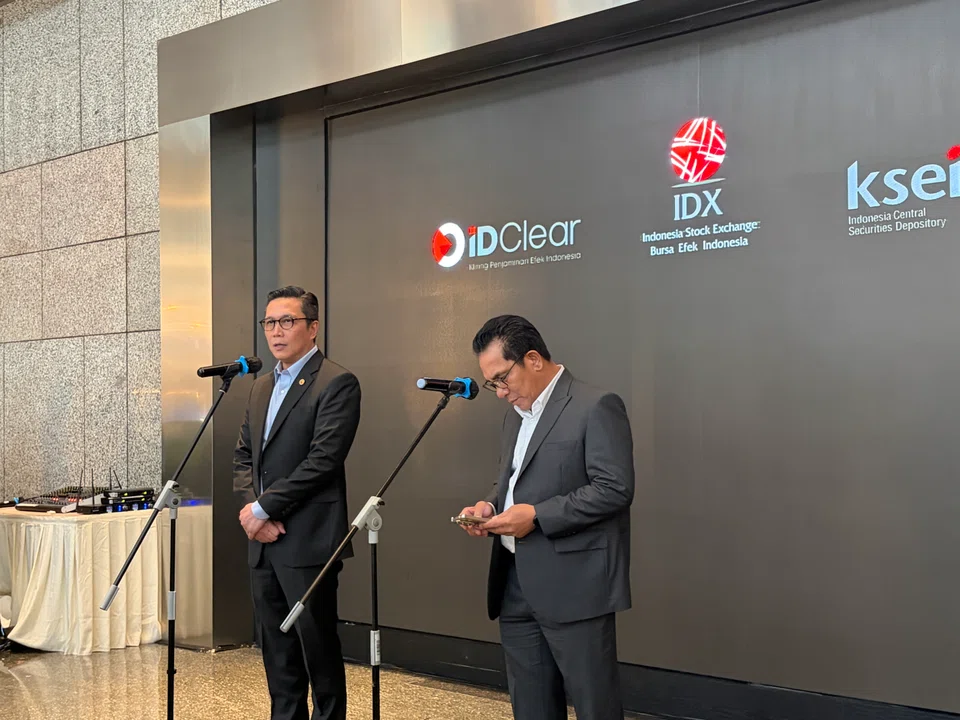
[JAKARTA] In a fresh bid to shore up market confidence, Indonesia has cut the disclosure threshold for listed-company shareholders to 1 per cent from 5 per cent, effective immediately, as Jakarta races to reassure MSCI that its market meets international governance standards.
The policy took effect on Tuesday (Mar 3) afternoon, a day before the Indonesia Stock Exchange (IDX) is due to meet MSCI again for talks on market accessibility and governance standards. The index provider’s late-January warning had triggered a market rout.
Jeffrey Hendrik, IDX’s interim president director, said that from market close on Tuesday, the names of shareholders owning more than 1 per cent in any listed company were made publicly available on the websites of the exchange and the Indonesia Central Securities Depository (KSEI).
“The new rule lowers the disclosure threshold from 5 per cent to 1 per cent and applies to all listed companies,” Hendrik said at a briefing.
The move is part of a broader set of reforms being rolled out by IDX to improve transparency and address concerns frequently raised by global investors.
In January, MSCI warned that Indonesia could be downgraded to frontier-market status as early as May, citing limited transparency that it said may have created conditions for potential price manipulation.
Under the updated framework, the exchange will also collect more granular data on institutional investors throughout March, including details, such as political affiliations, where relevant. That additional information is expected to be available by early April.
The exchange is set to meet the index provider again on Wednesday, marking a follow-up to earlier discussions on Indonesia’s market framework.
Market participants have long pointed to shareholder concentration and limited free float as structural issues affecting the Indonesian market.

IDX is also advancing changes to its free-float requirements.
Hendrik said that a draft regulation to raise the minimum public float from 7.5 per cent to 15 per cent has gone through an internal review and a public consultation process that ended in February.
The draft has since been submitted to the Financial Services Authority (OJK) for approval. IDX expects the new rule to be enacted in March.
If approved, the higher free-float requirement will apply immediately to new listings. Existing listed companies, however, will be granted a compliance period to adjust their ownership structure.
Hendrik added that the exchange is working closely with OJK to finalise the methodology and standard operating procedures for a new shareholder concentration list, targeted for release in the first or second week of March.
The list will identify stocks with highly concentrated ownership structures, regardless of whether the ownership is affiliated. However, it will not signal violations of minimum free-float rules and will not carry sanctions.
“The list is intended to serve as guidance for both global and domestic investors in assessing potential risks related to ownership concentration,” Hendrik noted.
Companies that appear on the list will be asked to conduct a public expose and are expected to take steps to improve their shareholder structure over time. The concentration list will be updated periodically, Hendrik added.
Decoding Asia newsletter: your guide to navigating Asia in a new global order. Sign up here to get Decoding Asia newsletter. Delivered to your inbox. Free.
Copyright SPH Media. All rights reserved.
TRENDING NOW

DBS, OCBC, UOB rout lops billions off STI as inflation, rate concerns spook investors

Grab CEO’s wife Chloe Tong on life with Anthony Tan and finding her purpose

OCBC sheds S$8 billion in value as shares close nearly 6% down; analysts cautious on banks

Deal between tycoon friends sparks scrutiny of Philippine power sector

