



Indonesia eyes Budget cuts amid high oil prices, keeps free meal programme fund intact
The move could calm market concerns over a possible rise in the budget deficit from higher oil prices, says an economist

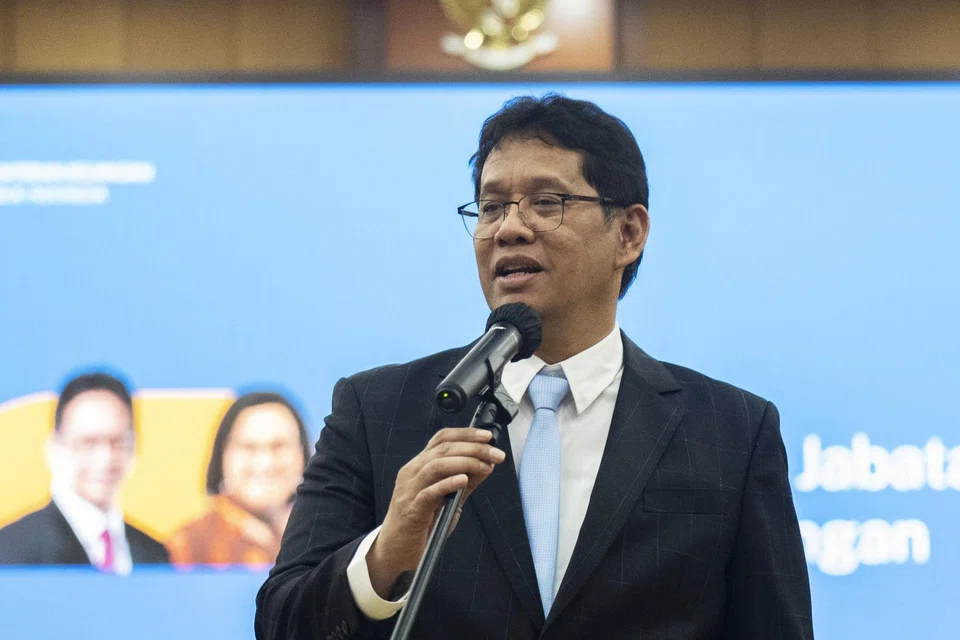
[JAKARTA] Indonesia is preparing additional Budget cuts if oil prices remain high, but the government will keep funding for the free meal programme – which accounts for more than 10 per cent of this year’s total Budget – unchanged.
Finance Minister Purbaya Yudhi Sadewa on Monday (Mar 16) said that, following meetings with economic ministers and finance officials, the government will re-evaluate its Budget as oil prices remain elevated. This is amid escalating tensions in the Persian Gulf – developments that could push up the South-east Asian country’s energy subsidy bill.
He added that the government will soon ask all ministries and agencies to reassess their budgets to identify spending that could be cut. He also urged them to postpone non-urgent new programmes.
“We are considering Budget cuts if oil prices remain high, but we will see the development in the Middle East,” Dr Purbaya said during a media briefing.
He also said there are currently no plans to raise the state Budget deficit ceiling above 3 per cent of gross domestic product, a threshold that recently drew scrutiny from investors.
David Sumual, chief economist at Bank Central Asia, said that the move could help to calm market concerns over a possible rise in the Budget deficit from higher oil prices, which may weigh on economic growth.
Indonesia faces the risk of a widening fiscal deficit as state spending jumped 41.9 per cent year on year, driven by front-loaded ministerial expenditures – particularly on the free meal programme and defence – as well as higher debt interest payments. Revenue, meanwhile, experienced only modest growth.
Nomura analysts noted that higher oil prices could put further strain on the country’s fiscal balance, worsening the twin deficits and pressuring the balance of payments – which is already under stress from persistent capital outflows, due partly to governance concerns and policy uncertainty, as Fitch and Moody’s have highlighted.
Suryaputra Wijaksana, an analyst at UOB Kay Hian, said that oil price volatility continues to be the main macroeconomic risk to Indonesia’s fiscal position. He noted that every US$1-per-barrel increase in average oil prices widens the deficit by 6.8 trillion rupiah (S$514 million), directly straining financing needs and the current account.


“However, Indonesia’s status as a net exporter of coal, gas and palm oil provides a partial natural hedge against these pressures,” he added in a note.
The Jakarta Composite index fell 1.6 per cent on Monday, while the rupiah slid to a record low near 17,000 per US dollar, reflecting investor jitters over the possibility that the government might exceed the 3 per cent Budget deficit ceiling.
Bank Indonesia held its monetary policy meeting on Tuesday, with the central bank keeping the rate unchanged at 4.75 per cent.
Decoding Asia newsletter: your guide to navigating Asia in a new global order. Sign up here to get Decoding Asia newsletter. Delivered to your inbox. Free.
Copyright SPH Media. All rights reserved.
TRENDING NOW

Once staunchly pro-China, Malaysian Chinese businesses are now distancing themselves from Beijing

Looking beyond looming CEO succession, should UOB potentially pursue a transformative merger?

Could stablecoins be the future of money?

Grab CEO’s wife Chloe Tong on life with Anthony Tan and finding her purpose

