



Indonesia imposes US$116 million in fines over manipulation of Sinar Mas, Prajogo-linked stocks
The penalties extend the country’s market clean-up to some of its most prominent corporate names

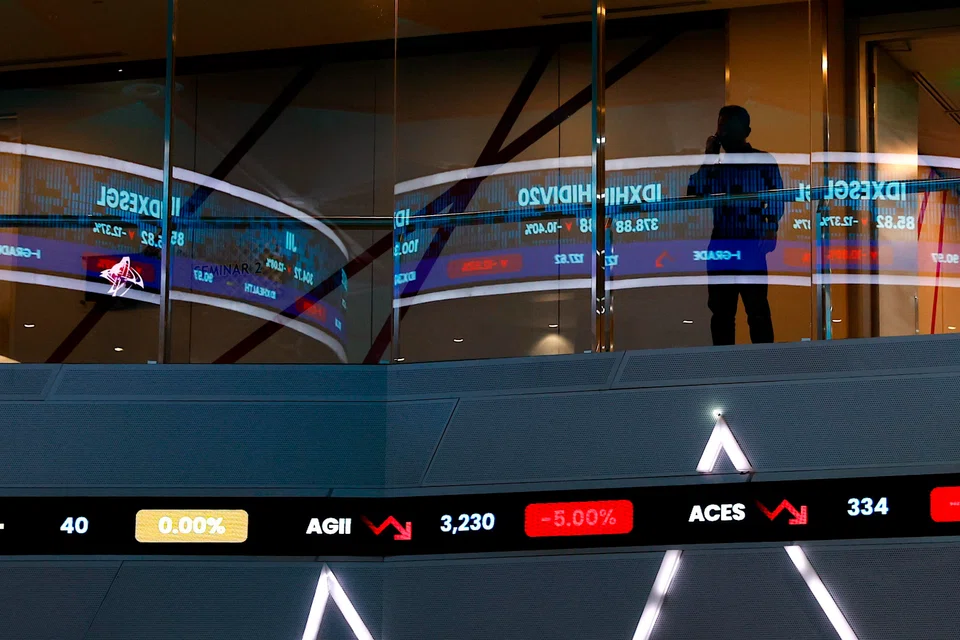
[JAKARTA] Indonesia’s financial regulator has imposed fines totalling 2.1 trillion rupiah (US$116.7 million) on parties found to have engaged in share manipulation and violated initial public offering regulations.
The three companies involved are listed entities linked to the Sinar Mas Group and billionaire Prajogo Pangestu.
The enforcement action, extending the authorities’ market clean-up to some of the country’s most prominent corporate names, comes amid the country’s stepped-up push for capital-market reforms.
Already, global index provider MSCI has flagged concerns over Indonesian markets’ transparency, ownership concentration and investability.
The three companies
Hasan Fawzi, the executive head of capital markets supervision at the Financial Services Authority (OJK), said on Friday (Oct 16) that Dian Swastatika Sentosa, a company linked to the Sinar Mas Group, had been fined 1.5 trillion rupiah for share-price manipulation.
Barito Renewables Energy, linked to Prajogo, has been fined 500 billion rupiah, and Petrindo Jaya Kreasi, also linked to the billionaire, was levied a 100 billion rupiah fine for violating IPO processes.
The regulator said that the fines target underwriters, traders and entities involved in IPO share allocations, and the ultimate owners linked to the three companies for having broken capital-market rules. The sanctioned parties were not named.
OJK informed that it had gathered evidence of unlawful gains arising from the trading in Dian Swastatika Sentosa’s shares, and the IPOs of Barito Renewables Energy and Petrindo Jaya Kreasi.
The three companies were among the stocks flagged by market authorities for high shareholding concentration, meaning that ownership was concentrated among a limited group of shareholders.

Evidence of wrong-doing
The regulator, which examined share transactions for Dian Swastatika Sentosa between 2023 and 2026, said that it found evidence of manipulation involving individual and institutional investors trading through several brokerage firms.
The activities were planned and structured, and triggered a significant rise in the company’s share price, OJK added.
The regulator requested data and documents from the brokerages involved, traced fund flows and summoned at least 12 brokerage directors, 15 individuals and 11 foreign legal entities in connection with the investigation.
Hasan said: “OJK also found evidence of violations involving brokerage directors and froze the licences of the individuals concerned.”
In the cases involving the Prajogo-linked companies, OJK found that shares offered to the public had allegedly been earmarked from the outset for groups associated with the companies’ controlling shareholders.
Certain parties linked to the controlling shareholders allegedly concealed their identities during the subscription process to secure large share allocations. This resulted in ownership being concentrated among a tight group of investors and a restricted supply of shares for public trading.
OJK pointed out that it had sought information from four securities underwriters and three custodians, traced related fund flows and summoned at least five brokerage directors, three custodians and seven parties involved in the fixed-allocation process.
The latest penalties come as Indonesia faces renewed scrutiny of its capital-market practices.
On Friday, MSCI launched a consultation on a proposal to reclassify Indonesia as a standalone market from its previous status as an emerging market. The move led to a trading halt and a sharp sell-off of Indonesian stocks.
OJK chairperson Friderica Widyasari Dewi said that the enforcement actions were part of an ongoing process and not prompted by MSCI’s announcement. She added that the regulator would continue to respect MSCI’s review process.
She noted that OJK and the Indonesia Stock Exchange had been implementing capital-market reforms since January. These have included lowering the shareholding disclosure threshold from 5 to 1 per cent, and expanding investor classifications from nine to 39 categories.
OJK pointed out that 835 parties had faced sanctions or law-enforcement measures since January, and that penalties totalling more than 390 billion rupiah had been levied before the latest fines.
The regulator also said 31 of the 61 companies previously identified as having highly concentrated shareholdings had been probed for suspected capital-market violations.
Decoding Asia newsletter: your guide to navigating Asia in a new global order. Sign up here to get Decoding Asia newsletter. Delivered to your inbox. Free.
Copyright SPH Media. All rights reserved.
TRENDING NOW

Singapore identifies 7 firms responsible for haze fires, notices issued urging action: Grace Fu

DBS remains analysts’ pick ahead of Q3 earnings after Singapore banks’ share slump

High Court rules against Julius Baer’s Singapore trust arm in US$50 million family trust dispute

Could stablecoins be the future of money?

