



Indonesia risks missing EV boom as most nickel goes to stainless steel, research shows
The growing adoption of nickel-free battery technologies is an added risk

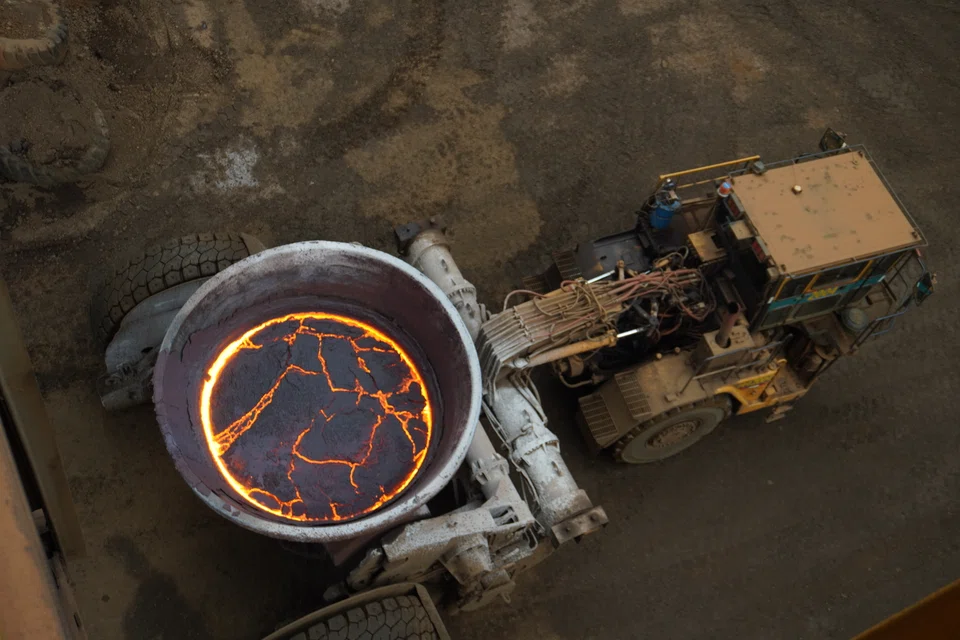
[JAKARTA] Indonesia’s ambition to position itself as a global hub for electric vehicle (EV) batteries may be undermined by the way its nickel is currently used, with most of the metal still flowing into stainless steel production rather than EV supply chains.
About 83 per cent of Indonesia’s nickel output in 2025 was absorbed by the stainless steel sector, while only 17 per cent went into EV battery production, according to publicly available industry data cited in a new briefing by the Centre for Research on Energy and Clean Air (Crea).
The findings, published on Thursday (Apr 16), highlight a widening disconnect between Indonesia’s “green nickel” narrative and the reality of its downstream industry structure. Analysts say that this could leave the country less able to capture the full benefits of the global EV transition.
Indonesia, the world’s largest nickel producer, has aggressively promoted downstream processing and EV battery investments as part of its industrial strategy.
However, Crea noted that the current production structure means the majority of nickel continues to serve traditional industrial demand rather than the fast-growing EV sector.
Syahdiva Moezbar, an industry analyst at Crea, said Indonesiaʼs EV-centric nickel ambition overlooks significant domestic technological and supply chain readiness.
“Expanding advanced nickel-refining technologies such as high-pressure acid leaching can support the production of higher-value derivatives and reduce the country’s reliance on stainless steel,” he pointed out.
Boom in captive coal
The report also points to the industry’s heavy reliance on captive coal power, raising questions about the environmental credibility of Indonesia’s EV supply chain.
According to Crea, the rapid expansion of nickel smelters has been accompanied by a surge in off-grid coal power plants dedicated to supplying energy for processing facilities.
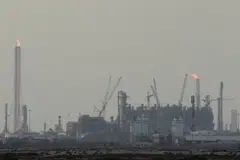
The country’s nickel industry is linked to a 31 gigawatt pipeline of captive coal capacity, enabled partly by regulatory loopholes and a green taxonomy that classifies such plants as “transitional”.
This has created what the report describes as a carbon lock-in, as new industrial facilities are often developed without sufficient planning to connect to renewable energy sources or the national power grid in the future.
Katherine Hasan, another analyst at Crea, said reducing the industry’s dependence on captive coal power is critical not only for environmental reasons but also for long-term competitiveness.
She added that new facilities should be located closer to renewable energy sources to avoid long-term carbon lock-in.
“Only when Indonesia ceases reliance on and the construction of new high-carbon assets can it transform ʻgreen nickelʼ from a mere label into a financially and operationally incentivised reality.”
Nickel loses ground
Beyond environmental concerns, market trends in the EV sector could also pose risks for Indonesia’s nickel strategy.
Nickel-free battery technologies are gaining traction globally, particularly lithium iron phosphate (LFP) batteries, which now account for more than 80 per cent of the EV battery market in China due to their lower cost and longer lifespan.
The growing adoption of LFP batteries by Chinese automakers, both domestically and in emerging markets, suggests that many EVs sold in countries such as Indonesia may rely on battery technologies that do not require nickel.
Meanwhile, conventional internal combustion engine (ICE) vehicles still dominate global vehicle sales. Because nickel is widely used in stainless steel components for these vehicles, a large share of Indonesia’s production remains indirectly tied to the ICE market rather than the EV sector.
Crea also warned that the rapid expansion of Indonesia’s nickel industry is accelerating the depletion of higher-grade nickel ore, particularly saprolite resources needed for energy-intensive processing. As ore quality declines, energy consumption, production costs and emissions are likely to rise.
Decoding Asia newsletter: your guide to navigating Asia in a new global order. Sign up here to get Decoding Asia newsletter. Delivered to your inbox. Free.
Copyright SPH Media. All rights reserved.
TRENDING NOW
Singapore identifies 7 firms responsible for haze fires, notices issued urging action: Grace Fu
DBS remains analysts’ pick ahead of Q3 earnings after Singapore banks’ share slump
High Court rules against Julius Baer’s Singapore trust arm in US$50 million family trust dispute

Could stablecoins be the future of money?

