



Indonesian carriers face US$1 million daily hit as Krakatau ash grounds Jakarta flights
The potential losses could widen to affect tourism, investments and logistics if disruptions persist

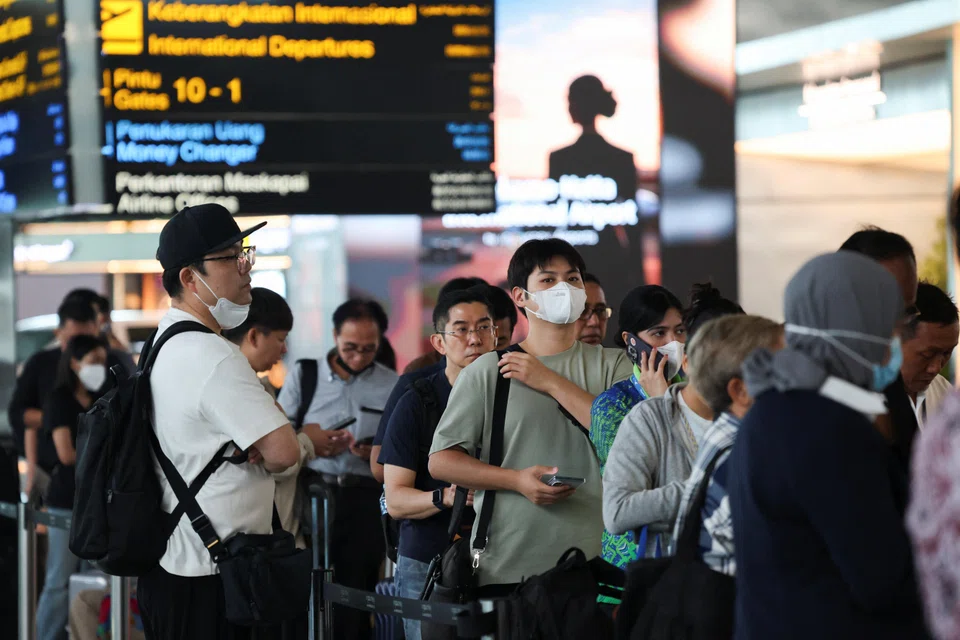
[JAKARTA] Indonesia’s airlines face losses of up to 19 billion rupiah (US$1.1 million) a day as volcanic ash from Mount Anak Krakatau has forced the closure of major airports, including Jakarta’s Soekarno-Hatta, the country’s airline association has said.
The estimate on the losses from airport closures serving Jakarta and Lampung, another vital corridor, factors in lost ticket revenue from cancelled flights and higher operating costs from fuel, aircraft parking and crew expenses.
It also includes potential passenger compensation and related services, said Bayu Sutanto, general secretary of the Indonesia National Air Carriers Association (Inaca).
“If the disruption were to last seven days, the potential loss could reach around 70 billion rupiah to 130 billion rupiah,” he said in a statement.
The disruption has affected about 2,961 flights and 341,000 passengers since Saturday (Sep 5); on Monday, the ash from the eruption forced the closure of seven airports in the country.
Apart from Soekarno-Hatta, the affected airports are Halim Perdanakusuma – also in Jakarta – and airports in Lampung and West Java flanking the Sunda Strait.
The concentration of air traffic in Jakarta makes the disruption significant for foreign investors and business travellers, who rely heavily on city’s connectivity as Indonesia’s main centre for government, finance and corporate activity.
The Jakarta-Singapore corridor is one of the world’s busiest international air routes. With 31 flights a day and about 4.6 million scheduled seats last year, it ranked as the sixth-busiest international route globally, said AirlineRatings.
Soekarno-Hatta handled 25.9 million passengers and 177,724 aircraft movements in the first half of this year, including 17.55 million domestic and 8.35 million international passengers.
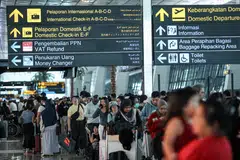
Around 40 per cent of international flights are concentrated in the capital, connecting Jakarta with major cities in Asia, Europe and the US.
This means that disruptions in the capital’s main hub can quickly ripple across the wider aviation network.
The closure adds another strain on airlines already grappling with tight cash flows and rising fuel costs, potentially putting further pressure on their financial health.
Gerry Soejatman, a Jakarta-based independent aviation analyst and consultant, said that Indonesia’s aviation industry has been facing a difficult recovery in 2026, so these airport closures could weigh further on airlines’ performance.
Indonesia caps domestic airfares to protect consumers’ purchasing power, but the policy creates a trade-off for airlines: While keeping fares affordable for passengers, the caps limit these carriers’ ability to raise prices when fuel and other operating costs go up, leaving them with less room to protect their margins.
Indonesia’s Ministry of Transportation said on Monday that volcanic activity and ash fall had prompted the airport closures, which would be extended until midnight, pending continued monitoring of conditions.
Mount Anak Krakatau, located in the Sunda Strait between Java and Sumatra, has been active since early July; eruptions intensified on Friday night.
Indonesia’s Meteorology, Climatology and Geophysics Agency said that it detected volcanic ash at altitudes of around 15,000 feet and 50,000 feet, and the Geological Agency has warned of a high risk of further eruptions in the coming days.
By Monday morning, volcanic ash was still detected in Jakarta, Banten, West Java and parts of Sumatra, coating vehicles and household floors.
Industry executives noted that the impact could extend beyond airlines to tourism, business travel, logistics and investment if closures and flight disruptions persist.
Indonesia’s economy has been projected to grow by around 5 per cent this year, so prolonged disruptions could weigh on economic activity and make it harder to sustain growth momentum.
Erwin Octavianto, a regional economist at the Center for Urban and Regional Study, said the Sunda Strait is a strategic corridor connecting production centres, industrial zones and logistics networks between Java and Sumatra. Disruptions there could trigger knock-on effects along supply chains and raise economic costs.
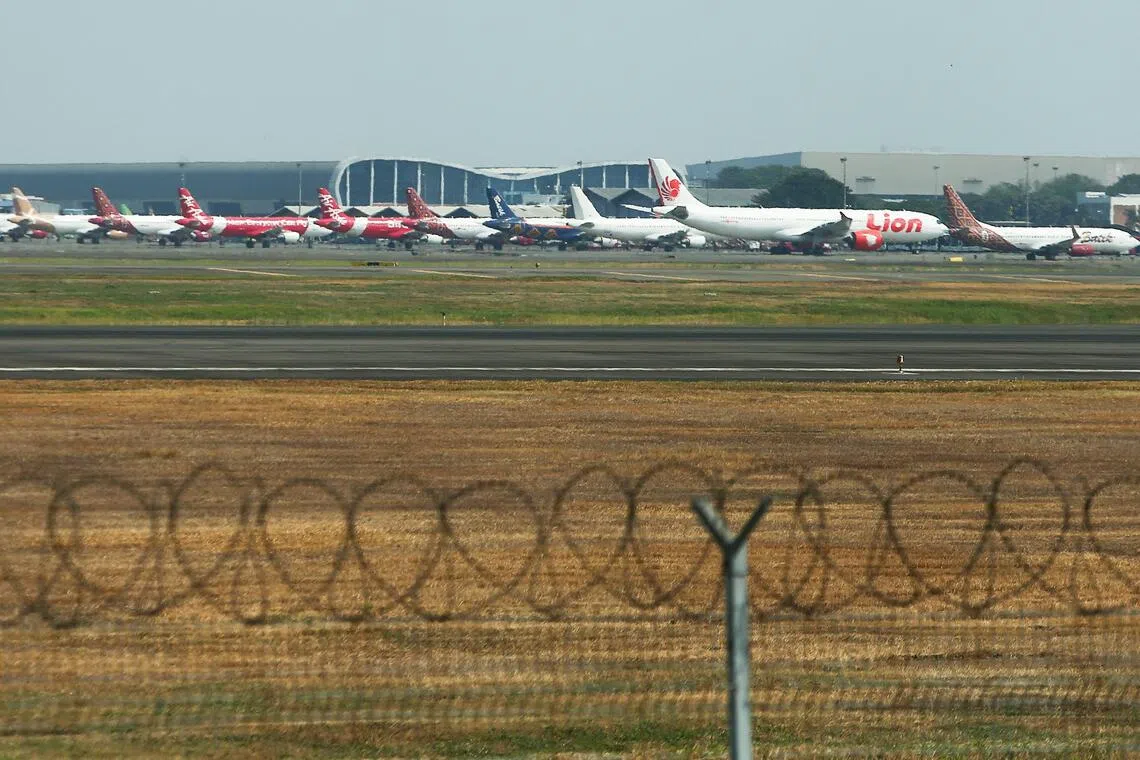
Key aviation gateway
The disruption has hit Jakarta at a time when the country remains heavily reliant on this vital aviation gateway for both domestic connectivity and international arrivals.
Alvin Lie, aviation expert and chairman of the Indonesian Air Transport Users Association, said that the concentration makes the Indonesian aviation system efficient in times of normal operations, but vulnerable during disruptions.“When Jakarta is disrupted, the impact spreads,” he added.
Unlike Bali’s Ngurah Rai Airport, which primarily serves as a final destination for tourists, Soekarno-Hatta plays a crucial connecting role as a gateway and transit hub linking Jakarta with cities across the archipelago.
Indonesia recorded 1,202,917 flights last year, said the statistics agency; nearly half the country’s flight traffic used Soekarno-Hatta as a link, followed by Bali’s Ngurah Rai Airport.
Alternative airports face limits
The government has designated alternative airports to handle flights affected by closures caused by the ash, including Kertajati and Yogyakarta International in Java, as well as Adisutjipto, Jenderal Ahmad Yani in Semarang, Adi Soemarmo in Solo and Juanda in Surabaya.
But analysts said that moving flights to these alternative airports could prove challenging, as they cannot immediately match Soekarno-Hatta’s capacity and connectivity.
Lie noted that these alternative facilities are already running at close to capacity, and some have infrastructural limitations. Jenderal Ahmad Yani Airport in Semarang, for instance, is primarily equipped to handle narrow-body aircraft, so accommodating larger wide-body jets would be a hurdle.
“There are also practical constraints around international traffic, including immigration processing and onward transport,” he explained.
Indonesia has spent years expanding and upgrading airports in the hope of spreading air traffic beyond its traditional gateways.
New and upgraded international airports have been built across the country, but passenger and flight volumes at some of these facilities have yet to reach earlier expectations.
Kertajati, located about 200 km from Jakarta, is a 2.6 trillion rupiah international airport built under President Joko Widodo. It has been used to receive some flights diverted from Jakarta, including those carrying Muslim passengers returning from their pilgrimage. Passengers diverted there have to make additional bus or train journeys to reach the capital.
The airport has direct international services, including flights operated by Singapore’s Scoot. Last year, it handled fewer than 70,000 passengers.
Soejatman said that Indonesia would still need to invest in other airports to expand capacity and connectivity, but those facilities cannot be expected to quickly absorb large numbers of flights when Jakarta is closed.
He added: “At least under normal circumstances, having more flights to a wider range of cities would provide alternatives when disruptions like this occur.”
Decoding Asia newsletter: your guide to navigating Asia in a new global order. Sign up here to get Decoding Asia newsletter. Delivered to your inbox. Free.
Copyright SPH Media. All rights reserved.
TRENDING NOW

Far East Organization’s The Serra Residences sells less than a quarter of units released at average S$3,460 psf

Philippine power giant First Gen rebuffs foreign offers, plans up to US$2.6 billion in expansion

Once staunchly pro-China, Malaysian Chinese businesses are now distancing themselves from Beijing

Is stagflation returning? That mostly depends on the Iran war

