



Indonesia’s commodity clout in numbers
The export revamp by South-east Asia’s largest economy might shake up the industry’s global supply chain

[JAKARTA] Indonesia’s plan to centralise exports of key commodities under a state-controlled entity is shining a spotlight on just how deeply the world depends on the country’s coal, palm oil and minerals.
From power plants in China and India to cooking oil across South Asia, Indonesian commodities sit at the heart of global supply chains.
Now, President Prabowo Subianto is pushing for tighter state control over those flows, arguing that Indonesia has lost billions of dollars through under-invoicing and offshore trading structures – a move that has shocked investors and global commodity traders.
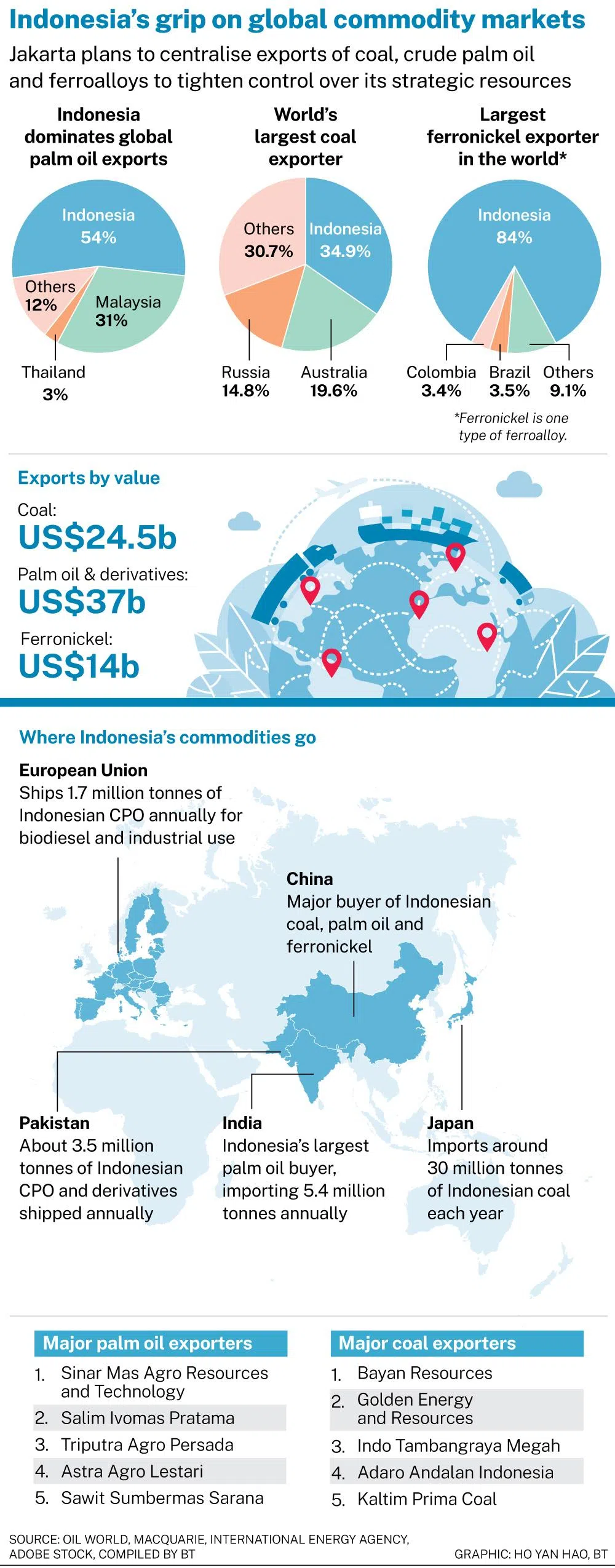
The policy will initially target coal, crude palm oil (CPO) and ferroalloys, sectors worth tens of billions of dollars annually and long characterised by complex trading ecosystems involving producers, traders, refiners and offshore intermediaries.
Here is what the policy means in numbers, sectors and market exposure.
Decoding Asia newsletter: your guide to navigating Asia in a new global order. Sign up here to get Decoding Asia newsletter. Delivered to your inbox. Free.
Copyright SPH Media. All rights reserved.






