



Indonesia’s eFishery founder faces verdict in fraud case over alleged 70 billion rupiah losses
Prosecutors have sought a 10-year prison term and fine of 1 billion rupiah for Gibran Huzaifah

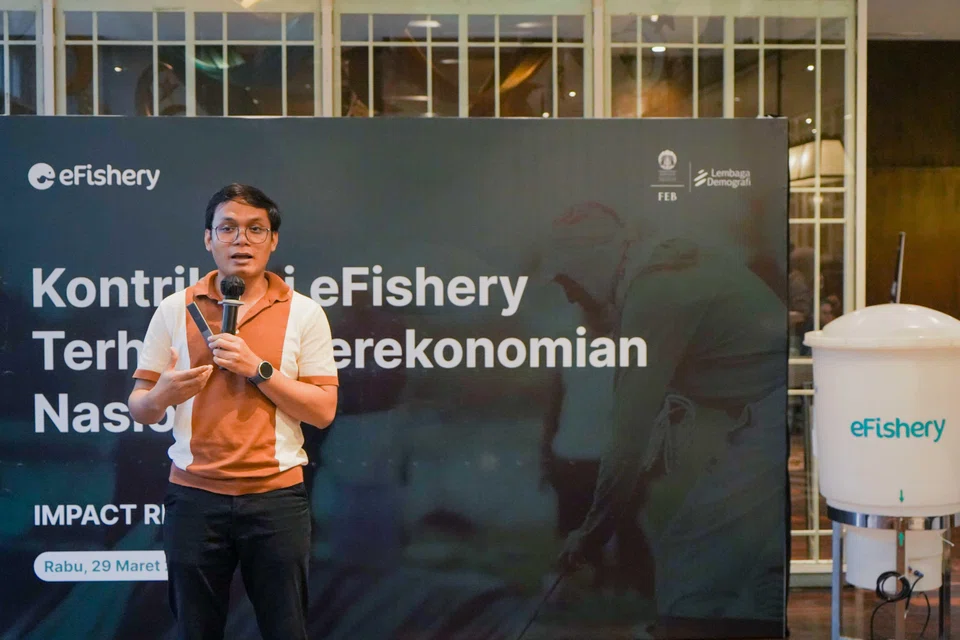
[JAKARTA] The founder of Indonesian aquaculture startup eFishery, Gibran Huzaifah, will learn his fate on Wednesday (Apr 29), when the verdict of a high-profile fraud and embezzlement case involving alleged losses of 69.5 billion rupiah (S$5.5 million) is delivered.
The case has been closely watched by investors since the startup’s collapse. Prosecutors have sought a 10-year prison sentence and a fine of one billion rupiah for Huzaifah, who has denied the allegations.
The ruling will be delivered at the Bandung District Court.
The case also involves two other former executives of eFishery.
Prosecutors have sought a 10-year prison term and a one billion rupiah fine for former vice-president of corporate finance and investor relations Angga Hadrian Raditya, and an eight-year sentence for Andri Yadi, who was the startup’s vice-president of artificial intelligence, Internet of Things and culti-financing.
The case centres on allegations that Huzaifah had engaged in financial misconduct, which caused losses to the company and its investors. The charges were filed under Article 374 of the Criminal Code on embezzlement in office, as well as Article 3 of Indonesia’s anti-money laundering law.
During a hearing earlier in April, prosecutors claimed that the defendants’ actions caused financial losses of about 69.5 billion rupiah to Multidaya Teknologi Nusantara – the legal entity behind eFishery, which was identified as the victim in the case.
The court heard that the defendants had given instructions for the acquisition of AI startup DycodeX, which develops technology used to support automated fish-feeding systems, for about 15 billion rupiah.
The funds were allegedly misappropriated; the acquisition ultimately did not go through.




Prosecutors also highlighted Huzaifah’s alleged efforts to manipulate the company’s financial statements to secure bonuses totalling 54 billion rupiah, an act they said caused losses to the company.
They further argued that the defendants’ actions had damaged investor confidence in Indonesia’s rapidly growing technology sector.
Fall from grace
In his defence statement, Huzaifah rejected all allegations brought by prosecutors, insisting that he had not committed the offences outlined in the indictment.
In his personal plea, he told the court that during his 11 years leading eFishery, the company had generated significant returns for several early investors.
Some shareholders, he said, recorded gains many times their initial investment, including representatives of investors who later became complainants in the case.
The scandal surrounding eFishery, once one of Indonesia’s most celebrated agritech startups, has become one of the region’s biggest startup downfalls, after Huzaifah admitted that it had overstated revenues.
The fallout reportedly left investors facing losses of around US$300 million. An investigation into the eFishery founder began after the company, previously led by Huzaifah, was taken over by FTI Consulting in February 2025 following a report of major internal fraud allegations.
All eyes on this
Wednesday’s verdict is expected to draw close attention from Indonesia’s technology and investment communities.
Analysts said that the ruling could set an important precedent for how Indonesia handles alleged misconduct cases involving high-profile technology startups.
Rahmad Budi Harto, lead consultant at public affairs firm Kiroyan Partners, said the relatively modest fine of one billion rupiah sought by prosecutors suggests that the case may involve business practices that require closer scrutiny, though the public and stakeholders have not been given a fuller picture of what happened at eFishery.
He said prosecutors were able to pursue the fraud and embezzlement charges because these are public offences that do not require a complaint from investors, even though investors were among those most directly affected.
“We hope more details will emerge beyond the FTI Consulting investigative report, which I believe served as the entry point or key evidence used by prosecutors in the current case against the founder,” he added.
“At the very least, this case should serve as a reminder to startup founders that even if investors do not pursue civil lawsuits, authorities can still bring criminal charges if elements of general offences such as fraud or embezzlement are found, since these are not complaint-based crimes.”
Founded in 2013, eFishery rose rapidly to prominence by providing technology and financing solutions for fish and shrimp farmers.
The startup attracted major backing from domestic and international investors, including Temasek, SoftBank and Peak XV Partners, and was widely regarded as a pioneer in Indonesia’s agritech sector.
However, revelations in early 2025 that the company had inflated revenues triggered a dramatic collapse in its valuation and credibility.
The scandal has since prompted broader scrutiny of governance standards and financial transparency within South-east Asia’s startup industry.
Decoding Asia newsletter: your guide to navigating Asia in a new global order. Sign up here to get Decoding Asia newsletter. Delivered to your inbox. Free.
Copyright SPH Media. All rights reserved.
TRENDING NOW

Once staunchly pro-China, Malaysian Chinese businesses are now distancing themselves from Beijing

Looking beyond looming CEO succession, should UOB potentially pursue a transformative merger?

Could stablecoins be the future of money?

Grab CEO’s wife Chloe Tong on life with Anthony Tan and finding her purpose

