



Malaysia should bump up incentives to woo advanced chipmakers: Nomura analyst
Analyst urges focus on advanced packaging, calling it the global tech industry’s primary need

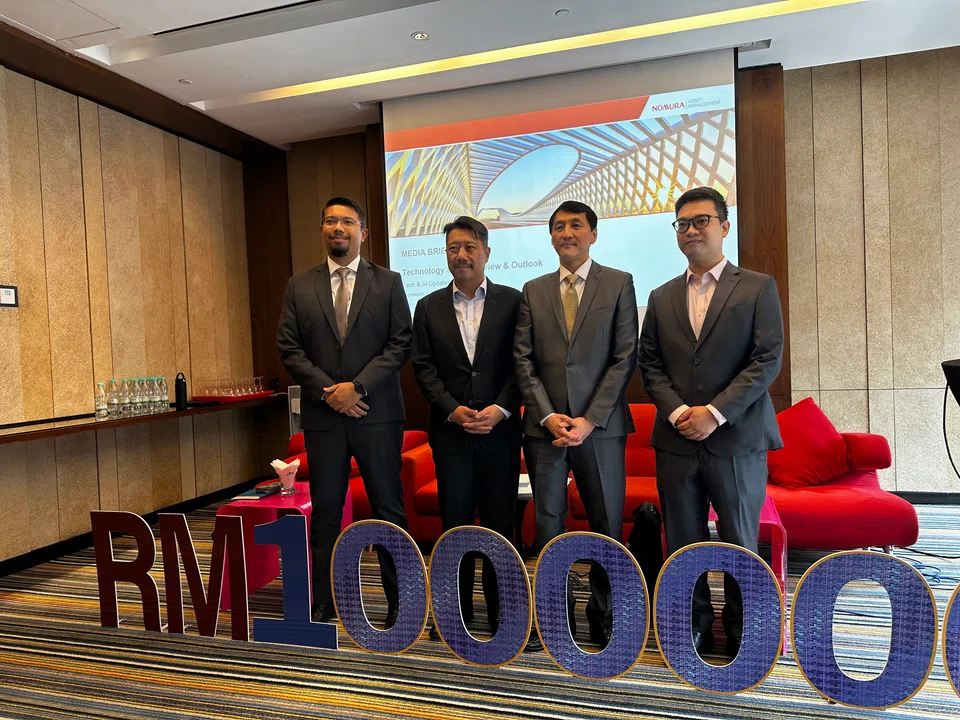
[KUALA LUMPUR] Malaysia should “double or triple” its incentives to semiconductor companies to reel in advanced manufacturers such as Taiwan Semiconductor Manufacturing Company (TSMC), as competition for global chip investment intensifies, a senior technology analyst has suggested.
Takeshi Kawamoto, a senior analyst at Nomura Asset Management UK, said the country has already established a strong position in back-end semiconductor activities such as assembly, packaging and testing, but needs advanced front-end manufacturing to capture a larger share of the artificial intelligence-driven chip boom.
“Malaysia is strong in the back end, but there’s not much (on the) front end,” he said at a media briefing on Monday (Sep 21), emphasising that front-end manufacturing such as advanced packaging will be a game changer for Malaysia.
He noted that leading-edge fabrication capabilities are concentrated among a few players, namely TSMC, Samsung Electronics and Intel.
With Samsung expanding in the US and Intel facing recent operational challenges, TSMC stands out as the most strategic potential investor for Malaysia.
He acknowledged that attracting the Taiwanese chipmaker would be difficult, as governments around the world are offering generous incentives to secure semiconductor investments. Japan, for example, has extended substantial support to persuade TSMC to set up manufacturing operations there.
“I have seen some of the subsidies that the government is offering for foreign companies to come to Malaysia. I would double or triple that,” he said.
Malaysia should promote its competitive costs
“Now is the opportunity to attract them, because it’s a race to attract foreign companies,” Kawamoto added, noting that Malaysia should highlight its competitive costs, availability of water and electricity, natural resources and relatively young, technology-savvy workforce.
The country also benefits from maintaining good relations with both the US and China at a time when geopolitical tensions are prompting chipmakers to diversify their supply chains.

“I kind of consider Malaysia the Switzerland of semiconductors,” he said, pointing to the country’s position between the world’s two largest economies.
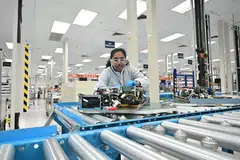
Malaysia is already home to operations by global semiconductor groups such as Intel and Infineon Technologies; US chipmaking-equipment supplier Lam Research has also set up manufacturing operations in the country.
However, Kawamoto said Malaysia must strengthen its advanced-packaging capabilities for more direct exposure to AI-related demand.
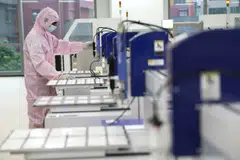
Advanced packaging enables components such as high-bandwidth memory and graphics processing units to be integrated to improve computing performance.
The process is critical for AI chips, but remains complex and is still largely handled by TSMC and a limited number of outsourced semiconductor assembly and test providers.
Mohd Aris Mohd Sharif, portfolio manager at Nomura Asset Management Malaysia, said local semiconductor companies are already investing in additional production capacity, and that some expansions are being supported by customer commitments rather than speculative demand.
Malaysian firms’ nascent efforts
Several Malaysian companies are also making a foray into advanced packaging, both as equipment suppliers and back-end service providers, even as global chipmakers increasingly focus their resources on front-end activities.
Some domestic players have also begun penetrating AI supply chains. However, the contribution has yet to be fully reflected in their earnings because many projects remain in the ramp-up stage, said Mohd Aris.
Kawamoto said the longer-term semiconductor outlook remains constructive as demand for AI broadens from model training into inference and enterprise applications, creating a wider and potentially more sustainable demand base for computing.
He expects that semiconductor shares would remain volatile following their strong rally, and that investors have become increasingly sensitive to signs of slower AI capital expenditure, higher interest rates or earnings and guidance that fall short of elevated expectations.
The global Shariah-compliant semiconductor fund he advises invests in companies in the US, Europe and Japan. Its investment process draws largely from the Nasdaq Global Semiconductor Index, which has about 80 semiconductor companies on it.
Kawamoto said Malaysia’s listed semiconductor sector currently does not have enough breadth and depth to support a dedicated domestic semiconductor fund.
That could change over the next decade if more companies grow and seek public listings, he added.
Launched in July 2022, the Nomura Global Shariah Semiconductor Equity Fund stood at about RM1 billion (US$245 million) in assets under management as at Jul 31, 2026.
Leslie Yap, managing director and country head of Nomura Asset Management Malaysia, said, citing LSEG Lipper data: “Its MYR class delivered a net return of 304.67 per cent from inception through Jul 31, compared with 323.16 per cent for the Nasdaq Global Semiconductor Index.”
However, he cautioned that past performance was not indicative of future returns.
Hasif Murad, CEO of Nomura Asset Management Malaysia, said the fund was designed to give Malaysian investors access to leading global semiconductor companies while broadening the range of Shariah-compliant investment products available locally.
Decoding Asia newsletter: your guide to navigating Asia in a new global order. Sign up here to get Decoding Asia newsletter. Delivered to your inbox. Free.
Copyright SPH Media. All rights reserved.
TRENDING NOW

Malaysian king buys stake in Singapore-listed mining firm expanding into rare earths

Grab CEO’s wife Chloe Tong on life with Anthony Tan and finding her purpose

Once staunchly pro-China, Malaysian Chinese businesses are now distancing themselves from Beijing
Longer wait times expected as S’pore healthcare institutions report system disruptions

