



Beyond servers: Malaysia targets bigger share of AI economy
The data centre boom is creating opportunities from chips and cooling to AI applications

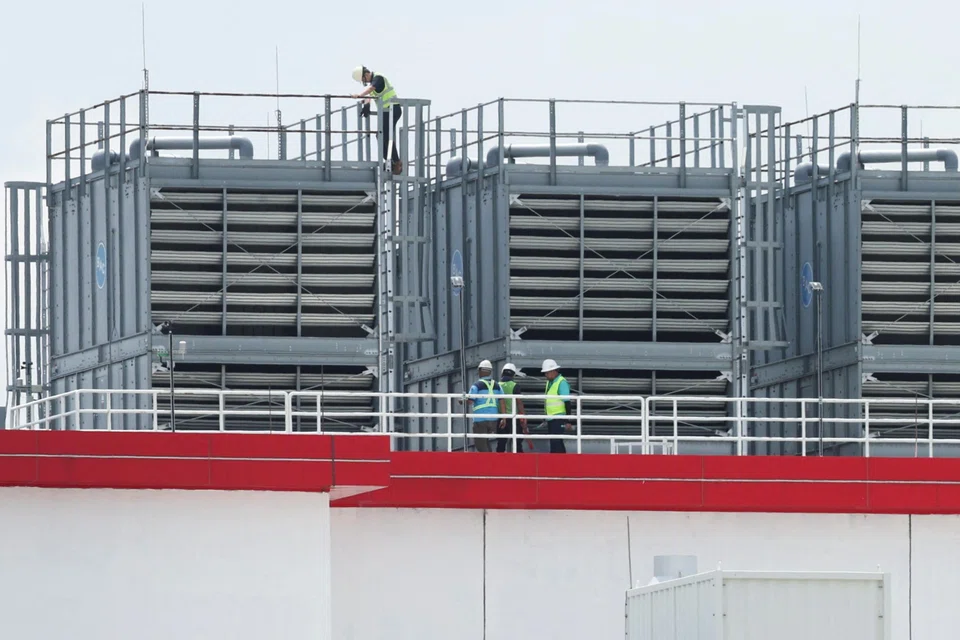
[KUALA LUMPUR] Beyond the concrete gates of Malaysia’s multibillion-dollar data centres lies the biggest artificial intelligence prize: a scramble to capture more of the AI supply chain, from chips and cooling systems to specialised hardware powering the regional tech boom.
“The race for AI applications and also participation in the building of AI is on, not so much data centres, but on the hardware,” InvestPenang CEO Loo Lee Lian told The Business Times.
Malaysia Semiconductor Industry Association president Wong Siew Hai similarly sees opportunities for the country’s existing electrical and electronics (E&E) base, spanning chips, power systems, sensors and other components.
An early sign of this spillover is emerging not inside the server halls, but in the equipment required to keep them running.
In July, US-based Vertiv, which provides power and cooling infrastructure for data centres, established manufacturing operations in Johor as AI-related demand expands across the region.
“I think we’re probably one of the first data centre infrastructure manufacturers in Malaysia, in Johor, to support AI growth,” said Andrew Whall, vice-president of operations and service operations, Asia, Vertiv.
Manufacturing equipment closer to customers significantly reduces lead times, he said, while Johor offers an established manufacturing ecosystem capable of supporting the operations.
“There’s critical mass for people, and the support we can get from that manufacturing ecosystem is there,” Whall said.
Beyond the gates
Yong Kai Ping, CEO of Malaysia Semiconductor IC Design Park, said Malaysia could capture significantly more value if more supporting equipment and systems were sourced locally – ideally at 30 per cent.
“We’re not talking about replacing Nvidia graphics processing units. Those will continue to come from companies like Nvidia,” Yong said. “We are talking about everything around them.”
That includes networking equipment, power-management systems, cooling systems and supporting electronics – areas where Malaysian companies could potentially design or manufacture products.
But having servers physically located in Malaysia does not automatically bring Malaysian companies into their supply chains.
“The opportunity is certainly there, but only if servers are procured locally so that multinational corporations (MNCs) can benefit local supporting companies. Otherwise, the spillover is mostly restricted to land, building construction, utilities and general maintenance,” Malaysia Semiconductor Industry Association’s Wong told BT.
Malaysian suppliers could eventually design chips, power systems, sensors and other components, but Wong said building those capabilities and meeting global qualification requirements would take time.
The opportunity is also drawing Malaysian startups further into the technology stack. Kuala Lumpur-based nanoSkunkWorkX is developing a thin-film interface designed to improve heat and current management in AI chip packaging.
“Malaysia’s advantage is not just that it assembles chips, but that it has decades of industrial muscle that can be reconfigured for frontier technologies,” said nanoSkunkWorkX co-founder and CEO Iqbal Shamsul.
The company draws on capabilities spanning Malaysia’s semiconductor, oil and gas, and aerospace industries, but Iqbal said gaps remain in applied research, pilot and qualification infrastructure, and patient deep-tech capital.
“The gap is how quickly we can connect research, industry, qualification and capital to turn an invention into a global manufacturing process,” he said.
Chip opportunity
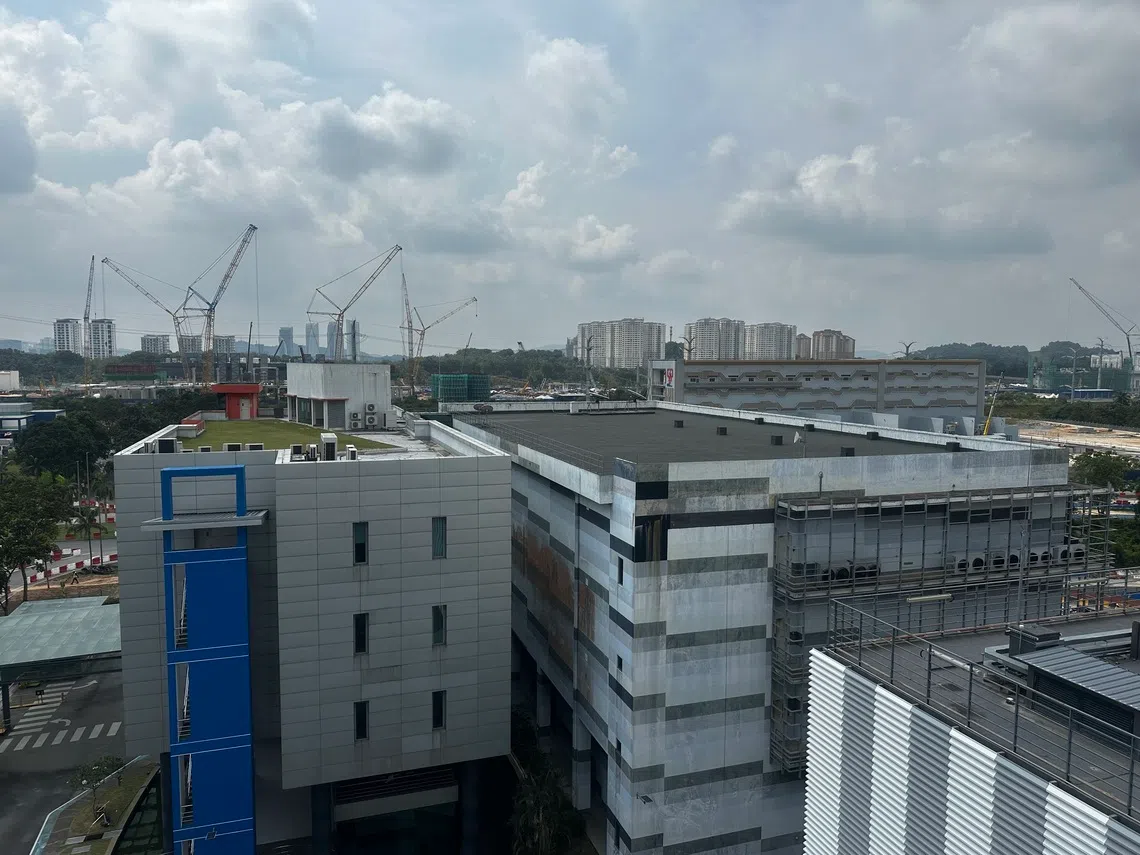
The global AI investment cycle is lifting demand for memory, networking and power semiconductors, and advanced packaging, said RHB Research senior economist Chin Yee Sian.
Malaysia was the world’s sixth-largest semiconductor exporter in 2023, with integrated circuits accounting for 56 per cent of its E&E exports, up from 35 per cent in 2016.
However, moving from manufacturing into higher-value AI technologies remains a work in progress.
Wong said advanced-packaging capabilities in Malaysia currently reside mainly with MNCs, even where manufacturing takes place locally. Capabilities among Malaysian companies remain relatively limited and need to be strengthened.
There are early signs that parts of the existing semiconductor ecosystem are repositioning themselves.
In Penang, home-grown automated test equipment companies that traditionally focused on legacy semiconductors are increasingly targeting AI chips.
“The automated test equipment companies used to be very involved in legacy chips, but right now they’re all venturing into the new AI chips,” InvestPenang’s Loo said.
She noted that Malaysia is also trying to build capabilities further upstream through integrated circuit design and advanced packaging, while companies such as SkyeChip are developing locally designed AI processors.
Above the servers
Capturing more of the hardware surrounding AI infrastructure, however, represents only part of the economic prize.
Tan Aik Keong, founder and CEO of Bursa Malaysia-listed Agmo, said customers are moving from asking “what is ChatGPT?” to exploring how AI can be integrated into their business processes, enterprise data and systems to improve efficiency and ultimately earnings.
“I think data centres are like shopping malls – they need tenants, which are AI software applications,” he said.
Greater availability of computing infrastructure within Malaysia could make it easier to deploy AI in industries where data residency, security, latency and regulation matter, including financial services, healthcare and government.
Tan said local infrastructure allows private and hybrid AI deployments where sensitive enterprise data and certain workloads can remain within Malaysia, while companies tap more advanced models when required.
“If Malaysia hosts the servers, supplies the electricity and provides engineering services, but the models, platforms, applications and recurring software revenue are owned elsewhere, then we are capturing only part of the value,” he said.
But the physical presence of computing infrastructure does not necessarily provide Malaysian technology companies with a competitive advantage.
“Data centres are essentially a commodity. AI computing is priced globally. Having more data centres doesn’t automatically give Malaysian AI companies an advantage,” said TS Wong, group managing director of Zetrix AI.
He emphasised that the bigger opportunity lies in ideas, software innovation and the ability to execute.
The real test
Tsubasa Nakazawa, managing director of Kintone Southeast Asia, pointed out that Malaysia’s AI push will be judged not by its data centre capacity, but by its ability to boost productivity across ordinary businesses.
“The real test for Malaysia will be whether that investment changes how Malaysian companies work, how employees solve problems and how local businesses create value,” he added.
A Kintone survey of 252 Malaysian small and medium-sized enterprises (SMEs) found 34.5 per cent still used spreadsheets for core operations, while 34.9 per cent juggled more than three software tools daily and 30.5 per cent relied on more than five WhatsApp groups for work.
For SMEs, Nakazawa said the opportunity is not necessarily to develop sophisticated AI models, but to apply the technology to everyday problems such as customer follow-ups, approvals, information management and repetitive work.
The wider payoff matters given the resources required to host the infrastructure. Kenanga Research said national utility provider Tenaga Nasional had a 7,500 megawatt pipeline across 56 data centre projects as at end-2025, while Johor has tightened approvals for lower-tier facilities amid concerns over water consumption.
Agmo’s Tan said: “Data centres are the foundation, not the final product. The higher-value opportunity is what Malaysia builds above the infrastructure layer: AI platforms, applications, intellectual property and eventually products that can be exported regionally.”
- Inside Asean: Malaysia examines the forces reshaping one of South-east Asia’s most dynamic economies. This is the second of three instalments: Part 1: As Malaysia’s chip goals morph into a multi-state model, are they outgrowing Penang? Part 3: Malaysia’s aircraft servicing sector is taking off, but can it move up the value chain?
TRENDING NOW

S$8 billion wiped off OCBC value as shares slide 5.8% in heavy trade

Grab CEO’s wife Chloe Tong on life with Anthony Tan and finding her purpose

Brookfield denies accusation it cut Soilbuild out of Mapletree deal
8 public officers referred to police over property buys near unannounced MRT stations: Chan Chun Sing

