



Malaysia’s aircraft servicing sector is taking off, but can it move up the value chain?
The country is eyeing a bigger share of the growing US$9 billion market in South-east Asia

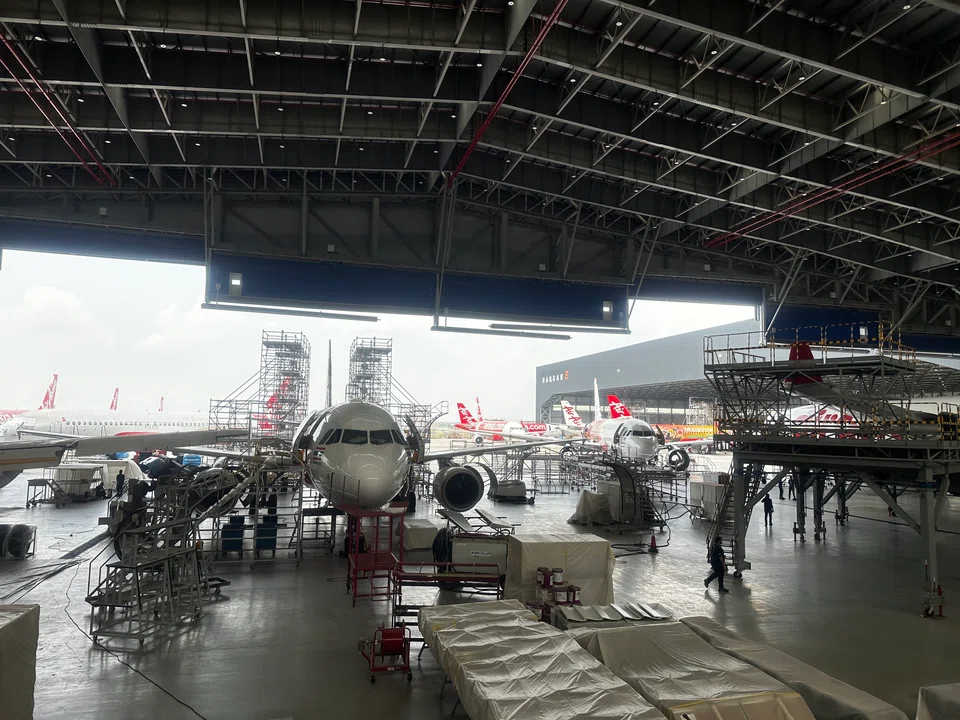
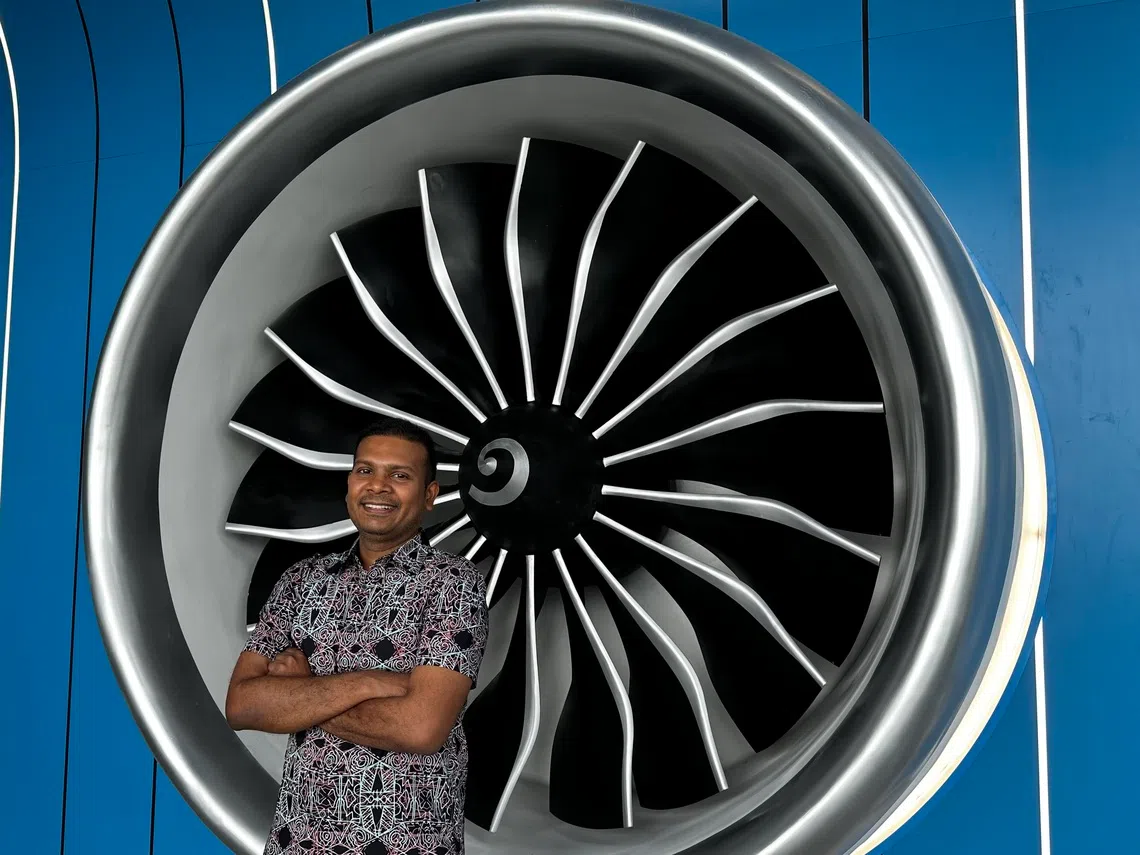
[KUALA LUMPUR] When the aviation industry virtually shut down during Covid-19, Asia Digital Engineering (ADE) chief executive Mahesh Kumar chose an unconventional path by expanding operational capacity rather than retreating.
Kumar, then head of fleet and technical asset management at AirAsia, was among those behind the formation of ADE in 2020. The maintenance, repair and overhaul (MRO) arm of Capital A (formerly AirAsia Group), started with a single maintenance line in what Kumar jokingly called a reban ayam, or “chicken coop”.
Six years later, it has 16 lines, more than 2,200 employees and plans to expand to 40 lines within five years, he told The Business Times.
ADE’s rapid expansion reflects a broader opportunity. South-east Asia’s commercial aircraft fleet is forecast to grow about 6 per cent annually between 2025 and 2035 – the fastest pace among major global regions, according to Alton Aviation Consultancy.
Commercial MRO demand is expected to rise from about US$9 billion to US$12 billion in real terms over the period.
Malaysia is eyeing a bigger share of that business. MAB Engineering has doubled its maintenance capacity at Subang Airport, Singapore’s SIA Engineering Company (SIAEC) is ramping up a base-maintenance operation there, while GE Aerospace is expanding its engine-overhaul capabilities in Sepang.
But the bigger question for Malaysia is whether it can turn more aircraft in its hangars into a deeper, higher-value aerospace industry.
The expansion comes as the country enters the final stretch of its Aerospace Industry Blueprint 2030 road map, which aims to turn the country into a leading South-east Asian aerospace hub. The industry generated RM32.5 billion (US$7.9 billion) in revenue in 2025, against a target of RM55.2 billion by the end of the decade.
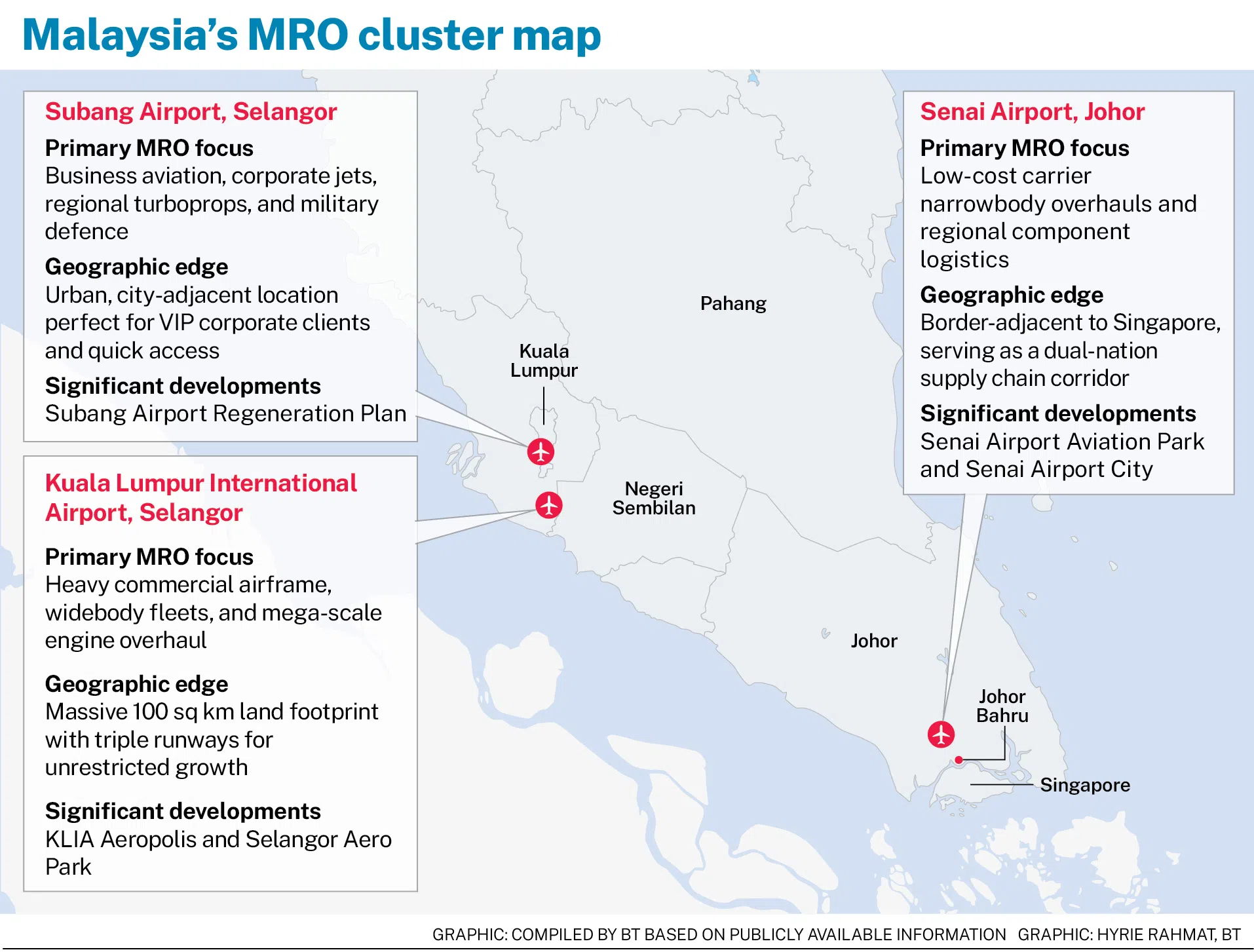
Malaysia’s MRO activity is concentrated around three main hubs: Subang Airport, its most established aerospace cluster; Kuala Lumpur International Airport in Sepang, where new engine and aerospace businesses are taking shape; and Senai Airport in Johor, an emerging maintenance hub close to Singapore.
More planes, more maintenance
Alton’s Singapore-based director Joshua Ng expects South-east Asia to become an increasingly important part of the global MRO ecosystem over the next decade, driven primarily by the pace of fleet growth.
“The region is progressively developing a broader and more sophisticated MRO ecosystem,” he told BT.
He noted that Singapore will remain a major centre for higher-value and technically complex work, while Malaysia is emerging as an important additional growth engine, supported by investment in narrowbody airframe capacity, engine capabilities and the wider aerospace ecosystem.
ADE’s Kumar views MRO demand boom as far more than a passing post-pandemic rebound: “I don’t see demand easing. I think it will continue increasing.”
Aircraft delivery constraints have forced airlines to keep older planes flying for longer, generating additional heavy maintenance and inspection requirements. Passenger-to-freighter conversions have also absorbed some existing hangar capacity.
He noted that capacity remains a constraint even for ADE as the company currently captures only about 25 to 30 per cent of AirAsia’s more than RM3 billion annual engineering and maintenance expenditure, leaving close to RM2 billion of potential business still outsourced.
ADE plans to have 20 maintenance lines by the end of next year and eventually 40, although some of that future capacity could be built outside Malaysia.
Cost meets capability
Malaysia’s proposition, however, is not simply cheap maintenance.
“Malaysia’s strongest proposition is probably its balance between capability and cost,” said John Low, managing partner for South-east Asia and Australia at Roland Berger.
While the country may not be able to match Singapore’s deep ecosystem or Indonesia’s massive domestic scale, Low noted that Malaysia bridges the gap with competitive operating costs, robust infrastructure and skilled engineering talent.
As Singapore faces tightening capacity and rising costs, he argues Malaysia should not position itself as the budget option, but rather as a high-capability, cost-competitive hub for sophisticated MRO and aerospace services.
Kumar estimates ADE’s maintenance rates are around 20 to 25 per cent below the average that AirAsia pays other MRO providers, while turnaround times are about 20 to 30 per cent faster.
That combination is helping to attract foreign customers, with ADE servicing airlines including Air France, Scoot and IndiGo. Air France, which does not operate commercial flights to Malaysia, flew widebody aircraft into the country for maintenance for about 18 months, Kumar said.
Endau Analytics founder Shukor Yusof said Malaysia compared favourably with other regional markets because of its talent and relatively low costs.
Low said Singapore remains the regional benchmark, with a deep concentration of original equipment manufacturers, specialist repair companies, as well as sophisticated engine and component capabilities.
Singapore currently accounts for around 10 per cent of global MRO output and close to 20 per cent of global engine MRO output, he added.
Far from competing head-on, the two operators serve complementary roles. SIAEC’s Base Maintenance Malaysia facility in Subang – housing two hangars and a six-aircraft capacity – complements its main hubs in Singapore and the Philippines.
Nearby, MAB Engineering doubled its Subang lines to four in May, dedicating half to Malaysia Airlines and Firefly while opening the remaining lines to third-party businesses.
Capturing the higher-value segment
For Malaysia, adding airframe capacity is only part of the opportunity. The more difficult step is capturing higher-value engine, component and specialist repair work.
GE Aerospace is developing a new 500,000 square feet engine-overhaul facility in Sepang, while ADE is looking for another 150 acres to support its next phase of expansion.
“We are looking into engine, landing-gear, auxiliary power unit, avionics and mechanical-component workshops as ADE moves beyond its established line and base-maintenance operations,” said Kumar.
MAB Engineering, meanwhile, is also actively moving up its value chain by expanding into high-precision component testing, composite structural repairs and aircraft teardown operations.
Malaysia has set an ambitious target of capturing 50 per cent of South-east Asia’s MRO business and 5 per cent of the global market by 2030.
Endau Analytics’ Shukor, however, is sceptical that Malaysia can make the leap quickly. He believes it cannot be done in “the near future” as the work “requires heavy investments and highly skilled people – both lacking in Malaysia”.
Low similarly identified ecosystem depth as one of three critical bottlenecks, alongside talent and execution.
“Malaysia needs to fill several gaps. Every component that still needs to be shipped overseas for specialist repair adds cost and turnaround time,” he added.
Talent advantage and constraint
Malaysia’s current talent pool provides a wealth of skill, but that means they are sought after by overseas employers. This could cause constraints as the country expands its capacity in the sector.
The aerospace industry employed about 34,700 people in 2025, including more than 12,000 in MRO, but the government estimates thousands more will be needed over the next five years.
Shukor said Malaysian engineers are frequently recruited by overseas employers, particularly in the Middle East, while Low said Malaysia needs to expand training capacity and improve career progression and remuneration to retain experienced workers.
Kumar, however, considers people one of Malaysia’s biggest advantages. ADE’s workforce has almost tripled from just over 700 employees in 2020 to more than 2,200 today, and the company has established its own engineering training school.
“Anyone can build a hangar,” Kumar said. “What you really need are people who can run the business.”
“The bigger prize for Malaysia is therefore cluster development,” Low said, adding that once sufficient MRO volume is established, suppliers and specialist repair companies have greater incentive to locate nearby, allowing more of the value surrounding each aircraft to remain in Malaysia.
- Inside Asean: Malaysia examines the forces reshaping one of South-east Asia’s most dynamic economies. This is the last of three instalments: Part 1: As Malaysia’s chip goals morph into a multi-state model, are they outgrowing Penang? Part 2: Beyond servers: Malaysia targets bigger share of AI economy
TRENDING NOW

LTA proposes combining car COE categories, adding rebate-surcharge system

StarHub to acquire MyRepublic’s mobile business amid ongoing telco consolidation

DBS, OCBC, UOB rout lops billions off STI as inflation, rate concerns spook investors

Grab CEO’s wife Chloe Tong on life with Anthony Tan and finding her purpose

