Malaysia’s CIMB explores taking Indonesian arm private amid market volatility
Tight float rules are among factors pushing the bank towards an estimated US$196 million buyout


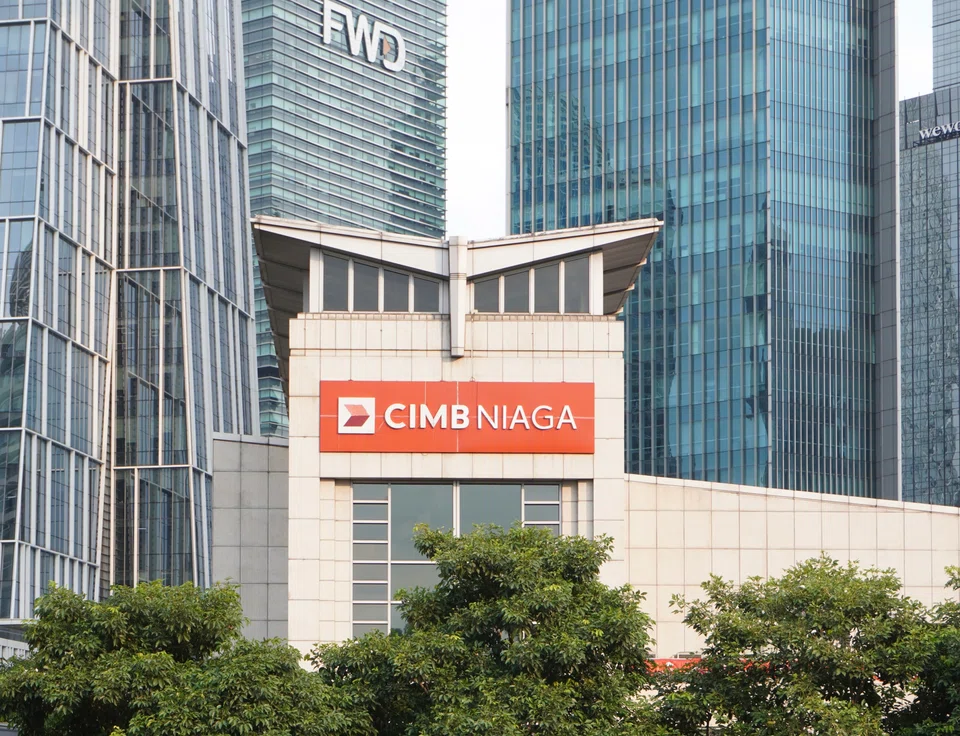
[KUALA LUMPUR/JAKARTA] CIMB Group, Malaysia’s second-largest bank by assets, is considering taking its Indonesian arm CIMB Niaga private, as challenging market conditions dim prospects for a secondary share offering.
Analysts estimate the buyout could cost about US$196 million.
The deliberations come as Indonesia tightens minimum free-float requirements to improve market liquidity and transparency, amid concerns over opaque ownership structures and the investability of its stock market.
CIMB Niaga faces a minimum free float of 12.5 per cent by March 2027 and 15 per cent by March 2028, compared with its current level of about 6.6 per cent. CIMB holds about 91.4 per cent of the bank.
BIMB Securities analyst Kelvin Ong said a potential MSCI reclassification of Indonesia from emerging-market to stand-alone-market status could make it more challenging to meet the free-float requirements within the prescribed time frame.
“Against this backdrop, management indicated that it may engage with the Indonesian regulators to assess the feasibility of taking CIMB Niaga private,” he said in a report on Wednesday (Oct 21).
Analysts outlined the options following a closed-door briefing led by CIMB chief financial officer Khairul Rifaie on Tuesday.
Privatisation as preferred option
Hong Leong Investment Bank analyst Raymond Ng said that management is more seriously exploring privatisation, including engaging regulators on possible structures.
“We see strategic merits, as this could streamline the ownership structure and provide greater flexibility in executing CIMB’s longer-term Indonesia strategy, particularly across wealth, mass affluent, selected (small and medium-sized enterprises) and syariah,” he said.
SEE ALSO






A straightforward buyout of minority shareholders at prevailing prices was estimated in the briefing to cost around RM800 million (US$196 million).
However, management stressed that privatisation would not necessarily involve buying out all minorities.
The proposal remains exploratory with regulatory hurdles, and its eventual structure is yet to be determined, Ng said.
A Kiwoom Sekuritas Indonesia analyst said CIMB Niaga had three options: sell a stake to a strategic investor at an acceptable valuation, launch a new public offering, or pursue privatisation that could lead to delisting.
The analyst described a public offering as less feasible under current market conditions, making privatisation the most strategic and credible option. CIMB Securities, the group’s research arm, expressed a similar assessment.
CIMB Niaga had total assets of 382 trillion rupiah (US$21 billion) as at Jun 30, with corporate lending emerging as its main growth driver. Its market capitalisation stood at about 37.8 trillion rupiah in mid-October.
Weak valuation dampens secondary offering
UOB Kay Hian analyst Keith Wee said CIMB Niaga’s depressed valuation makes public equity fundraising or a secondary offering increasingly unlikely. “Instead, capturing value over a longer investment horizon remains the priority.”
Structures under consideration could allow selected long-term institutional minority shareholders to retain their stakes in the private entity, subject to regulatory discussions and clearance.
This could limit CIMB’s need to commit substantial fresh capital, preserving its capacity to return excess capital to shareholders, Wee added.
Nevertheless, CIMB Niaga faces near-term earnings pressures from funding costs and credit trends.
Ng said that asset quality remains broadly stable, although delinquencies among mass-market consumers have risen. Its buy-now-pay-later portfolio, in which asset-quality problems emerged in mid-2025, is being run down as a legacy book.
Sizeable recoveries from legacy non-retail accounts that supported first-half earnings are expected to normalise significantly in H2, mechanically lifting net credit costs.
Ng warned of an increasingly unfavourable earnings mix, with potential pressure from narrowing net interest margins and rising credit costs.
“While broad-based asset-quality deterioration is not evident yet, CIMB Niaga remains the clearest downside risk to group earnings,” he added.
Wee said margin pressures could intensify as management expects two further interest rate increases in Indonesia. As deposits typically reprice faster than loans, higher funding costs could squeeze CIMB Niaga’s net interest margin.
The management of the bank aims to accelerate loan repricing and improve its deposit mix to cushion the impact of the expected increases.
Group ROE target remains intact
The group’s 2026 return-on-equity (ROE) target of 11 to 11.5 per cent remains intact, supported by stronger earnings contributions from Singapore and an expected improvement in Thailand, following the disposal of its loss-making automotive finance business, said Wee.
He noted that the potential transaction therefore sits alongside efforts to manage near-term earnings pressures, while retaining exposure to Indonesia’s longer-term growth opportunities.
Its eventual structure will also determine how much capital CIMB needs to commit.
CIMB Niaga is scheduled to release third-quarter results on Oct 28, followed by CIMB Group on Nov 25.
CIMB had not responded to The Business Times’ queries at the time of writing.
CIMB Niaga shares rose 11.29 per cent on Tuesday, outperforming the Jakarta Composite Index.
On Wednesday, Bursa Malaysia-listed CIMB Group ended marginally lower, down 0.1 per cent at RM7.14, with nearly 13.2 million shares changing hands.
Decoding Asia newsletter: your guide to navigating Asia in a new global order. Sign up here to get Decoding Asia newsletter. Delivered to your inbox. Free.
Copyright SPH Media. All rights reserved.