



Malaysia’s F1 return: A low-cost second chance, possible Singapore boost
Opportunity to fix a ‘mistake’ could open the door to a permanent return for Malaysian race

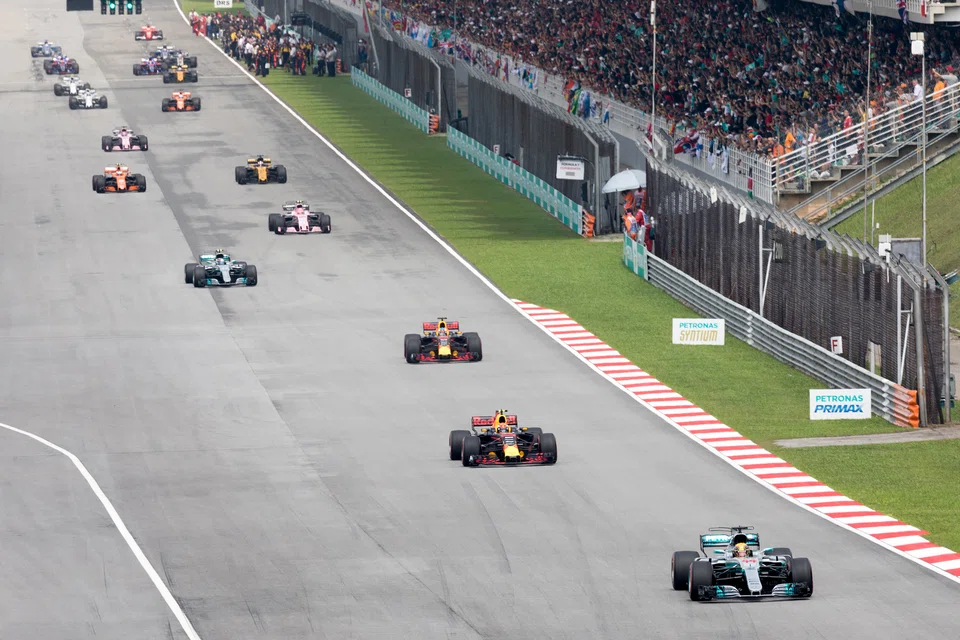
[SINGAPORE] This weekend’s one-off return of a Formula 1 race in Malaysia, as a stand-in host for the relocated Bahrain Grand Prix, is not only a “dress rehearsal” for a permanent return, but also a possible boost to neighbouring Singapore, said industry analysts.
Sepang’s role as a replacement venue for the Bahrain race was announced in July after the ongoing hostilities in the Middle East forced the event’s relocation.
The move will cost the Gulf state an estimated US$100 million in economic impact, with Malaysia estimated to net as much as RM1.3 billion (US$318.5 million), said Hong Leong Investment Bank.
Malaysia was a permanent stop on the F1 circuit from 1999 to 2017, and exited due to high costs and limited returns after Singapore’s 2008 debut.
The landscape has since shifted, with the sport recording a 30.7 per cent growth in total annual TV viewership from 2017 to 2025 alongside the mainstream success of Netflix’s documentary series Formula 1: Drive to Survive.
Dr Simon Chadwick, professor of AfroEurasian sport at the Emlyon Business School in Paris, said that F1 has shifted into an experiential economy where success requires “glamscaping” – the use of music, fashion and lifestyle to target Generation Z fans who want “social media moments” on top of fast cars.
The Malaysia race will run from Friday (Oct 2) to Sunday, with Singapore’s night race taking place from Oct 9 to 11.
A successful trial could elevate Sepang in an increasingly crowded 24-race calendar. Sepang International Circuit CEO Azhan Shafriman Hanif previously called dropping the race a “mistake”, noting that the exit occurred just before the sport’s boom.
The current opportunity has cost Malaysia about RM16 million to upgrade the circuit to F1 standards, compared with historical annual hosting fees exceeding RM300 million. This gives Sepang a low-risk audition to regain the confidence of the government and F1.


Singapore boost
If Malaysia does secure a permanent return, it could provide a boost to Singapore’s race, the city-state’s tourism numbers, and related industries such as aviation and hospitality.
Fears of fan-attendance cannibalisation are largely unfounded. Dr Chadwick added that while a cheaper addition to the calendar in close proximity could theoretically threaten attendance in Singapore, any lost traffic would likely be “marginal”.
Dr Samer Elhajjar, senior lecturer at the National University of Singapore Business School’s department of marketing, noted that the two races offer starkly different value propositions that target distinct consumer segments.
The sentiment was echoed by William Saunders, head of F1 at sports and entertainment marketing agency MKTG, who pointed out that the events can coexist because they offer a “very different look and feel”.
He contrasted Singapore’s established city-centre night race with Malaysia’s traditional daytime road course.
Because they are distinct propositions, the two races can mutually create value rather than cannibalise each other. Dr Chadwick noted that this potential regional bundling could be described as a “South-east Asia Inc” double-header.
Saunders added: “When Singapore first joined the calendar, it likely looked over its shoulder at Malaysia, which was then the ‘established big cat in the jungle’.” Two decades later, that dynamic has flipped, leaving Singapore secure in its position.
Grouping the two also advances F1’s efforts to regionalise the calendar, putting Singapore into a “regional swing” rather than leaving it isolated in the autumn, he said.
Dr Elhajjar suggested that the back-to-back schedule creates a “one trip” phenomenon.
“Instead of competing for the same fans... they may be growing the region together,” he said, with international visitors treating the events as a single South-east Asian itinerary.
This extended footprint distributes spending across the Causeway. While Singapore’s hospitality and transport sectors stand to benefit, the economic impact reaches well beyond tourism staples.
Data from payment platform Adyen during Singapore’s 2025 race week showed that overseas visitors accounted for 76 per cent of hotel revenues during the period. This drove a 24 per cent surge in hotel receipts compared with a typical week in the second half of 2025.
Retail sales jumped 27 per cent over the race weekend, led by international fashion shoppers whose average transaction values were 183 per cent higher than local buyers, while F&B revenues surged up to 31 per cent.
Local entrepreneurs on e-commerce platforms such as Shopee and Lazada are well-positioned to capitalise on increased regional traffic, alongside the financial and healthcare sectors.
Can Malaysia make it work?
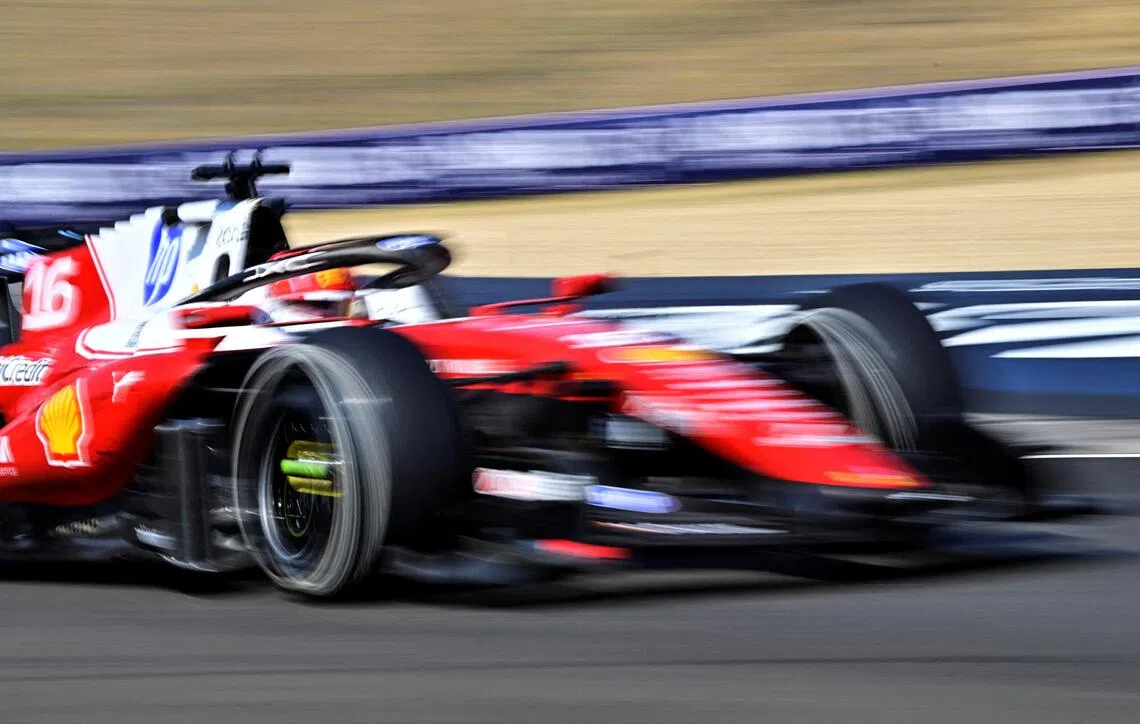
Motorsport marketing consultancy EDJ Motorsport’s founder Matthew Marsh said that Malaysia’s 2017 exit stemmed from incorrectly viewing the race through a “performance marketing” lens.
Expecting ticket sales to cover the estimated US$80 million to US$100 million annual hosting cost ignores F1’s value as a “brand marketing” platform for national awareness – a strategy that Singapore mastered without expecting the event alone to balance the books, said the former endurance racing driver.
To sustain a permanent double-header, Malaysia must modernise its consumer experience. Despite its airport proximity, Sepang historically suffered from traffic bottlenecks and infrastructure deficits.
Modern F1 venues demand seamless public transport and consistent baseline amenities, such as high-quality Wi-Fi and air-conditioning, which Sepang previously lacked, Marsh added.
Commercial hurdles also remain.
F1’s own statistics indicate that fans generally attend only one race a year due to high costs; even at European double-headers, fans rarely bunch attendance, Saunders cautioned.
Rising ticket, flight and hotel prices are also shifting live attendance into a “middle-class pursuit”.
Dr Chadwick noted that, coupled with European reluctance to fly through Middle Eastern airspace, Malaysia will likely draw a regional rather than global audience.
Corporate cannibalisation is another risk. Brands have limited activation budgets, said Saunders, and a permanent Malaysian race could force sponsors to choose between Kuala Lumpur and Singapore.
Marsh added that sponsors will likely favour Singapore for its higher corporate margins and global visibility.
Major players such as Standard Chartered, which uses Singapore as a key hub, would likely only sponsor the Malaysia race if it were placed on the opposite end of the calendar – such as a March slot – to avoid duplicating regional marketing spend.
Finally, Malaysia must fend off its regional rivals. The Thai Cabinet in 2025 approved a 40 billion baht (US$1.2 billion) bid for a 2028 Bangkok race.
To that end, Malaysia still has somewhat of an advantage, according to Dr Chadwick. While Thailand boasts larger market volume, Malaysia retains a competitive edge in “storytelling and authenticity” due to its established F1 history, he said.
A successful Malaysian audition could signal a broader shift in the global F1 strategy. A permanent return for Sepang would likely come at the expense of traditional European venues, accelerating F1’s pivot towards higher-growth tracks.
European races are increasingly struggling to deliver the return on investment seen in the Middle East or the Americas, Dr Chadwick added.
Thus, if Malaysia executes a profitable, high-engagement event this October, it could pry the door open for further expansion into South-east Asia, leaving legacy European tracks behind.
Still, Marsh was highly sceptical that Sepang will ever secure a permanent spot.
This year’s race is essentially a favour from Bahrain to help F1 fill a calendar gap, rather than a genuine open audition, he said. With the 24-race calendar capped and about five host nations willing to pay full price, Malaysia would face hosting fees that it previously deemed unviable.
But the stakes extend well beyond the 2026 calendar. While Bahrain has officially been reinstated as the season opener next year in March, escalating Middle East hostilities cast reasonable doubt on the viability of that schedule, Dr Chadwick said.
If that conflict persists into next spring, F1 will once again need a reliable substitute for its early season swing.
Saunders said a successful Malaysian Grand Prix this October could position Sepang at the front of the queue for any 2027 cancellations, effectively turning this one-off substitution into a recurring contingency plan.
And if Malaysia wants to return to the F1 calendar for good, it must use this unexpected audition to prove to F1, corporate sponsors and its own citizens that it can handle a global mega-event, said Dr Elhajjar.
“It’s a question of ‘You can trust me, I’m reliable again’,” he said. “They don’t have any chance to lose this opportunity.”
Decoding Asia newsletter: your guide to navigating Asia in a new global order. Sign up here to get Decoding Asia newsletter. Delivered to your inbox. Free.
Copyright SPH Media. All rights reserved.






