



Market rout puts pressure on Indonesia to deliver concrete steps
The rupiah has weakened about 8% to become the worst-performing currency in Asia this year
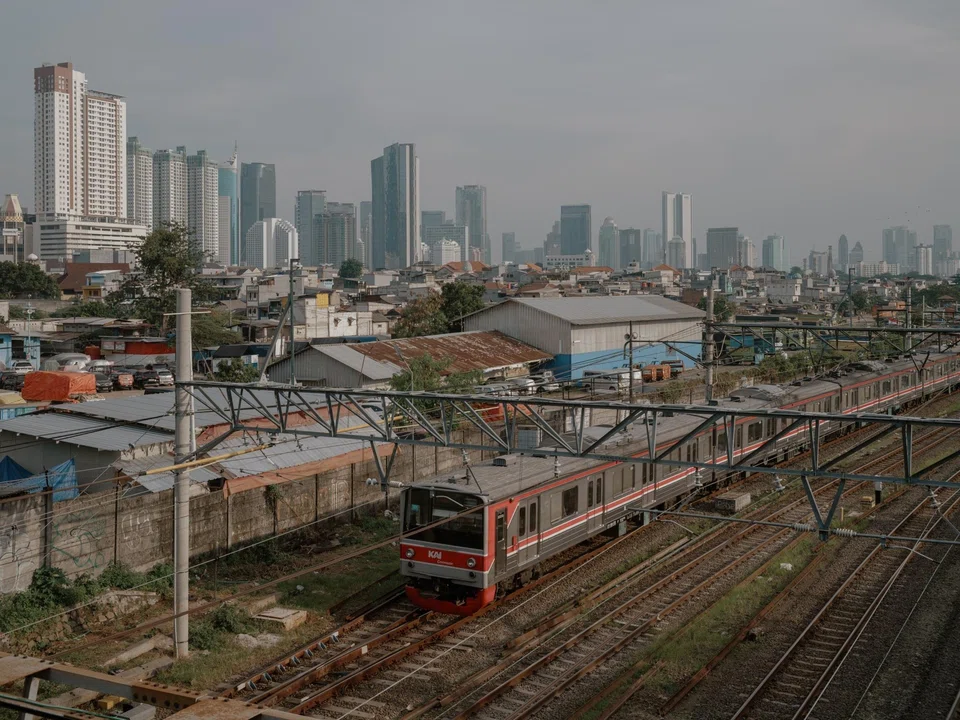
[JAKARTA] Indonesian authorities need to provide firmer policy guidance and unveil concrete steps to improve sentiment after last week’s sell-off that pummelled stocks and the currency, according to analysts, who say investors will remain unconvinced by assurances alone.
Market participants will largely be in a wait-and-see mode ahead of Bank Indonesia’s interest rate decision on Jun 18, and MSCI’s review of the country’s investability later this month, analysts said. In the meantime, rumours of a reshuffle of policymakers will add to uncertainty, they said, even as the finance ministry and central bank unveiled another measure over the weekend to support bond yields and attract inflows.
“The next two weeks are critical,” said Mohit Mirpuri, a partner at SGMC Capital in Singapore. “The market is looking for clear signs of fiscal discipline, policy consistency and a strong commitment to macroeconomic stability.”
Mounting concerns over the government’s economic management, confusion regarding new commodity export rules and revived concerns about Indonesia’s sovereign credit profile have sent Indonesian assets spiralling. Just five months after hitting a record high, the benchmark stock index has tumbled nearly 39 per cent to become the worst performer this year among more than 90 global gauges tracked by Bloomberg. Last week was its poorest performance in more than four years.
The rupiah has weakened about 8 per cent to become the worst-performing currency in Asia this year as it fell to multiple record lows and breached a psychological level of 18,000 per US dollar last week. While bonds also dropped, the decline was relatively modest as the central bank and the finance ministry intervened in the market to keep yields, especially on 10-year debt, steady.
Bank Indonesia (BI) governor Perry Warjiyo and Finance Minister Purbaya Yudhi Sadewa held a joint briefing at the Parliament on Saturday, pledging that authorities will aim to maintain sufficient liquidity in the market and work together to boost yields and capital inflows. The central bank will also increase the interest rate for government cash placed with it, Warjiyo said.
“The statement on Saturday can be a start to reduce market pressures but it’s still not enough to sustainably turn the market direction,” said Josua Pardede, chief economist at Bank Permata in Jakarta. Authorities should provide details on the remuneration rate, the scale of government deposits and the implications for BI’s costs and the government’s bond issuance as “otherwise, markets could interpret it as a blurring line between fiscal and monetary policy, limiting any positive impact on the rupiah”, he said.
Global investors are increasingly losing confidence in Indonesia on President Prabowo Subianto’s more populist and interventionist agenda. That’s led them to pull a net US$422 million out of Indonesian bonds this year and a net US$3.56 billion from local stocks in the same period, already higher than equity outflows in 2020 during the pandemic. The Iran war has compounded those concerns, accelerating capital outflows and a broader retreat from risk, as elevated oil prices increase the energy subsidies budget.
“The bigger issue is not communication but policy clarity,” Mirpuri said.
SEE ALSO





For now, investors will observe policymakers’ efforts to boost bond yields while also ensuring such increases won’t hurt the already strained state budget, one analyst said. Bank Indonesia will also need to raise rates more aggressively to lure funds, said Lionel Priyadi, a macro strategist at Mega Capital Sekuritas.
“For the rupiah to strengthen back to below 18,000 levels, BI would need to hike interest rate by more than 50 basis points,” Priyadi added, expecting a 75-basis-point increase this month. “For now, the markets will remain in a wait-and-see mode.”
The plan to pay higher remuneration on government deposits marks the latest effort by monetary and fiscal authorities to deepen policy coordination. By increasing returns on cash parked at the central bank, the measure could help offset some of the government’s rising financing costs.
“If we increase the remuneration to the government, the government’s net interest burden will be better managed,” Warjiyo told reporters on Saturday. “This also simultaneously addresses the concerns of one of the ratings agencies regarding the government’s increasing interest payments.”
While the statement may lead to a “positive bias” for markets, the yield increase must be managed so that it will be gradual and does not spook domestic investors, said Aldo Perkasa, head of research at Trimegah Sekuritas Indonesia.
The “optimistic narrative” must also be followed by a more detailed policy response, Pardede said.
“These days, pressures are beyond just exchange rate volatility, but are related to risk perception towards Indonesia,” he said. “Investors are not only attracted by high returns but also by their belief that Indonesia’s economic outlook remains credible.” BLOOMBERG
Decoding Asia newsletter: your guide to navigating Asia in a new global order. Sign up here to get Decoding Asia newsletter. Delivered to your inbox. Free.
Share with us your feedback on BT's products and services
TRENDING NOW

DBS, OCBC, UOB rout lops billions off STI as inflation, rate concerns spook investors

Grab CEO’s wife Chloe Tong on life with Anthony Tan and finding her purpose

OCBC sheds S$8 billion in value as shares close nearly 6% down; analysts cautious on banks

Deal between tycoon friends sparks scrutiny of Philippine power sector

